








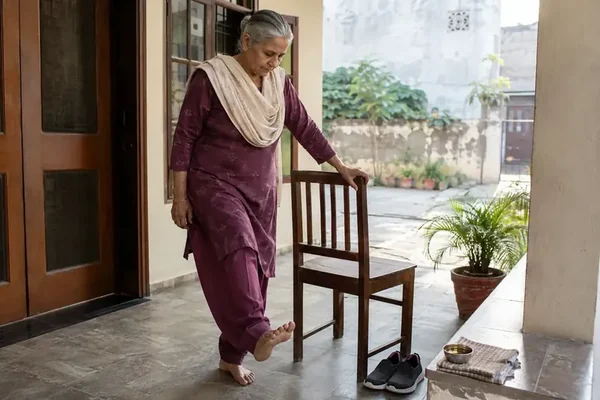
Indigestion and low appetite (badhazmi): heaviness after meals, early fullness or no hunger

Does this sound like you?
Indigestion (apachan, badhazmi) means discomfort or heaviness in the upper stomach around meals, feeling full too soon, or nausea and burping. Low appetite means less hunger or interest in food than is usual for you.24 The two overlap, but with indigestion you start a meal and cannot finish it, while with low appetite you do not want to start.
Urgent signs: new, severe or uncertain chest discomfort, vomiting blood, black stool, or severe worsening stomach pain need care today and should not be called indigestion. The full list is under “When it should not wait”.1
- Food seems to sit heavy in the upper stomach long after a meal ("pet bhari lagna", "khana hazam nahi hota").
- You feel full after a few bites, even when you were hungry.
- Meals bring discomfort, nausea or burping.
- Hunger rarely comes, or food has lost its appeal ("bhookh nahi lagti", "khane ka man nahi karta").
- You have started skipping meals, or eating much less than before.
Short spells after an illness, travel or a stressful week are common. See a doctor if it keeps returning, limits what you eat or comes with weight loss.1
Learn moreAgni and agnimāndya: what Ayurveda means by digestive fire, and how it compares with indigestionAgni (अग्नि) is Ayurveda's image for digestion; agnimāndya means it runs low.

What it is, and what it isn't
Doctors call indigestion dyspepsia: a group of upper-stomach symptoms around meals.2 Low appetite is measured against your own usual hunger.4 In Hindi, indigestion is usually called apachan, apach or badhazmi (अपच).
| It is | It isn't |
|---|---|
| Heaviness, early fullness or upper-stomach discomfort linked to meals | Food "rotting" inside because it feels heavy |
| Low hunger that lasts, compared with your usual pattern | Something to fix by forcing large meals or a tonic |
| Sometimes linked to medicines, stress, mood or another condition | A safe label for new chest discomfort |
If another symptom leads, these pages fit better:
- burning or sour taste: acidity
- swelling and wind: gas and bloating
- gnawing upper-stomach pain, or an ulcer or H. pylori report: gastritis, ulcer and H. pylori
- fatty liver or raised liver enzymes on a report: fatty liver
- pain as the main problem: stomach pain
When it should not wait
Post-meal discomfort is common. These patterns are different.
Urgent signs
Get emergency care now if: you have new, severe or uncertain chest discomfort, especially with breathlessness, sweating, feeling faint or pain spreading to the arm, jaw, neck or back. Don't call it indigestion until a doctor has checked.1
Get urgent in-person care if:1
- you vomit blood or material like coffee grounds
- you pass black, tarry stool
- you can't keep fluids down
- you have severe or worsening stomach pain
- you feel confused, very weak or faint
Arrange a prompt review, often with a gastroenterologist, if:13
- food sticks or it hurts to swallow
- you are losing weight without trying
- vomiting keeps returning
- you feel unusually tired or breathless (possible anaemia)
- new, lasting symptoms begin later in life
If low appetite comes with hopelessness or thoughts of harming yourself, please seek urgent help from a doctor or emergency service today.
How Dr. Sharma assesses it
Most of it is a conversation that separates the feeling first.
- Which feeling. Heaviness, early fullness, nausea, upper-stomach pain, burning or swelling; and whether hunger is absent, or present but eating stops early.
- The meal. How soon after eating it starts, whether small meals do it too, meal times, long gaps, pace, and what you can actually eat and drink in a day.
- The rest of your health. Weight or strength change, sleep, stress and mood, recent illness, teeth or swallowing trouble, bowel pattern, alcohol and tobacco.
- Medicines. Painkillers, iron, antibiotics and anything else you take, including remedies. Some can affect the stomach or appetite. Bring the strip or packet; don't stop a prescribed medicine on your own.
- Tests or a referral, only when useful. For example a blood test, an H. pylori test or an endoscopy if a warning sign calls for one, with the reason explained first. By video, Dr. Sharma can take the history and give guidance; an examination needs a visit.
What treatment can and can't promise
- No universal digestive medicine. There is no one enzyme, churna, tonic or food-ban list for every kind of indigestion or low appetite. The plan follows the reason.
- Routine first. Widely accepted indigestion treatment is cutting down tea, coffee and alcohol, stopping smoking, and losing weight if you are overweight. Avoid rich, spicy or fatty food, and don't eat for three to four hours before bed.1
- After assessment. Diet and routine guidance and, if they suit your pattern, Ayurvedic treatment for indigestion. Weight loss, swallowing trouble or mood that needs support are referred.
- Honest outcomes. Short changes often settle as routine returns; a lasting change needs follow-up, not a promised timeline.
- Indigestion medicine vs finding the cause. Antacids and digestive tablets can ease symptoms without explaining them. Here the reason comes first, and Ayurvedic medicines are considered only after assessment. For the broader question of Ayurvedic treatment for digestion, see all digestion concerns.
Your doctor

Your doctor
Dr. D.K. Sharma, the Ayurvedic doctor who sees you
Name, qualification and registration BAMS; practising since 1992 4067, Board of Ayurvedic and Unani Systems of Medicine, Punjab
Reviewed by Dr. D.K. Sharma.
Medical content approved by Dr. D.K. Sharma.
A consultation, ₹500
If meals have been uncomfortable or hunger has faded for weeks, a consultation looks at the whole picture, including sleep, stress and medicines. You explain how it started and what you have tried. Dr. Sharma can then discuss what may be behind it, whether any test or referral is needed first, and whether Ayurvedic treatment at Bharat Clinic suits you. See how to book, or read how a video consultation works.
In person at Samrala Chowk or Focal Point, Gobindgarh, in Ludhiana, or by video. Usually 30–60 minutes, with your personalised Dinacharya (daily-routine) guide, prepared after the consultation. Bring what you can: how soon after meals it starts, what you eat in a day, any weight change, the medicines you take, and any reports.
The consultation
₹500In person in Ludhiana, or by video
Includes your personalised Dinacharya (daily-routine) guide, prepared after the consultation.
How booking works · no payment until step 3
- You send a request
- Suitability and a time are confirmed
- You pay ₹500
- Your slot is confirmed
- The consultation
Other costs
- Medicine, if advised
- Discussed after your consultation
- Care courses
- Discussed after your consultation
Related reading
Questions before you book
How is indigestion different from acidity?
Indigestion usually centres on heaviness, early fullness or discomfort in the upper stomach.
Full answer
Acidity and reflux more often mean burning, a sour taste or food coming up. You can have both; see the acidity page.
What is apachan, and is it the same as badhazmi?
Apachan (अपच, अपचन), apach and badhazmi are everyday Hindi words for indigestion.
Full answer
They cover heaviness after meals, food that "doesn't digest" (khana hazam nahi hota), early fullness, belching or a poor appetite. They describe a feeling, not a diagnosis, so the first step is to find out what is behind them. Ayurveda reads this through agni, the digestive fire.
"Pet kharab" can also mean loose motions. If that is your problem, read loose motions and IBS.
How can I improve digestion?
If food doesn't seem to digest (khana na pache), start with the routine steps under "What treatment can and can't promise".
Full answer
They include less tea, coffee and alcohol, and a gap of three to four hours between your last meal and bed.1 Don't take ibuprofen or aspirin unless a doctor has prescribed it, because they can irritate the stomach.1 A pharmacist can suggest a medicine for a short spell.1 If you need something most days, or the problem lasts, get the cause looked at instead of adding another remedy.
Which churna, herb or digestive tablet is good for digestion?
Digestive churnas (also spelled churan, or powders), herbal mixtures, tonics and digestive tablets are sold for many different problems, and none suits everyone.
Full answer
Triphala churna and similar churnas are used traditionally in Ayurveda for digestion. Good evidence for them as a remedy for indigestion is limited, and the right choice depends on your pattern and on any medicines you take. No product or dose is named here. Triphala and isabgol are also discussed on the constipation page. For Ayurvedic medicine or tablets for acidity or reflux, see the acidity page. For Ayurvedic medicine and treatment across all digestive problems, see the digestion hub.
Bhookh kyu nahi lagti?
If you have no appetite (bhookh nahin hai), there is no single reason.
Full answer
Illness, medicines, stress or mood, pain, nausea, teeth or swallowing problems and digestive discomfort can all reduce appetite. Whether hunger is absent or you fill up early points to different questions.
When does weight loss matter?
Losing weight without trying, alongside low appetite, needs a doctor's assessment, especially with weakness, pain, vomiting, bleeding, fever or trouble swallowing.1
Can my medicines cause it?
Some can. Painkillers, iron and several other medicines can upset the stomach or reduce appetite.
Full answer
Bring a full list of what you take, and don't stop a prescribed medicine without speaking to the prescriber.
Can I start by video?
Yes. Most of the assessment is a conversation, and Dr. Sharma can take that history by video and go through reports you already have.
Full answer
If your stomach needs to be examined, you'll be told and offered a visit.
Understand it better
Khana nahi pachne ka karan: why food does not seem to digest. Food that seems not to digest usually has more than one cause, from meals and medicines to stress or another condition.24
- Meals: large or late meals, eating fast, long gaps followed by a heavy meal.
- Medicines and habits: some painkillers, alcohol and smoking.
- Stress, sleep and mood: stress, anxiety and low mood can change hunger and how a meal settles.
- Other conditions: H. pylori, an ulcer, gallstones, thyroid or other conditions, which need their own tests.
Foods. Which foods sit heavy for you, and how to eat enough when hunger is low, depend on your pattern; they are worked out in the consultation rather than listed here.