
Piles & Anorectal
How to prevent piles coming back: fibre, straining and toilet habits
Piles that settle once can return if the same pressure returns. This guide explains what high-fibre foods, fluid and toilet habits can change — and what no routine can promise.
When this should not wait
This guide is for prevention after piles have been assessed. Seek urgent medical care for heavy or continuing bleeding, faintness, black or tar-like stool, severe worsening pain, fever, or a very painful swelling. Arrange timely assessment for repeated bleeding, unexplained weight loss, a lasting change in bowel habit, or symptoms that are not settling.
Do not wait for a message reply when bleeding is heavy or you feel acutely unwell.
Why piles come back
Piles are swollen blood-vessel cushions near the anus. Pressure can rise with repeated straining, constipation, diarrhoea, long toilet sitting, pregnancy or frequent heavy lifting. Treatment may settle symptoms, but the same pressures can build again.
That is why prevention is less about one special product and more about reducing strain over time. It also explains why a good week does not prove the problem has permanently disappeared.
High-fibre foods for piles, and what fluid does
Current medical guidance places fibre and bowel habits among the first measures used for many people with piles. Fibre can make stool softer and easier to pass, while fluid helps fibre work effectively.
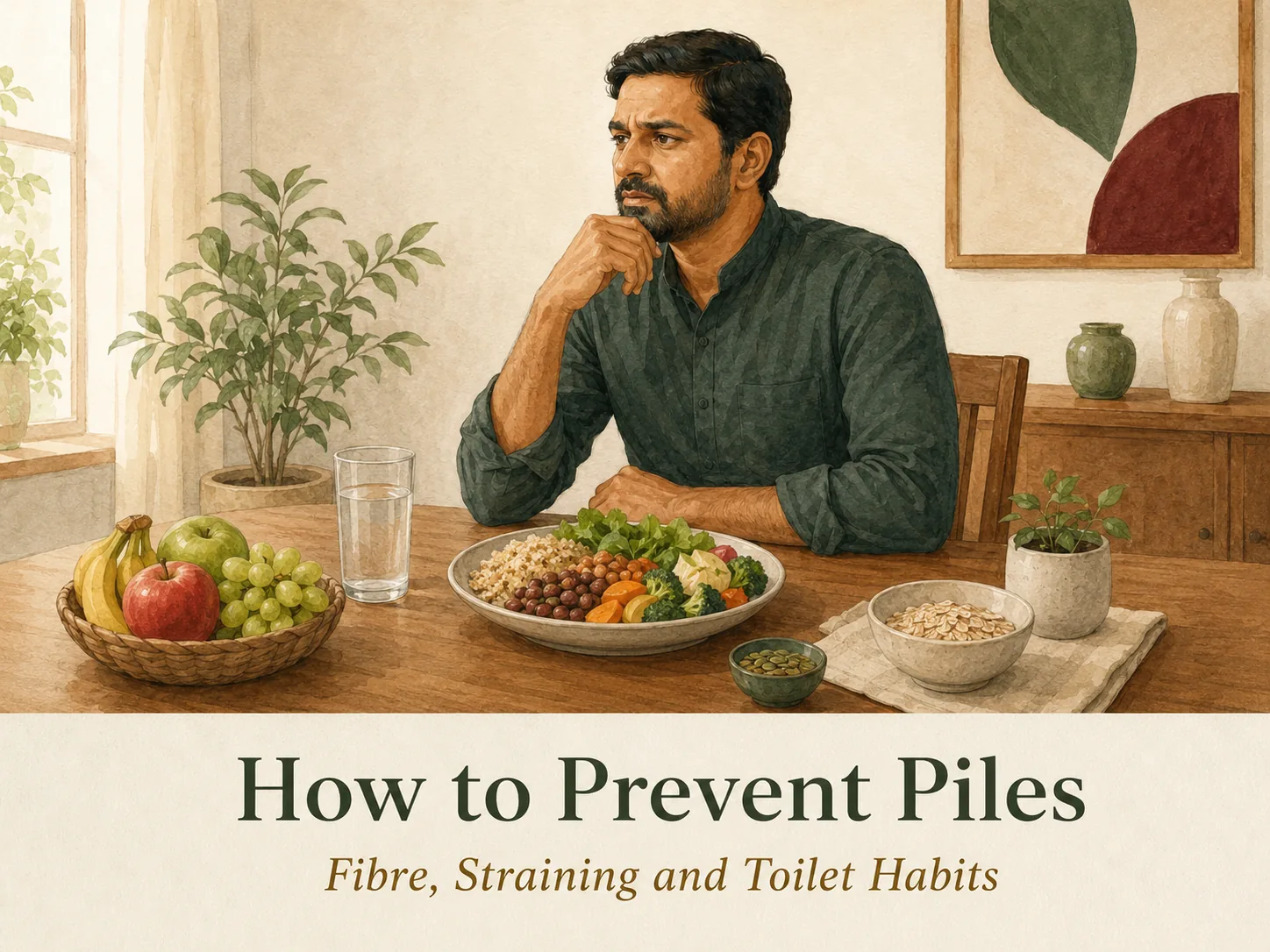
High-fibre foods for piles can come from ordinary meals:
- whole grains such as atta roti, oats, dalia or brown rice
- pulses such as rajma, chana, moong and masoor
- vegetables and fruit that suit your digestion
- seeds or fibre supplements only when appropriate for you
Add fibre gradually. A sudden large increase may cause gas or bloating. The right fluid intake depends on your health, activity, medicines and weather; people with fluid restrictions should follow their clinician’s advice.
The toilet habits that matter most
Go when the urge is present. Delaying can allow stool to become harder.
Avoid repeated pushing. If stool is not passing, stronger straining adds pressure without explaining why the problem is happening.
Keep toilet time purposeful. Long phone sessions on the toilet prolong pressure in the area.
Review recurring constipation or diarrhoea. Both can contribute to irritation and pressure. A separate bowel problem may need its own assessment.
These habits support prevention; they do not diagnose the cause of pain, bleeding or a lump.
What about sitz baths and creams?
Warm water and short-term over-the-counter products may provide comfort for some people, but comfort is not the same as confirming the diagnosis or preventing recurrence.
Hydrocortisone products for piles should not be used longer than seven days unless a clinician specifically advises otherwise. Longer use can irritate or thin the skin. Repeated need for creams is a reason to arrange assessment rather than continue buying another tube.
A common belief
“If I stop eating spicy food, piles will never return.”
What is more accurate
Spicy food may irritate symptoms in some people, but hard stool, straining and prolonged toilet sitting are more direct prevention targets. Removing one food cannot guarantee that piles will not return.
Pregnancy, lifting and changing routines
Pregnancy and frequent heavy lifting can increase pressure in the area. Travel, illness, altered meals and a new work routine can also change bowel habits. These contexts are worth discussing because prevention needs to fit the person rather than rely on one universal rule.
Before your appointment
Write down:
- how often symptoms return
- whether stool is usually hard, loose or variable
- how long you tend to sit or strain
- any bleeding, pain or swelling
- creams, laxatives, supplements or medicines already used
Do not assume every bleed is piles. Do not keep using a steroid cream beyond its labelled short course. Do not start a large fibre dose without checking how it fits your medicines and health conditions.
Questions people ask
How can I prevent piles naturally?
The best-supported routine measures are fibre, suitable fluid intake, less straining and less prolonged toilet sitting. They reduce common pressures but cannot guarantee prevention.
How much fibre do I need?
Needs vary. Increase fibre gradually and discuss a target with a clinician or dietitian when you have ongoing bowel symptoms, other illnesses or medicines that affect digestion.
Will piles return even if I do everything correctly?
They can. Good habits lower avoidable pressure, but pregnancy, constipation, diarrhoea, lifting and individual anatomy can still matter.
Are sitz baths useful?
Warm water may feel soothing. It should be treated as comfort care, not proof that the problem is piles or that it has been treated fully.
Should bleeding be checked if it stops?
New or unexplained bleeding deserves medical review because several conditions can cause it. Heavy bleeding, black stool or faintness needs urgent care.
Sources
- American Society of Colon and Rectal Surgeons. Clinical Practice Guidelines for the Management of Hemorrhoids. 2024
- National Institute of Diabetes and Digestive and Kidney Diseases. Eating, Diet & Nutrition for Hemorrhoids and Symptoms & Causes of Hemorrhoids
- NHS. Hydrocortisone for piles and itchy bottom: how and when to use it
A private next step
WhatsApp opens with an editable message. Nothing is sent until you press send.
Read next
This guide is educational. It does not diagnose, replace an examination or provide emergency care.
Prefer BharatClinic on Google
Add BharatClinic as a Preferred Source to find more of our health guides and updates in Google Search.