
Piles & Anorectal
Piles in three days: what can realistically change
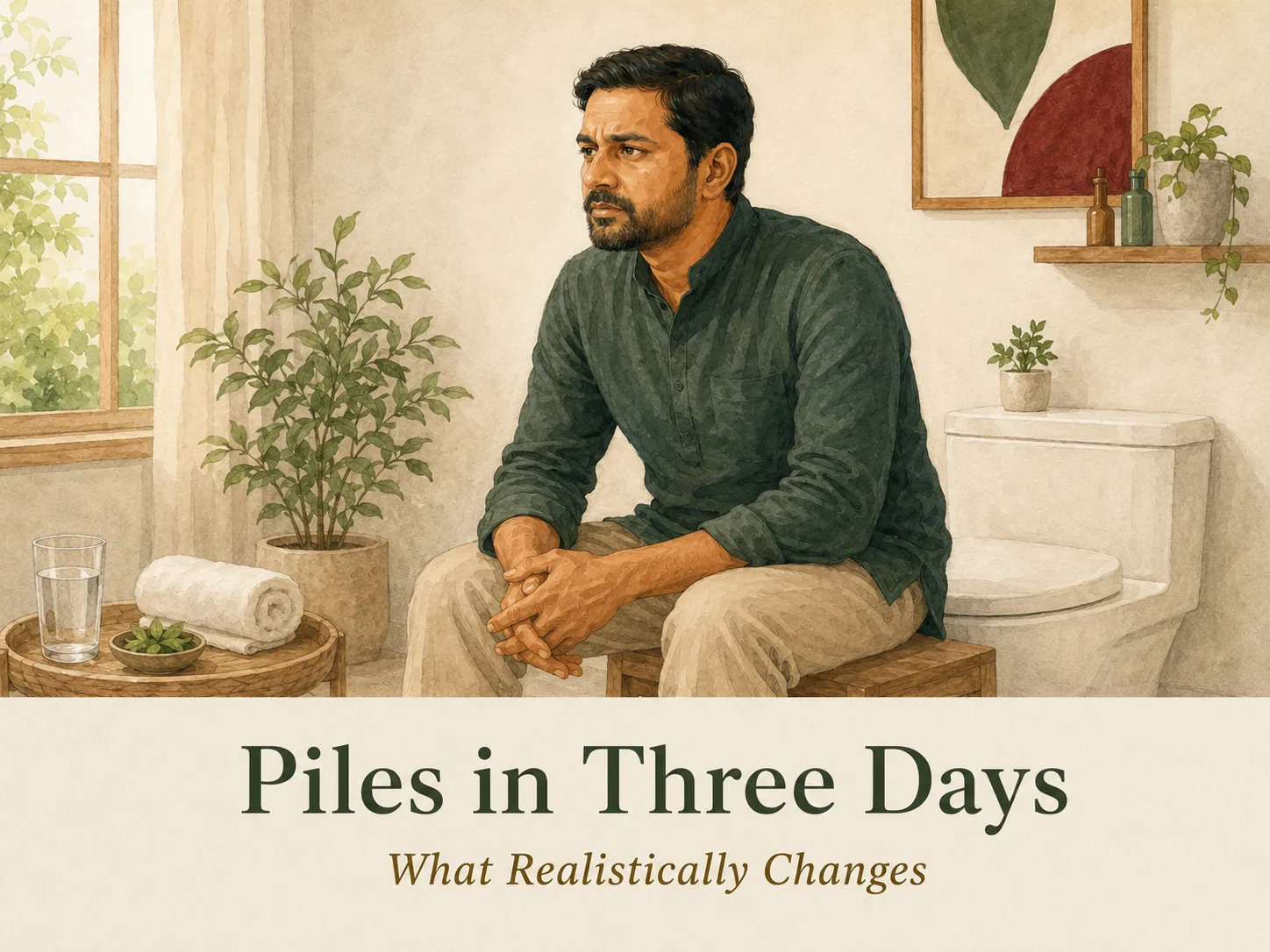
“Gone in three days” is a powerful advertisement because it gives a worried person a clear deadline. A body does not work to an advertising deadline. This guide separates possible symptom relief from diagnosis, longer-term control and the bleeding that should not wait.
When this should not wait
Seek urgent medical care for heavy or continuing bleeding, faintness, black or tar-like stool, severe worsening pain, fever, or a very painful swelling. Arrange timely assessment for repeated bleeding, unexplained weight loss, a lasting bowel-habit change, or symptoms that have not been examined.
Bright-red blood can occur with piles, but the colour alone does not prove the cause.
What the three-day promise leaves out
A quick claim often mixes three different ideas:
1. comfort improving; 2. the swelling settling; 3. the condition being diagnosed and controlled.
These are not the same. A person may feel less discomfort while the original pressure, constipation or diagnosis remains unresolved. Another person may have bleeding from a different cause and lose time by treating it as piles.
A responsible answer starts with assessment, not a calendar.
What may change first
If piles have been confirmed, reducing hard stool and straining can reduce irritation and pressure. High-fibre foods, suitable fluid intake and shorter toilet sitting are common first-line measures. A clinician may also discuss short-term comfort measures or other treatment depending on the findings.
The speed and degree of improvement vary. This page does not set a three-day expectation, a fixed healing time or a universal treatment.
A common belief
“There must be one food, oil or medicine that removes piles in three days.”
What is more accurate
Food can help make stool easier to pass. A cream may reduce discomfort. Neither proves the diagnosis or guarantees that swollen tissue will disappear by a deadline. Products should not replace assessment when bleeding, severe pain or a persistent lump is present.
Why assessment comes first
Current guidance recommends a history and physical examination when piles are suspected. Depending on the symptoms, the clinician may inspect the area, perform a rectal examination or use a short instrument to look inside. Some people with rectal bleeding need further bowel evaluation.
That is not unnecessary delay. It is how piles are separated from a fissure, prolapse, skin condition or another source of bleeding. A treatment plan based only on an advert or chat message skips the most important step.
What supports longer-term control
Longer-term care commonly focuses on the pressure pattern:
- make stool easier to pass
- reduce repeated straining
- avoid prolonged toilet sitting
- review recurring constipation or diarrhoea
- return for assessment if bleeding or swelling continues
Some people improve with conservative care. Others may need a procedure. The choice depends on the diagnosis, symptom burden and examination — not a promise that one approach works for everyone.
How to read a three-day advert
Ask:
- Will the diagnosis be confirmed before treatment?
- What exactly is expected to improve?
- What is not being promised?
- What happens if bleeding or pain continues?
- Are tests, referral or procedures discussed when appropriate?
A trustworthy explanation should distinguish relief from resolution and should never use embarrassment to rush a decision.
Questions people ask
Can piles be cured in three days?
No responsible clinician can promise that. Symptoms may start changing, but diagnosis, severity and contributing pressure differ between people.
Can food fix piles in three days?
No. Fibre and fluid may help stool pass more easily, which reduces strain. That is useful care, not a guaranteed deadline.
How long do piles take to settle?
There is no single timeline. It depends on the diagnosis, severity, bowel habits and chosen care. An examination gives a safer answer than an advert.
Should bleeding be checked if it stops?
New or unexplained rectal bleeding should still be discussed with a clinician. Stopping does not identify the cause.
Can piles come back?
Yes. Repeated straining, constipation, diarrhoea and prolonged toilet sitting can bring pressure back even after symptoms settle.
Sources
- American Society of Colon and Rectal Surgeons. Clinical Practice Guidelines for the Management of Hemorrhoids. 2024
- National Institute of Diabetes and Digestive and Kidney Diseases. Hemorrhoids: Diagnosis, Treatment, and Eating, Diet & Nutrition
- MedlinePlus. Rectal bleeding
A private next step
WhatsApp opens with an editable message. Nothing is sent until you press send.
Read next
This guide is educational. It does not diagnose, replace an examination or provide emergency care.
Prefer BharatClinic on Google
Add BharatClinic as a Preferred Source to find more of our health guides and updates in Google Search.