





Anal fistula (bhagandar)

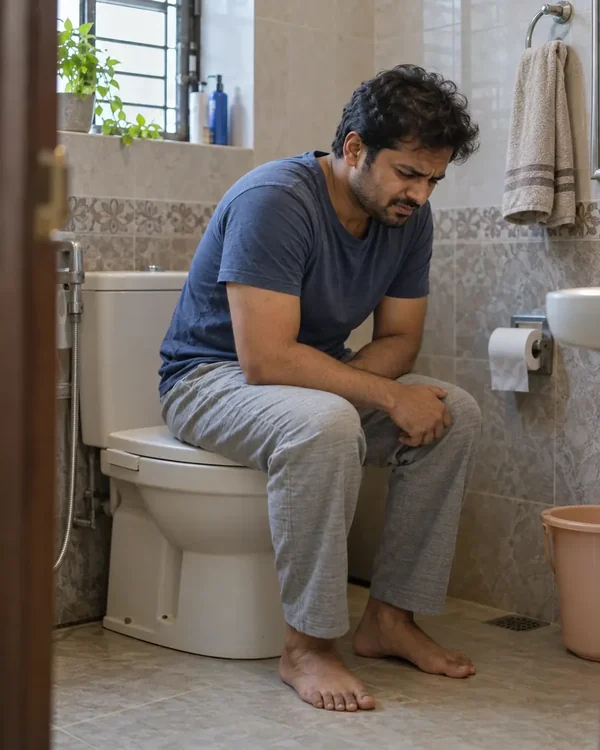
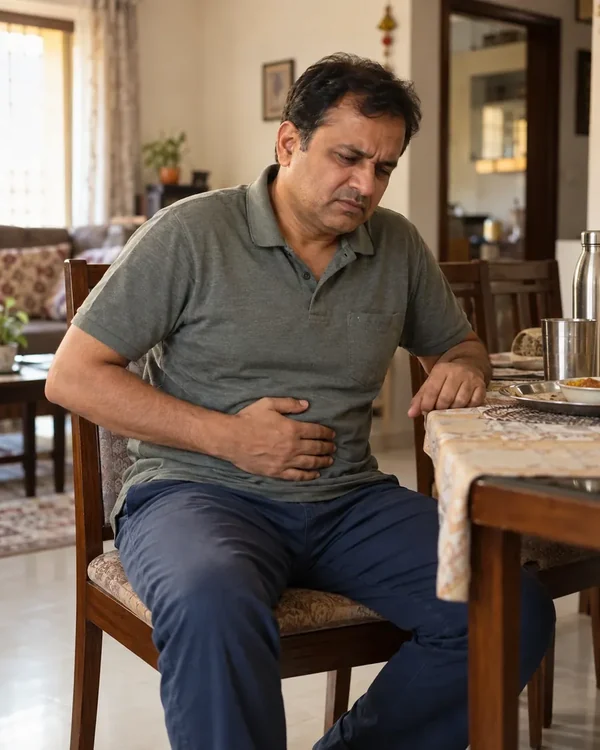
Does this sound like you?
A boil near the back passage that bursts and keeps coming back, or a small opening that leaks, is easy to mistake for piles.
The short answer: an anal fistula is a small tunnel between the inside of the back passage and the skin near the anus. It usually follows an abscess and rarely closes by itself. Creams and tablets do not remove the tunnel, so it needs the right kind of examination, usually by a surgeon.1
Urgent signs: a hot, swollen, painful lump near the anus with fever or chills needs same-day care, and heavy bleeding or feeling faint needs emergency care now; the full list is under “When it should not wait”.1
- A painful lump or boil near the back passage burst, eased, and then came back.
- There is a small opening in the skin near the anus that leaks pus, blood or a watery discharge.
- Your underwear is stained, and you keep a pad or tissue there.
- The skin around the anus is sore, itchy or irritated from the discharge.
- You were told it is "piles", but it doesn't feel like piles.
These signs can come from an anal fistula, which people often call bhagandar.1

What it is, and what it isn't
The word "fistula" on its own is also used for other connections in the body, such as the access created for dialysis. This page is about the anal one, known in Hindi as bhagandar (भगंदर).1 Doctors may also write it as fistula-in-ano. Most begin with an abscess near the anus (often called a perianal abscess), a collection of pus that bursts or is drained and leaves a channel that doesn't close.1
Is bhagandar the same as piles? No. Piles are swollen blood vessels; a fistula is a tunnel that leaks pus or blood. They can feel similar at first, which is why an examination matters.12
| Piles (bawasir) | Anal fissure | Anal fistula (bhagandar) | |
|---|---|---|---|
| What it is | Swollen blood vessels in or around the anus | A small tear in the lining of the anus | A tunnel from inside the anus to the skin |
| Typical sign | Bright red blood, a lump that may come out | Sharp pain during and after a stool | Discharge of pus or blood from an opening near the anus |
| Usual pattern | Comes and goes with constipation | Pain with each stool, sometimes for weeks | Boil or discharge that keeps returning |
The key difference: a fistula is a tract with an opening, so it rarely closes by itself.1 The other two are covered on piles (bawasir) and anal fissure; blood in the stool without a discharge is covered on blood in stool.
In Hindi, Punjabi and Hinglish
Show the words and Hinglish questionsHide the words
This page is in English. These are the words people use for an anal fistula, and what they mean here.
| You may say or search | It means |
|---|---|
| bhagandar (भगंदर) | Anal fistula.1 |
| bawasir | Piles: a different problem from a fistula.12 |
| rog, bimari, lakshan, ilaj | Disease, illness, symptoms, treatment. |
| gharelu ilaj, desi ilaj | Home remedies, traditional remedies. |
Common questions in Hinglish
- Bhagandar kya hota hai, aur fistula kya hota hai? Bhagandar is the Hindi name for an anal fistula, a small tunnel between the inside of the back passage and the skin near the anus.1 Full answer: “What it is, and what it isn't”
- Bhagandar kaise hota hai? Small glands just inside the anus can become blocked and infected, causing an abscess. When it bursts or is drained, a tunnel may remain.1 Full answer: “Understand it better”
- Bhagandar ke lakshan kya hain? Typical signs are a boil near the back passage that bursts and returns, or a small opening near the anus that leaks pus, blood or watery fluid.1 Full answer: “Does this sound like you?”
- Bhagandar ka ilaj kya hai? Kya bina operation ho sakta hai? Rarely without surgery: a fistula is a lined tunnel, and medicines do not remove it.1 Full answer: “Can a fistula heal without surgery?”
When it should not wait
Urgent signs
Get urgent care the same day if: you have a painful, hot, swollen lump near the anus with fever or chills, or you feel very unwell. This can be an abscess that needs draining.1
Get emergency care now if: bleeding from the back passage is heavy or won't stop, you feel faint, or the pain is severe and spreading.2
Arrange a prompt medical review if:
- you also have diarrhoea that lasts, stomach pain or weight loss, which can point to a bowel condition such as Crohn's disease;
- you have diabetes or a weak immune system;
- the discharge has lasted for weeks.1
How Dr. Sharma assesses it
A private conversation first. Any examination is explained before it starts and is done only with your consent.
- The story. When the first boil appeared, whether it burst or was drained, how often it comes back, and what leaks: pus, blood or watery fluid.
- Your bowels. Constipation, straining, diarrhoea, and any blood or mucus in the stool.
- Your health. Diabetes, bowel conditions, earlier anal surgery or treatment, and medicines you take.
- A gentle look. Where the opening is and how the skin looks, which helps tell a fistula from piles or a fissure.
- Reports, and the next step. Bring any ultrasound, MRI or surgeon's notes. The full path of a fistula is usually mapped with an examination by a surgeon and, often, an MRI scan.1
What treatment can and can't promise
- Surgery is the usual fistula treatment. Most anal fistulas are treated with an operation chosen by a colorectal or general surgeon, based on where the tunnel runs.1 When that is the right step, you are told so plainly and referred.
- Why a surgeon decides. Some tracts pass through the muscles that control the bowel. Choosing a procedure that protects that control needs a surgeon's assessment and, often, imaging.1
- What can help alongside. Soft, regular stools, keeping the area clean and dry, and warm sitz baths can ease soreness while you are waiting for, or recovering from, treatment. Your personalised Dinacharya (daily-routine) guide follows the consultation.
- Home remedies and treatment without an operation. No cream, tablet, diet or home remedy removes a fistula tract, and any Ayurvedic treatment is decided only after assessment.
- What to expect. Fistulas can come back, even after surgery, which is why follow-up matters.1
"Dr. Sharma assesses a suspected fistula, explains what the findings mean and refers you to a colorectal surgeon, who maps the tunnel and decides on the procedure. He can advise on bowel habit, skin care and your Dinacharya routine before and after treatment."
Your doctor
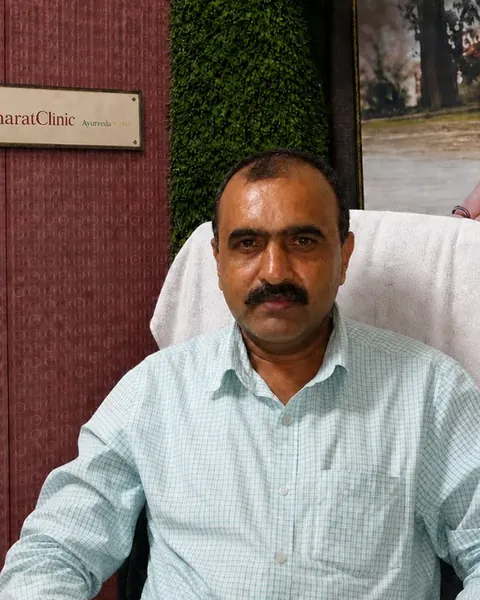
Your doctor
Dr. D.K. Sharma, the Ayurvedic doctor who sees you
Name, qualification and registration BAMS; practising since 1992 4067, Board of Ayurvedic and Unani Systems of Medicine, Punjab
Reviewed by Dr. D.K. Sharma. Approval recorded on 8 November 2026 for this exact text.
Medical content reviewed by
A private consultation, ₹500
A consultation gives you time to describe the whole pattern, from the first boil to what leaks now. Dr. Sharma can then explain what the findings suggest, who should see you for the tunnel itself, and how supportive care can fit alongside.
With Dr. D.K. Sharma (BAMS), in person in Ludhiana or by video. A fistula needs to be seen, so an in-person visit is usually more useful; video can go through your history and reports first. Your personalised Dinacharya (daily-routine) guide is prepared after the consultation. Bring any scan reports, a surgeon's notes, and a list of medicines.
The consultation
₹500In person in Ludhiana, or by video
Includes your personalised Dinacharya (daily-routine) guide, prepared after the consultation.
How booking works · no payment until step 3
- You send a request
- Suitability and a time are confirmed
- You pay ₹500
- Your slot is confirmed
- The consultation
Other costs
- Medicine, if advised
- Discussed after your consultation
- Care courses
- Discussed after your consultation
To start, book a consultation, or read how a video consultation works for your history and reports.
Seeing a doctor in Ludhiana: Piles specialist in Ludhiana
Related reading
Questions before you book
Can a fistula heal without surgery?
Rarely. Because it is a lined tunnel, a fistula usually doesn't close by itself, and medicines don't remove the tract.1
Full answer
Most people need a procedure chosen by a surgeon. Care for the skin and bowels can ease symptoms meanwhile.
What does Ayurveda offer, and what is referred?
Ayurveda has described bhagandar for centuries. Today, a fistula that needs surgery is referred to a surgeon, and routine, diet and supportive care can sit alongside.
Full answer
What the clinic itself does is confirmed after assessment. Bhagandar in Ayurveda and modern medicine compares the two views.
Is laser treatment an option for a fistula?
It can be, for some fistulas. Laser closure is one of several procedures a colorectal surgeon may choose, depending on how the tract runs, and success rates vary.
Full answer
Which procedure suits you is the surgeon's decision after imaging; you are referred for that.
Will I need an MRI?
Often, if surgery is being planned. An MRI shows the path of the tunnel and how it relates to the muscles that control the bowel.1 The surgeon decides.
Is it cancer?
Almost always no. A fistula is usually caused by an infected gland.1
Full answer
Any lasting change near the anus should still be examined.
Can I start by video?
Yes, for your history and reports. A fistula needs an examination, so an in-person visit or a surgeon usually follows.
Understand it better
Why it forms. Small glands just inside the anus can become blocked and infected, causing an abscess.1 When the abscess bursts or is drained, a tunnel may remain. Less often, a fistula is linked to Crohn's disease, an infection such as tuberculosis, or earlier surgery or radiotherapy.1
Myths. "A fistula is just a bad pile." It is a different problem with a different treatment. "If it stops leaking, it has healed." A tract can stay quiet for weeks and then flare again.