



Sciatica (nas ka dard): pain from the back or buttock down the leg
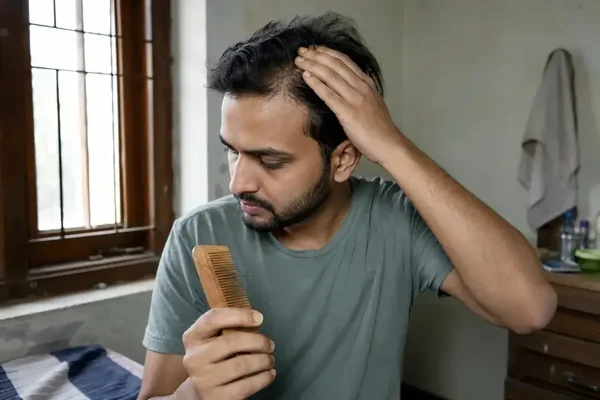
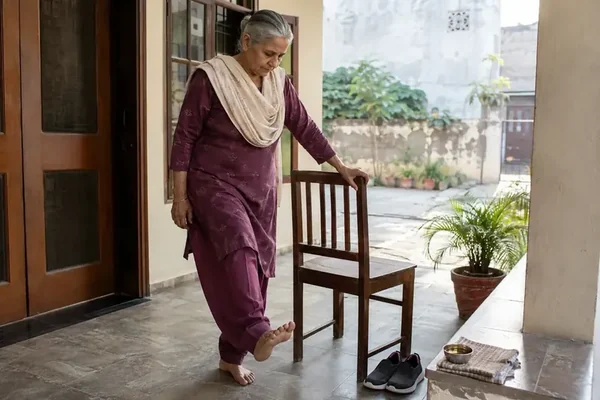
Does this sound like you?
Short answer: sciatica is pain that travels from the lower back or buttock down one leg because a nerve root is irritated, usually by a disc.1 Staying active and exercise suited to you are the main treatment, and most cases ease within weeks.13
Urgent signs: sciatica in both legs, new weakness in both legs, numbness around the genitals or buttocks, or new trouble controlling your bladder or bowel need a hospital the same day.2 The full list is under “When it should not wait”.
Sciatica symptoms are usually felt in one leg: a shooting or burning line of pain from the buttock down the back or side of the leg, sometimes to the foot, that gets worse when you cough, sneeze or sit.
- Pain runs from your lower back or buttock down the back or side of one leg, often below the knee.
- The leg pain is worse than the back pain.
- There is tingling, pins and needles or numbness in the leg or foot.
- Coughing, sneezing, bending or sitting for long makes it shoot.
- It is hard to find a comfortable way to sleep.
Sciatica is common and often settles with time and activity.1 It is worth assessing when it is severe, keeps returning, or comes with weakness or any sign in the next section. If the pain is in a joint or your neck instead, start from joint, back and neck pain.
What it is, and what it isn't
Sciatica is pain along the sciatic nerve, which runs from the lower back through the buttock and down each leg. It happens when the nerve root is irritated or pressed, most often by a bulging or slipped disc.1 People also call it "nas ka dard", "nas dabna" or "pair mein current".
| It is | It isn't |
|---|---|
| Pain, tingling or numbness travelling down one leg | Every ache in the back or thigh |
| Usually from a disc or narrowing in the lower spine | Always a reason for surgery |
| Often worse with sitting, bending or coughing | A sign to stay in bed |
If the pain stays in the back and doesn't travel below the knee, read lower back pain.
When it should not wait
Sciatica is usually not an emergency. These patterns are different.
Urgent signs
Get emergency care now if you have:
- sciatica in both legs;
- new weakness in both legs;
- numbness around the genitals, buttocks or inner thighs;
- new trouble passing urine or controlling your bladder or bowel.
This can be cauda equina syndrome, and it needs a hospital the same day.2
Get urgent care the same day if:
- the leg is getting weaker, or you find it hard to lift the front of your foot and toes so that the foot drops or drags (foot drop)4;
- the pain started after a fall or an accident;
- you have a fever with back pain;
- the pain is sudden and severe.1
Arrange a prompt review if: you are losing weight without trying, you have had cancer, or the pain is getting worse rather than settling.3
How Dr. Sharma assesses it
Your back and legs are examined in person: how you bend, how you walk, and the strength, feeling and reflexes in each leg.
- Where and since when. Which leg; how far down the pain goes; after a lift, a fall or gradually.
- The pattern. Tingling, numbness or weakness; what eases or worsens it: sitting, standing, walking, coughing; morning stiffness and night pain.
- Work and posture. Desk hours, driving, two-wheeler travel, lifting, activity and weight.
- Health and medicines. Diabetes (which can also affect leg nerves), thyroid or bone problems; every painkiller, nerve tablet, injection or steroid you have taken, and for how long. Bring the strips.
- Reports, and tests only when useful. Bring any MRI or X-ray. A scan is suggested when it would change the plan, for example when weakness is getting worse or surgery is being considered.3
What treatment can and can't promise
- No single tablet or oil. The plan follows the cause and how the nerve is affected. Which tablet, oil or injection, if any, fits depends on what the examination shows.
- Keep moving. Staying as active as you can, and exercise suited to you, are part of recommended care.3
- Within scope, or referred. Once you have been assessed, you get posture, work and routine guidance, and Ayurvedic treatment where it suits you. A physiotherapist, a spine specialist or an orthopaedic surgeon is suggested when that is right, and at once for worsening weakness.
- Honest outcomes. Sciatica usually eases over weeks. For some it lasts longer or returns, and a few need a specialist opinion. How long it takes is decided after assessment.
- Follow-up. At a review, Dr. Sharma checks the strength and feeling in each leg again, asks how far the pain now travels and how you are walking and sleeping, and adjusts the plan.
Your doctor
Your doctor
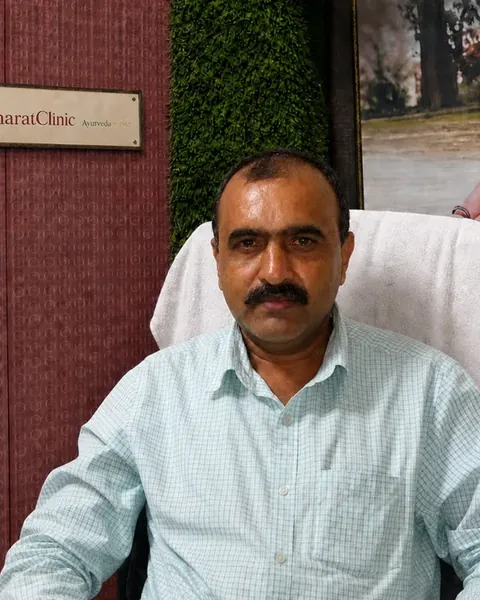
Dr. D.K. Sharma, the Ayurvedic doctor who sees you
Name, qualification and registration BAMS; practising since 1992 4067, Board of Ayurvedic and Unani Systems of Medicine, Punjab
Reviewed by Dr. D.K. Sharma.
Medical content approved by Dr. D.K. Sharma.
A consultation, ₹500
You describe where the pain travels and any numbness or weakness, and your legs and back are examined, including the strength and feeling in each leg. Dr. Sharma then explains the next step: whether a scan is needed, and whether treatment at Bharat Clinic suits you.
You can book a consultation or read how a video consultation works. Looking for a sciatica doctor or sciatica treatment near you? The consultation is in person at Samrala Chowk or Focal Point, Gobindgarh, in Ludhiana, or by video to begin. The clinic has no branches elsewhere. Sciatica needs the nerves in your legs examined, so most first consultations are in person. The visit usually takes 30 to 60 minutes. Your personalised Dinacharya (daily-routine) guide follows the consultation. Bring your MRI and the medicines you take.
The consultation
₹500In person in Ludhiana, or by video
Includes your personalised Dinacharya (daily-routine) guide, prepared after the consultation.
How booking works · no payment until step 3
- You send a request
- Suitability and a time are confirmed
- You pay ₹500
- Your slot is confirmed
- The consultation
Other costs
- Medicine, if advised
- Discussed after your consultation
- Care courses
- Discussed after your consultation
Questions before you book
Is sciatica the same as back pain?
No. In sciatica the main pain travels down the leg, often below the knee, because a nerve root is irritated.
Full answer
Back pain on its own usually stays in the back and buttock; lower back pain covers that.
What is the treatment for sciatica?
Sciatica pain treatment starts with staying as active as you can and exercise suited to you, and most sciatica eases over weeks.13
Full answer
The plan follows the examination. Worsening weakness or any of the warning signs above needs urgent care.
Is sciatica curable?
Most sciatica gets better on its own, usually within a few weeks to a few months, though it can come back, so a permanent cure cannot be promised.1
What are the last stages of sciatica?
Sciatica does not follow fixed stages. It usually gets better in a few weeks to a few months but can last longer, and it can come back.1
Full answer
See a doctor if the pain has not improved after a few weeks of home treatment, is getting worse, or is stopping your normal activities.1 The serious sign is not a late stage but a new one. Any of these needs a hospital the same day (see the warning signs above):12
- sciatica in both legs;
- severe or worsening weakness or numbness in both legs;
- numbness around the genitals or bottom;
- trouble passing or controlling urine or stool.
Do exercises or physiotherapy help sciatica?
Yes. For sciatica pain relief, gentle movement started early, regular sciatica exercises and physiotherapy are the main treatments, and long rest is not.1
Full answer
- Videos promising relief in minutes may ease a spasm, but sciatica itself usually settles over weeks.
- For sciatica pain treatment at home, exercises such as walking and gentle stretching of the legs and back are a safe starting point for most people. Stop any movement that sends the pain further down the leg or brings numbness, and ask a physiotherapist or doctor for exercises suited to you.
- Massage for sciatica pain relief may soothe tight muscles, but there is little evidence that it treats the nerve irritation itself.
How should I sleep with sciatica?
Full answer
The advice is to carry on with normal activities as far as you can and to use self-management that suits you.3 See a doctor if the pain gets worse, does not improve after weeks of home treatment, or limits what you can do.1 Pain or weakness in both legs, numbness around the groin or bottom, or trouble starting or controlling urine or stool needs urgent care.12
Yoga for sciatica: is it safe?
An exercise programme may be considered for sciatica, taking your needs, preferences and abilities into account.3
Full answer
The guidance does not name yoga or any pose. The cause and severity decide what is safe, so start with an assessment, and have a clinician or physiotherapist approve any poses and say when to stop. The urgent signs in the answer above apply here as well.1
Do I need an MRI?
Not always. An MRI is useful when weakness is getting worse, a warning sign is present, or surgery is being considered.3
Full answer
Disc changes on an MRI are also found in people without pain.
Will I need surgery for a slipped disc?
Most people with sciatica don't.1 Surgery is discussed when weakness is getting worse, a warning sign appears, or severe pain doesn't settle, and that conversation belongs with a spine or orthopaedic surgeon.
Understand it better
What can contribute. The causes of sciatica are usually something pressing on or irritating a nerve root in the lower spine1:
- A bulging or slipped disc: the most common cause.
- Narrowing of the spinal canal (spinal stenosis): more common with age, often worse on walking.
- A slipped vertebra (spondylolisthesis) or, less often, an injury, an infection or a growth.
- Load and habits: heavy lifting, long sitting or driving, and extra weight can make it more likely.