







Can't gain weight? Healthy weight gain, and what a doctor checks first

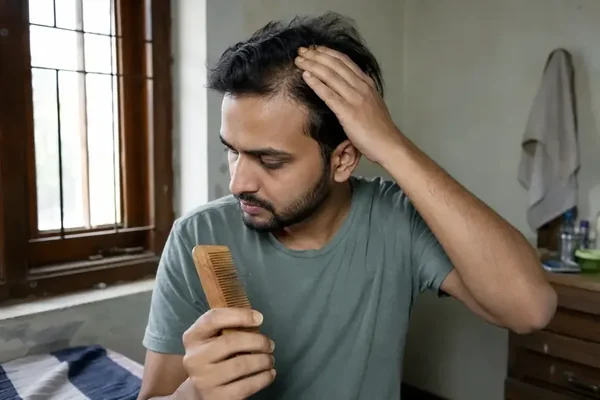
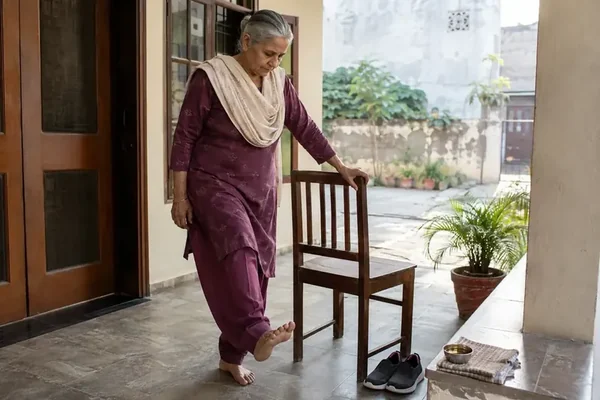
Does this sound like you?
Short answer: If you have always been thin, healthy weight gain comes from regular meals that give energy and protein together, steady strength activity and enough sleep, along with treating any cause that is found. If your weight has fallen without trying, the reason needs to be found first.12
Urgent signs: vomiting blood, black or bloody stool, chest pain, fainting or severe breathlessness need care today; the full list is under “When it should not wait”.
- You eat, but the scale doesn't move, or any gain disappears within weeks.
- Your appetite is small: meals feel heavy, or you are full after a few bites ("bhukh nahi lagti").
- Family or friends keep telling you that you are too thin.
- You have tried a gainer, a protein powder or a syrup, and you are not sure what it did.
- Clothes have started to feel loose although you haven't changed what you eat.
That last one points to weight that has fallen, not a thin frame; see "When it should not wait" below.2
Learn moreBrimhana (bṛṃhaṇa) and kārśya: nourishing therapy and underweightBṛṃhaṇa (बृंहण) is Ayurveda's name for nourishing therapy; kārśya (कार्श्य) for excess thinness.
What it is, and what it isn't
There are two quite different situations. A thin build that has always been yours: then the work is appetite, digestion, steady food, sleep and activity. Weight that has actually fallen: then the cause has to be found before anything else. In Hindi, weight gain is "vajan badhna", "vajan kaise badhaye" means how to gain weight, and "dubla-patla body ka ilaj" means care for a thin body.
Gaining weight is also not the same as building muscle. Body weight includes many tissues and fluids; muscle builds gradually through resistance activity, enough food and rest.
| It is | It isn't |
|---|---|
| A frame, a small appetite or a routine that keeps breaking | A problem one tin or tonic will solve |
| Sometimes linked to digestion, thyroid, sugar or an old illness | A reason to be judged about your body |
| A range set partly by height, build and family pattern | A number of kilos anyone can promise you |
If tiredness is the main worry, fatigue and low energy fits better. If you train and want to build muscle, see muscle strength and recovery.
When it should not wait
A long-standing thin build is not urgent. These patterns are.
Urgent signs
Get urgent in-person care now if:
- you vomit blood or pass black or bloody stool;
- you have chest pain, fainting or severe breathlessness;
- after a gym injection or supplement, your eyes or skin turn yellow, or you have chest pain or a racing heart.
Arrange a prompt medical review if:
- weight is falling without trying;
- there is fever, night sweats or a cough lasting more than three weeks;
- swallowing is difficult, or you are very thirsty and pass urine often;
- you are afraid of eating or of gaining weight.
Unexplained weight loss needs blood tests and an examination before any weight-gain plan.2
How Dr. Sharma assesses it
You describe what has happened, and the doctor asks about the rest.
- Frame or fall. Have you always been thin, or has weight dropped? From what to what, and over how long?
- A normal day of food. What you actually eat and drink, not what the ideal plan says; meal times; how soon you feel full.
- Appetite and digestion. Hunger, gas, acidity, loose motions or constipation, and what makes meals feel heavy.
- The rest of the foundation. Sleep, work hours, activity or gym routine, stress and mood, tobacco and alcohol.
- What you already take. Gainers, protein powders, syrups, herbs, anything injected, and regular medicines. Bring the tin or strip.
- Tests first, when useful. For example a blood count, thyroid, blood sugar, or a stool or chest check, with the reason explained. Reports you already have are reviewed.
What treatment can and can't promise
- Your frame sets a range. Height, build and family pattern matter; the plan works within yours.
- Appetite and digestion first. Food you can't digest or don't want to eat won't build anything.
- Food, sleep and steady resistance activity are what build tissue over time. 1
- Ayurvedic treatment alongside, chosen after assessment; a physician when a test points that way.
- Medicine and courses. This page gives general information about medicines (see the questions below). A medicine for you is advised only after the assessment. Buying medicines or joining a course through the clinic is not set up yet.
- How long it takes. Healthy gain is gradual. A fixed number of kilos per month cannot be promised before an assessment.
Your doctor
Your doctor
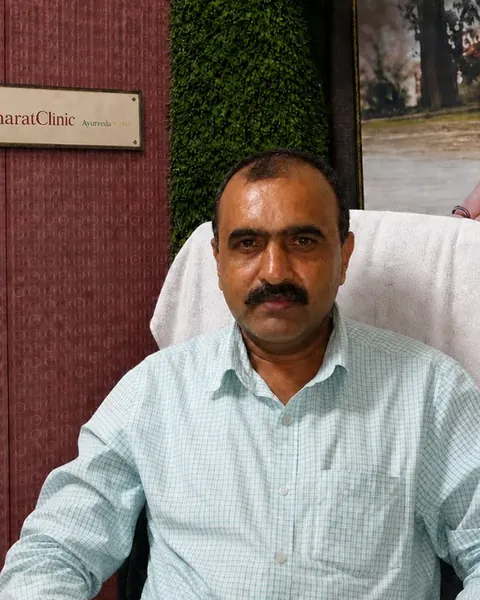
Dr. D.K. Sharma, the Ayurvedic doctor who sees you
Name, qualification and registration BAMS; practising since 1992 4067, Board of Ayurvedic and Unani Systems of Medicine, Punjab
Reviewed by Dr. D.K. Sharma. Approval recorded on 8 November 2026 for this exact text.
Medical content approved by Dr. D.K. Sharma.
A consultation, ₹500
The consultation is with Dr. D.K. Sharma, in person in Ludhiana or by video. You describe a normal day of food and what has changed. Dr. Sharma then discusses whether a test should come first, the sensible next step, and whether treatment at Bharat Clinic fits your needs. Your personalised Dinacharya (daily-routine) guide follows the consultation. If a gainer or syrup has not worked, say which and for how long; it tells him where to look.
Bring four rough clues, nothing perfect:
- what changed (weight, appetite, strength);
- when it changed;
- a normal day of food;
- what you already use, and any recent reports.
Arranging this for your child or a parent? Say who the consultation is for, and their age, when you ask for a time.
To ask for a time, book a consultation, or read how a video consultation works.
The consultation
₹500In person in Ludhiana, or by video
Includes your personalised Dinacharya (daily-routine) guide, prepared after the consultation.
How booking works · no payment until step 3
- You send a request
- Suitability and a time are confirmed
- You pay ₹500
- Your slot is confirmed
- The consultation
Other costs
- Medicine, if advised
- Discussed after your consultation
- Care courses
- Discussed after your consultation
Related reading
Questions before you book
What should I eat to gain weight healthily?
Eat regular meals, with a snack or two in between. Good weight gain foods give energy and protein together: milk, curd, paneer, dal, eggs if you eat them, nuts, and whole grains.
Full answer
Pair it with steady strength activity so the gain is not just fat, and keep sweets, fried food and fizzy drinks as extras, not the plan.1
Looking for a diet plan? The guide Weight kaise badhaye sets out how to eat more without forcing it, with a one-week start.
Oats, daliya and dry fruit. Oats or daliya made with milk, topped with nuts and dried fruit such as dates, raisins, almonds and cashews, are easy ways to add energy and protein for weight gain. Fresh fruit such as bananas, and peanuts or peanut butter, are other easy additions. No single food or dry fruit is "best" on its own: the gain comes from eating more, regularly, overall.
I'm vegetarian. How can I gain weight?
It is very possible. Build each meal around protein and energy together: dal, rajma or chana with rice or roti; paneer, curd and milk; soya; peanuts, nuts and seeds.
Full answer
Add one or two snacks a day, and do strength exercise so the gain becomes muscle.1
Is there an Ayurvedic medicine for weight gain?
Many tablets, capsules, powders and tonics are sold as weight gain medicine ("weight badhane ki dawa"), including Ayurvedic ones.
Full answer
Whether any of them suits you depends on why your weight is low, so this page gives general information and cannot choose one for you.
What is known in general. Healthy gain in a thin adult comes from regular food, strength activity and sleep, and from treating any cause that is found.1 Gainers, tonics and syrups are sold as food or supplements, and quality varies. Some Ayurvedic products have been found to contain lead, mercury or arsenic at toxic levels, and few well-designed trials show that Ayurvedic approaches work.4 Ayurvedic medicines can also have side effects and can interact with other medicines, so tell any doctor you see about everything you take. Read more in are Ayurvedic medicines safe?.
At the clinic. If Dr. Sharma advises an Ayurvedic medicine, he does so after finding why your weight is low, and after checking what else you take and your general health. He tells you what it is and why, alongside food, sleep and activity. A medicine is never the whole plan. There is no single "best" Ayurvedic medicine for weight gain: which one, if any, depends on the reason.
Bhukh nahi lagti. What causes a low appetite?
Everyday reasons such as digestion, meal timing and stress are common.
Full answer
So are thyroid problems, anaemia, diabetes, infections, low mood and some medicines. A real drop in appetite that has lasted weeks is worth investigating rather than covering with a syrup. Low appetite and indigestion has its own page.
Are protein powders or mass gainers safe?
They are food products, not medicine, and quality varies widely in an unregulated market.
Full answer
Most healthy people can get enough protein from ordinary food. If your kidneys aren't fully healthy, or you have another condition, ask before starting.
What about injections or supplements offered at the gym?
Please be careful. Anabolic steroids and similar shortcuts can harm the liver, heart, blood pressure, fertility and mood, and some harm lasts. 3
Full answer
Nobody without a medical qualification should give you an injection. If you have used something, tell the doctor plainly; you won't be judged, and it changes what is checked.
Can I start by video?
Yes, for the history, your reports and a plan. Weight that is falling usually needs an examination in person in Ludhiana; if an examination is needed, you are told and offered a visit.
Understand it better
Why some people stay thin. Usually a mix: 1
- Frame and family pattern: some bodies are built lean and stay in a lower range.
- Appetite and digestion: small meals, long gaps, acidity or loose motions.
- A busy or stressful routine: skipped meals, late nights, long shifts.
- High activity with too little food: work or training that uses more than you eat.
Why a falling weight is different. A genuinely dropped appetite or weight is a symptom: thyroid problems, anaemia, diabetes, infections including tuberculosis, digestive problems, depression and some medicines can all cause it. Covering it with a syrup can delay finding the reason.