

Knee pain treatment (ghutno ka dard) and knee osteoarthritis
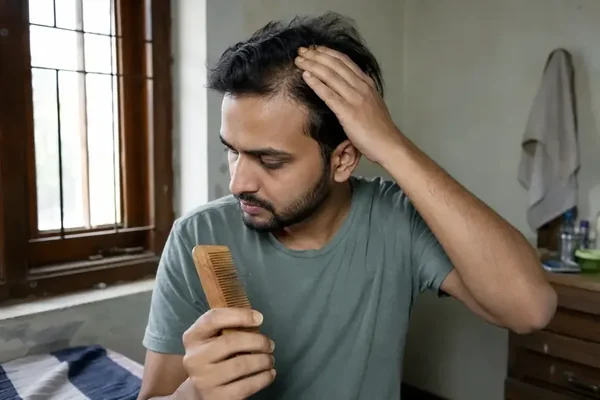
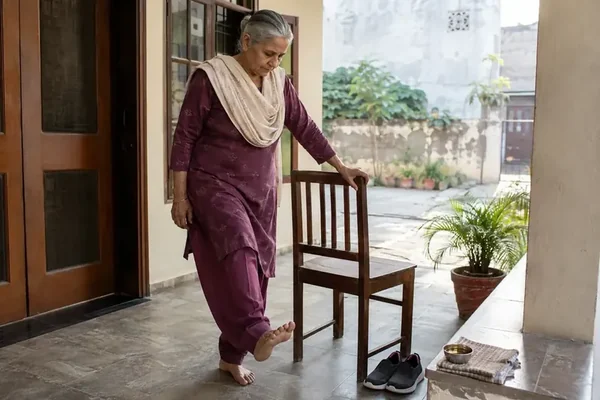
Does this sound like you?
Short answer: knee pain that builds slowly, is worse on the stairs (more coming down than going up) and is stiff after rest is often wear of the joint cartilage, called osteoarthritis.3 Exercise suited to you and weight loss, if you carry extra, help most.2
Urgent signs: a hot, red, swollen knee with fever4, or a knee that will not take your weight after a fall or twist, needs care today; the full list is under “When it should not wait”.
A painful knee usually gives itself away in these ways:
- Your knee aches on the stairs, especially coming down, or when you get up from a chair or the floor.
- It is stiff for a while when you first stand, then eases as you move.
- It feels worse after a long walk or a day on your feet, and better with rest.
- Squatting, sitting cross-legged or kneeling has become hard.
- You feel or hear a grating or clicking, and the knee sometimes swells.
Knee pain is common, and it is worth assessing when it keeps returning, swells or limits what you do.1 If it is another joint, your back or your neck that hurts, start from joint, back and neck pain.
Learn moreSandhivāta: what Ayurveda means by it, and how it compares with osteoarthritisSandhivāta (संधिवात) is Ayurveda's name for painful, stiff joints from vāta.
What it is, and what it isn't
Osteoarthritis is the most common cause of long-lasting knee pain in older adults. The cartilage that covers the bone ends thins, and the joint adjusts with changes in the bone and the tissues around it.3 People also say "ghutne ghis gaye" or "ghutnon ka tel khatam ho gaya". A knee is not an oil tank, and no oil has run out. Cartilage, bone, the joint lining, ligaments and muscles share the work, and any of them can hurt; the examination finds which.
| It is | It isn't |
|---|---|
| Pain linked to use, with short stiffness after rest | A knee that is suddenly hot, red and swollen with fever |
| More likely with age, past injury and extra weight | Explained by an X-ray alone; pain and X-ray often don't match |
| Usually a slow pattern over months or years | Proof that you must stop moving |
If several joints hurt (jodon ka dard) or stay stiff for a long time each morning, read arthritis and joint stiffness, which also lists the usual causes of joint pain. Sudden severe pain in one joint, often the big toe, may be gout; see gout and uric acid.
When it should not wait
Most knee pain can begin with a routine consultation. These patterns are different.
Urgent signs
Get urgent care the same day if:
Arrange a prompt review if: the knee locks or keeps giving way, swelling keeps returning, the pain wakes you at night, or you are losing weight without trying.
How Dr. Sharma assesses it
The knee is examined in person: how it moves, where it is tender, how you stand and walk.
- Where and since when. One knee or both; the front, inside, outside or back; after an injury or gradually.
- The pattern. Stiffness in the morning and how long it lasts; swelling, warmth or redness; night pain; stairs, squatting, walking distance; what eases or worsens it.
- Your load. Work and posture (standing, kneeling, floor sitting), weight, activity and footwear.
- Health and medicines. Diabetes, thyroid or other joint problems; every painkiller, steroid injection, tablet or oil you have used, and for how long. Bring the strip or bottle.
- Reports, and tests only when useful. Bring any X-ray or MRI. Osteoarthritis can usually be recognised without imaging in people over 45 with typical symptoms; a scan or blood test is suggested when the pattern calls for one.2
What treatment can and can't promise
- No single oil or tablet. Knee pain from wear, from inflammation and from the hip need different answers.
- Movement and strength first. Exercise suited to you, and weight loss if you are overweight, are the core of knee pain treatment when the cause is osteoarthritis.2
- Within scope, or referred. Once you have been assessed, you get routine and activity guidance, and Ayurvedic treatment where it suits you. An orthopaedic surgeon or physiotherapist is suggested when that is the right route. Physiotherapy for knee pain means a physiotherapist teaches you strengthening exercises suited to your knee and checks that you do them correctly.
- Honest outcomes. Pain and walking often improve with the right plan; worn cartilage does not grow back, and advanced damage may need an orthopaedic opinion. How long it takes is decided after assessment.
- Knee pain medicine. Painkillers and joint supplements are usually the first thing tried. Some ease a bad day; none rebuilds worn cartilage. An Ayurvedic medicine is considered only after assessment, and no product is named here.
- Follow-up. At a review, Dr. Sharma asks how far you can walk, how the stairs feel and whether swelling has come back, and adjusts the plan.
Your doctor
Your doctor
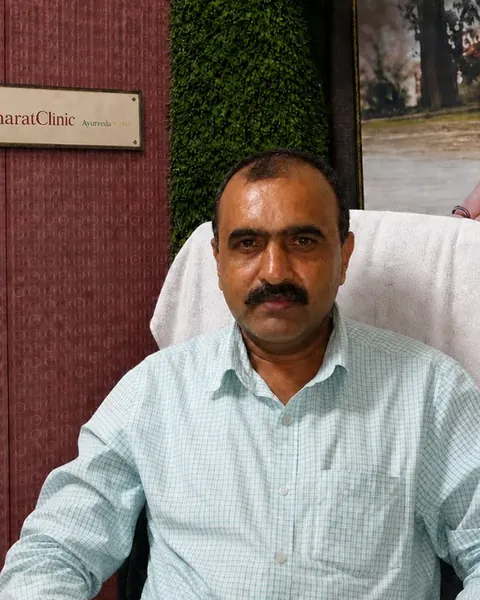
Dr. D.K. Sharma, the Ayurvedic doctor who sees you
Name, qualification and registration BAMS; practising since 1992 4067, Board of Ayurvedic and Unani Systems of Medicine, Punjab
Reviewed by Dr. D.K. Sharma. Approval recorded on 8 November 2026 for this exact text.
Medical content approved by Dr. D.K. Sharma.
A consultation, ₹500
You describe what the knee stops you doing now, such as stairs, the floor or a walk to the market, and the knee is examined. Dr. Sharma then explains the next step: whether you need an X-ray or a specialist, and whether treatment at Bharat Clinic suits you.
To have your knee examined, you can book a consultation with Dr. D.K. Sharma, an Ayurvedic doctor, or read how a video consultation works. The consultation is in person at Samrala Chowk or Focal Point, Gobindgarh, in Ludhiana, or by video to begin. A knee usually needs examining, so most first consultations are in person. The visit usually takes 30 to 60 minutes. Your personalised Dinacharya (daily-routine) guide follows the consultation. Bring your X-rays, MRI and the medicines or oil you use.
The consultation
₹500In person in Ludhiana, or by video
Includes your personalised Dinacharya (daily-routine) guide, prepared after the consultation.
How booking works · no payment until step 3
- You send a request
- Suitability and a time are confirmed
- You pay ₹500
- Your slot is confirmed
- The consultation
Other costs
- Medicine, if advised
- Discussed after your consultation
- Care courses
- Discussed after your consultation
Questions before you book
Is knee pain just old age?
No. Osteoarthritis is more common with age, but injury, weight, work and other joint conditions matter too, and younger people get knee pain for different reasons. The pattern is what points to the cause.
What can I do at home for knee pain?
The simplest knee pain treatment at home is to keep moving within comfort, strengthen the thigh muscles with simple exercises, and lose weight if you carry extra.
Full answer
- For knee joint pain, cycling is a good option, along with walking on level ground, swimming and standing up from a chair.
- Straight-leg raises are a gentle way to start strengthening the thigh. Stop any exercise that makes the pain sharper.
- A warm or cold pack is a simple home remedy for knee pain and can ease a sore day.2
A hot, swollen knee, a knee that locks or gives way, or pain after an injury should be checked rather than treated at home.
Yoga for knee pain: does it help?
Exercise matched to you is part of the standard advice for knee osteoarthritis: strengthening the muscles around the knee and general fitness.2
Full answer
The guideline does not single out yoga for every kind of knee pain. The cause comes first, because swelling, a knee that gives way, an old injury and your age all change what suits you. Pain can rise a little when you start, and support or adjustment helps.2 Gentle movement within comfort is safer than forcing a pose, and a physiotherapist can show what suits your knee.
Does diet matter for knee pain?
Weight matters most. Extra weight adds load to the knee, and losing it is part of the care for knee osteoarthritis if you are overweight.2
Full answer
No food for knee pain has been shown to rebuild worn cartilage, so be wary of any "knee diet" that says it does. Food advice depends on your weight, your other conditions such as diabetes, and your medicines, so it belongs in the assessment, not in a general list. If a toe or ankle swells suddenly, see gout and uric acid.
Why does my knee hurt when I bend it or climb stairs?
Pain at the front of the knee when bending, squatting or using stairs often comes from the joint behind the kneecap, or, in older adults, from wear in the knee (osteoarthritis).
Full answer
Strengthening the thigh muscles usually helps either way.2 The examination tells the two apart.
I'm young. Why do my knees hurt without an injury?
Common causes of knee pain in younger adults, even without an injury, are overuse from sport or a sudden increase in activity, pain behind the kneecap, extra weight and long hours of sitting.
Full answer
A knee that is hot and swollen, or pain in several joints, should be checked for arthritis.
Do I need an X-ray before I come?
Not usually. Bring one if you have it. Osteoarthritis can often be recognised from the history and examination, and an X-ray is suggested when it would change the plan.2
Should I stop walking if my knee hurts?
Usually not. Staying active and strengthening the muscles around the knee are part of the recommended care.2
Full answer
How much, and which kind, depends on your knee, so it is worked out in the consultation.
Can Ayurvedic treatment help me avoid a knee replacement?
No one can tell you that before examining your knee and seeing your X-rays.
Full answer
For some people pain and function improve enough that surgery isn't being discussed; for others an orthopaedic opinion is the honest answer.
Understand it better
What can contribute. The causes of knee joint pain are often several things together23:
- Age and wear: cartilage changes over time, and the joint's repair can't always keep up.
- Load: extra weight, kneeling or squatting work, and weak thigh muscles put more force through the knee.
- Past injury: an old ligament or cartilage injury raises the chance of osteoarthritis later.
- Knee pain in ladies: osteoarthritis is more common in women than in men, so it is one of the first causes checked when a woman's knee aches on the stairs.3
- Other causes of knee pain: problems at the hip, inflammatory arthritis and gout can all show up in the knee.