

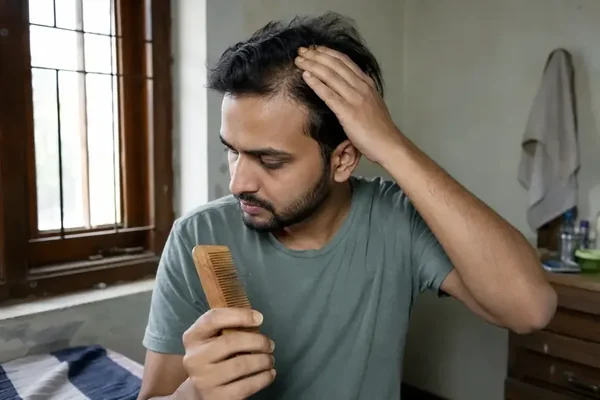


Feeling tense or worried? Stress and anxiety symptoms, and what helps
Does this sound like you?
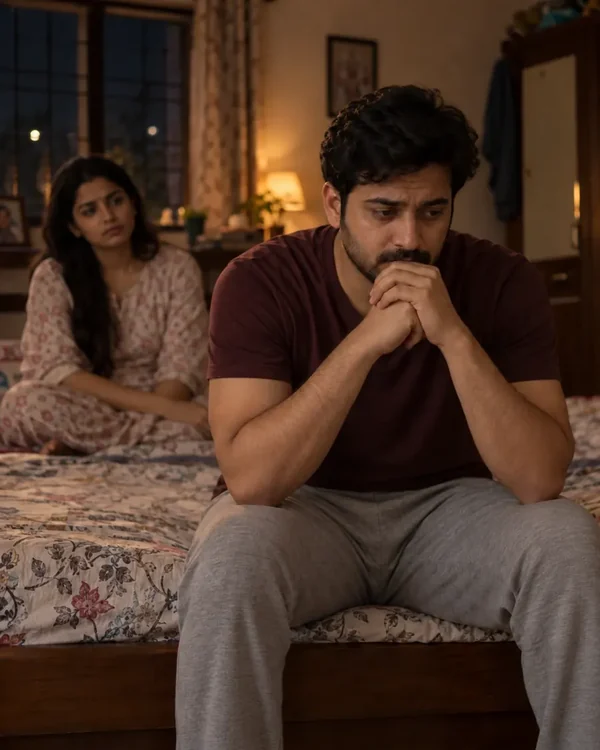
Everyday stress follows a pressure and eases when it passes; anxiety is worry or fear that stays, or comes without a clear reason.1 Worry that lasts for weeks, is hard to control or gets in the way of your day is worth a proper conversation.1
Urgent signs: thoughts of harming yourself or ending your life, or chest pain, fainting or breathlessness, need help now: call 112 or Tele-MANAS on 14416 (toll-free).456 The full list is under “When it should not wait”.
You may notice some of these:
- Your mind keeps going over work, money or family, even when you want to rest (overthinking).
- You feel restless, irritable or "on edge" most days.
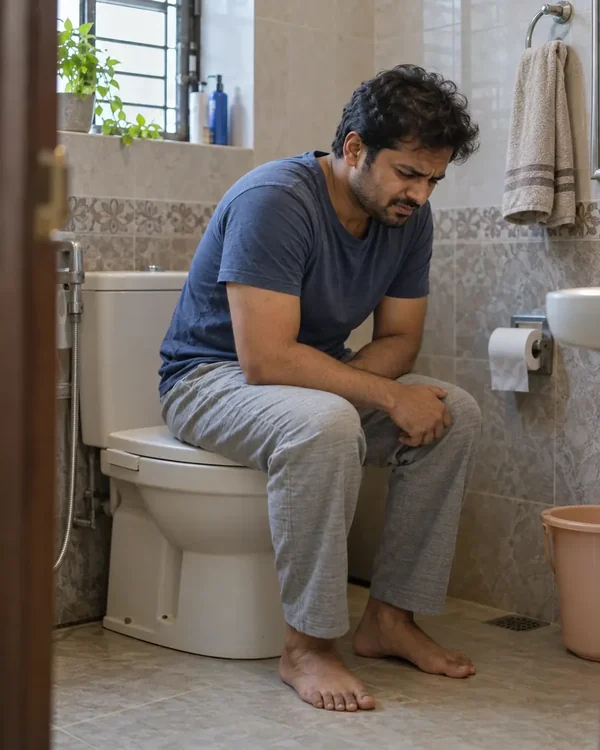
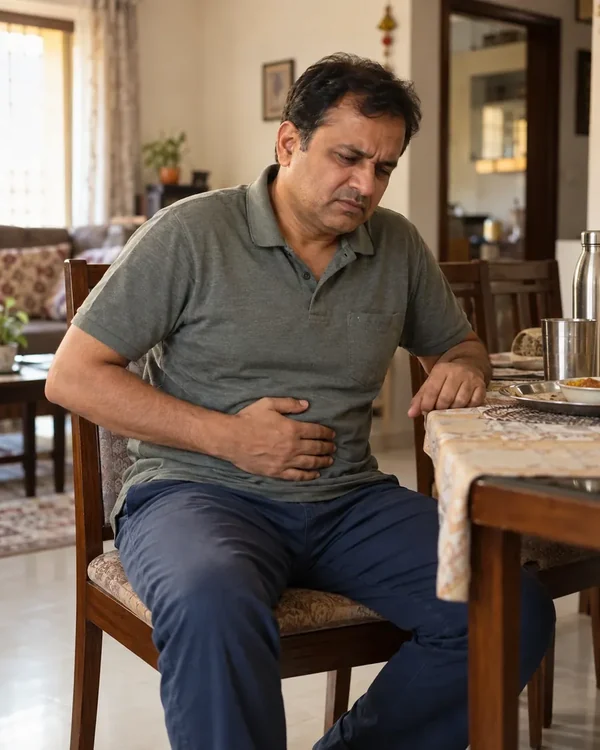
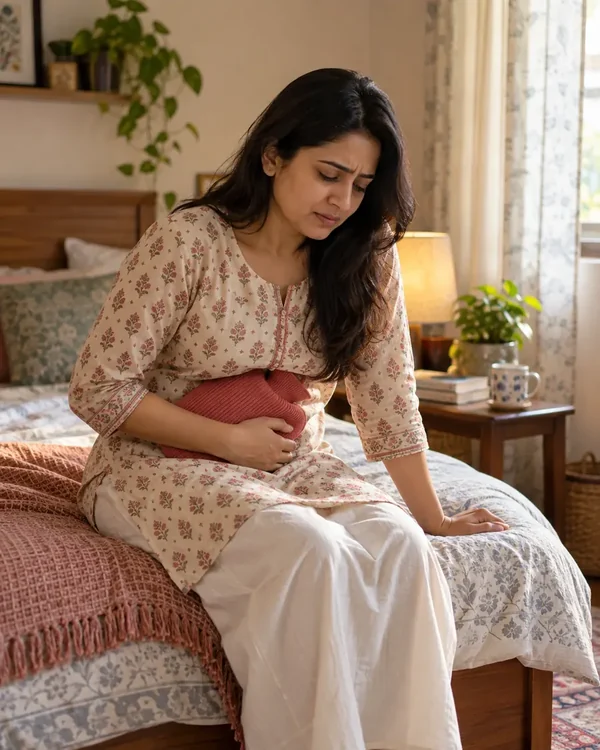
- Your heart races, your chest or shoulders feel tight, or your stomach churns when you are worried (ghabrahat).
- Sleep is harder, and you wake up already tense.
Learn moreChittodvega: what Ayurveda means by it, and how it compares with anxietyChittodvega (चित्तोद्वेग) is Ayurveda's name for an agitated, restless mind.
What it is, and what it isn't
Stress is the body's response to pressure; anxiety is a feeling of worry or fear that can stay after the pressure has passed.1 In Hindi and Punjabi, tanav means stress and ghabrahat means anxiety, and people say "tanav rehta hai", "ghabrahat hoti hai" or "dil ghabrata hai". When worry about many things lasts six months or more, doctors may call it generalised anxiety disorder.2
| It is | It isn't |
|---|---|
| A real, common health experience with treatments that help23 | A sign of weakness or a lack of faith |
| Often physical as well: heart, breath, muscles, stomach, sleep1 | Something you should be able to "switch off" |
| Sometimes linked to thyroid, caffeine, alcohol or a medicine | A reason to stop a prescribed medicine |
In Hindi, Punjabi and Hinglish
Show the words and Hinglish questionsHide the words
| You may say or search | It means |
|---|---|
| ghabrahat (घबराहट; Punjabi ਘਬਰਾਹਟ) | Anxiety or nervousness, often with a racing heart or a tight chest |
| tanav (तनाव; Punjabi ਤਣਾਅ) | Stress or tension: strain from pressure |
| tanav rehta hai, dil ghabrata hai | I feel stressed or tense; my heart feels uneasy with worry |
| chinta (चिंता; Punjabi ਚਿੰਤਾ) | Worry; in everyday use, anxiety |
| anxiety ke lakshan | The symptoms of anxiety |
| ilaj | Treatment or care |
Common questions in Hinglish:
- Anxiety ke lakshan kya hain? Your heart races, your chest or shoulders feel tight, or your stomach churns when you are worried. Worry that lasts for weeks is worth a proper conversation.1 Full answer: “Does this sound like you?”
- Anxiety ka matlab kya hai? Anxiety is worry or fear that can stay after the pressure has passed.1 When worry about many things lasts six months or more, doctors may call it generalised anxiety disorder.2 Full answer: “What it is, and what it isn't”
- Stress kaise kam kare? Regular activity, steady sleep, less caffeine and alcohol, slow breathing and talking to someone you trust help.23 Full answer: “Stress kaise kam kare? What can I do myself?”
- Tanav ke lakshan kya hain? Stress (tanav) usually shows as irritability, poorer sleep, tense muscles and a mind that keeps going over the same worries.1 Full answer: “Does this sound like you?”
- Ghabrahat ho to kya karen? Chest pain, fainting or breathlessness need emergency care first.6 Otherwise, slow breathing, regular activity and talking to someone you trust help. Full answer: “Stress kaise kam kare? What can I do myself?”
- Ghabrahat kyu hota hai? Often the body's alarm stays switched on after stress, poor sleep or worry. Full answer: “Why does ghabrahat happen?”
- Ghabrahat ka ilaj kya hai? Talking therapies such as CBT are the best-supported treatment for lasting anxiety.23 Any medicine is chosen for you after assessment, not from a page. Full answer: “What treatment can and can't promise”
The guide to ghabrahat explains what it means in English, why it comes, what a panic attack feels like, what to do in the moment, and what to know about ghabrahat tablets. Sleep the main problem? See insomnia and poor sleep. Slow thinking and poor focus? See brain fog. The whole area is on the stress and sleep hub.
When it should not wait
Urgent signs
If you have thoughts of harming yourself or ending your life, or someone is at immediate risk, call 112 (India's emergency number) or go to the nearest emergency department now. You can also call Tele-MANAS, the Government of India's mental-health helpline, on 14416 (toll-free).45 Don't wait for an appointment or a message reply.
Get emergency care now for chest pain, fainting or breathlessness with panic-like symptoms: the heart must be ruled out first, even if you have had panic attacks before. The same applies to sudden confusion, a severe headache or new weakness.6
Arrange a prompt review with a psychiatrist, psychologist or physician if:
How Dr. Sharma assesses it
You decide how much to share. The consultation usually covers:
- What changed, and when. Work, exams, money, a loss, an illness or a move; gradual or sudden.
- How it shows. Worry and racing thoughts; heart, breath, muscles, stomach and headaches; what sets it off and what eases it.
- The foundation. Sleep (falling asleep, waking, early waking, snoring), tea and coffee, alcohol, tobacco, screens, shifts, work and family pressure, appetite and weight.
- Mood, in plain questions. For example: over the last two weeks, how often have you felt nervous or on edge, or unable to stop worrying? Felt low, or lost interest in things you used to enjoy? The answers help decide whether a mental-health professional should be involved.27
- Health and medicines. Thyroid, blood pressure, sugar and every medicine or supplement you take. Don't stop a medicine on your own.
- Tests only when useful, such as a thyroid or sugar check, explained before you decide.
- A plan you understand, with a referral if your answers point to depression, panic disorder or severe anxiety.
What treatment can and can't promise
- The reason comes first. Ongoing pressure, too much caffeine, poor sleep, a thyroid problem and an anxiety disorder can feel alike, and they need different things.
- What is well supported: regular activity and sleep, less caffeine and alcohol, and talking therapies such as CBT for lasting anxiety.23
- What the clinic can do, and when it refers. Routine guidance and Ayurvedic treatment alongside ; a psychiatrist, psychologist or physician for depression, severe anxiety, panic disorder, bipolar disorder, psychosis, eating disorders, or alcohol or drug dependence. The clinic says so and refers.
- Medicine is chosen for you, not from a page. This page gives general information (see the questions below). A medicine or herb for you is advised only after assessment and around anything you already take. Buying medicines from the clinic is not set up yet.
- How long it takes. Decided after assessment; it usually improves gradually, with ups and downs.
What the clinic does, in short. Dr. Sharma listens to what sets the stress or anxiety off, asks about sleep, caffeine, health and medicines, and checks whether a physical cause such as a thyroid problem needs a test. For everyday stress he advises routine and Ayurvedic treatment alongside any care you already have. If your answers point to depression, panic disorder or severe anxiety, he says so plainly and refers you to a psychiatrist or psychologist, and he does not treat these alone.
Your doctor
Your doctor
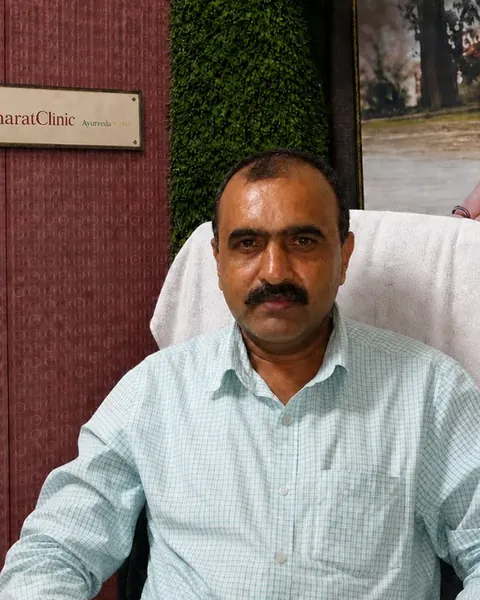
Dr. D.K. Sharma, the Ayurvedic doctor who sees you
Name, qualification and registration BAMS; practising since 1992 4067, Board of Ayurvedic and Unani Systems of Medicine, Punjab
Reviewed by Dr. D.K. Sharma. Approval recorded on 8 November 2026 for this exact text.
Medical content approved by Dr. D.K. Sharma.
A private consultation, ₹500
A consultation is useful when worry has lasted for weeks, is affecting sleep, work or health, or you cannot tell whether it is stress, anxiety or something physical. Dr. Sharma takes the history described above, discusses the sensible next step, tells you plainly when a psychiatrist or psychologist should be involved, and explains how supportive Ayurvedic care might fit alongside. A personalised Dinacharya (daily-routine) guide follows the consultation.
What to bring: when it began, what sets it off, your sleep, your tea or coffee, and the strips or prescriptions of anything you take. By video, sit somewhere private, with headphones if others are at home.
The consultation
₹500In person in Ludhiana, or by video
Includes your personalised Dinacharya (daily-routine) guide, prepared after the consultation.
How booking works · no payment until step 3
- You send a request
- Suitability and a time are confirmed
- You pay ₹500
- Your slot is confirmed
- The consultation
Other costs
- Medicine, if advised
- Discussed after your consultation
- Care courses
- Discussed after your consultation
You can book a consultation in Ludhiana or start by video.
Related reading
Questions before you book
Is what I feel stress or anxiety?
Often both, and you don't need to know which before you come.
Full answer
How long it has lasted and how much it affects your day matter more than the label.1
What are the types of stress?
Doctors usually speak of two kinds: short-term (acute) and long-term (chronic) stress.
Full answer
Short-term stress settles when the pressure passes. Long-term stress goes on for weeks or months and is more likely to affect sleep, mood and health.
Stress kaise kam kare? What can I do myself?
Regular physical activity, a steady sleep routine, less caffeine and alcohol, slow breathing, and talking to someone you trust all help.
My heart races. How do I know it isn't my heart?
You can't be sure on your own. Chest pain, fainting or breathlessness need emergency care first.
Full answer
A racing heart that keeps returning deserves a check of the heart and thyroid before it is put down to anxiety.6
Is there an Ayurvedic medicine for anxiety? Can ashwagandha or brahmi help?
This page gives general information. It cannot choose a herb or medicine for you.
Full answer
What is known in general. Talking therapies such as CBT are the best-supported treatment for lasting anxiety.23 Few well-designed trials show that Ayurvedic approaches work, and some Ayurvedic products have been found to contain lead, mercury or arsenic at toxic levels.9 Tell every doctor you see what you take.
At the clinic. Whether any herb suits you, and whether it is safe with your other medicines, is decided after assessment, never from a label.
I take medicine from a psychiatrist. Should I stop it?
No. Don't stop or reduce it on your own; some medicines cause withdrawal effects if stopped suddenly.
Full answer
Any advice here is planned around it, with your prescribing doctor.8
Why does ghabrahat happen?
Often it is the body's alarm system staying switched on after a long stretch of stress, poor sleep or worry; tea, coffee and some medicines can add to it.
Full answer
A thyroid problem or a heart rhythm problem can feel similar, which is why they are checked. The guide to ghabrahat goes through it in more detail.
What is social anxiety?
Social anxiety disorder, also called social phobia, is a long-term and overwhelming fear of social situations, such as talking to unfamiliar people, with a fear of being judged or embarrassed.10
Full answer
Cognitive behavioural therapy (CBT) is generally considered the most effective treatment.10 If it limits your daily life, a psychiatrist or psychologist is the right first step, and the clinic will say so plainly.
Can I start by video?
Yes. A first conversation about stress and anxiety works well by video.
Understand it better
What keeps anxiety going. Usually several things together:1
- Pressure that doesn't let up: work, money, exams, caring for someone, conflict at home.
- The body's alarm: a racing heart or tight breath is felt as danger, which brings more worry.
- Avoidance: staying away from what feels hard brings short relief and makes the next time harder.
- Sleep and stimulants: poor sleep, a lot of tea or coffee, nicotine and alcohol all raise tension.
- Health and medicines: an overactive thyroid and some medicines can feel like anxiety.
Panic attacks are sudden waves of intense fear with physical symptoms. When they keep happening, it is called panic disorder, and a psychologist or psychiatrist should be involved.6