







Dandruff and an itchy scalp: why it keeps coming back, and what helps
Does this sound like you?
Short answer: Dandruff is common, harmless flaking of the scalp, usually a mild form of seborrhoeic dermatitis, and you cannot catch it from someone else.12 Regular washing and an anti-dandruff shampoo usually keep it under control, but it tends to come back. Thick, raised, sore or spreading patches need a check.
Urgent signs: if your face, lips or tongue swell, or breathing gets hard, after a hair dye or new product, get emergency help now.3 The other signs are under “When it should not wait”.
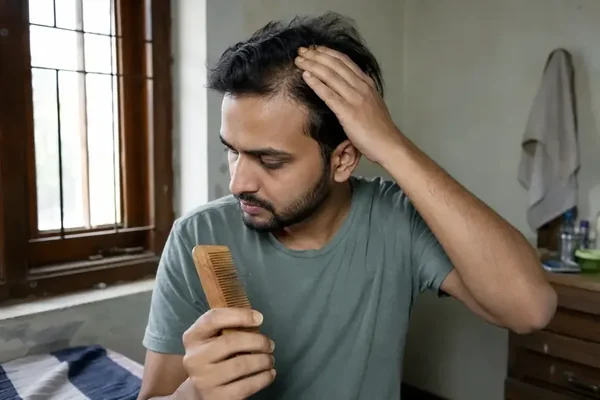
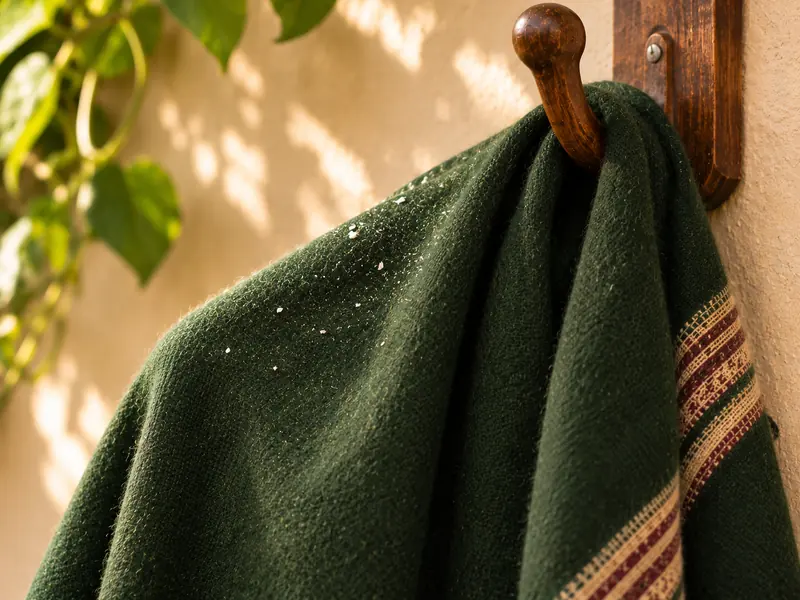
You may have white flakes on a dark shirt, an itch you try not to scratch in public, or a shampoo that worked for a month and then stopped. None of it means poor hygiene.
- White or yellowish flakes on your shoulders or in your hair.
- An itchy scalp, worse when you sweat, under a cap or helmet, or in winter.
- The scalp feels oily and flaky at the same time, or tight and dry.
- Redness or flaking at the hairline, eyebrows, beside the nose or behind the ears.
- An anti-dandruff shampoo helps for a while, and then it all comes back.
When dandruff keeps returning, it is worth knowing which kind of flaking you have, because each kind needs different care.1
Learn moreDarunaka: what Ayurveda means by it, and how it compares with dandruffDarunaka (दारुणक) is Ayurveda's name for a dry, itchy, flaking scalp.
What it is, and what it isn't
Dandruff (rusi) is flaking of the scalp, often with itching (sir mein khujli). Most of it is a mild form of seborrhoeic dermatitis, linked to the scalp's oil and a yeast that normally lives on the skin12. Other conditions can look similar: psoriasis, eczema, a reaction to a hair product, or a fungal infection.
| Often dandruff | Worth a closer look |
|---|---|
| Loose, small flakes and mild itching | Thick, silvery, raised patches, or patches at the elbows and knees too |
| Comes and goes with weather and sweat | Hair coming out in a scaly, sore patch |
| Settles with regular washing | Red, weeping or crusted skin, or a rash after hair dye |
| Itching so strong it wakes you, or nits on the hair |
A dry scalp is not always the reason for flaking.1
When it should not wait
Dandruff is not an emergency. These patterns are different.
Urgent signs
Get emergency help now if your face, eyes, lips or tongue swell, or you have trouble breathing, after using a hair dye or a new product.3
Arrange a prompt medical review if:
How Dr. Sharma assesses it
Most of it is a conversation, followed by a look at the scalp.
- The pattern. When it started. Oily or dry flakes. How itchy. Whether it comes with the seasons, sweat, a cap or helmet. Whether the face, ears, chest or other skin are affected.
- What you use. Every shampoo, oil, dye, gel and home remedy, and how often you wash. Bring them, including any cream from the chemist.
- Health that matters. Family history of psoriasis or eczema. Diet, sleep and stress. Recent illness, other skin problems, and every medicine you take.
- Hair fall alongside it. If you are also losing hair, both are looked at together; see hair fall.
- A look at the scalp. In person, where possible. By video, you do not need to send a photograph beforehand; the doctor may ask you to show the scalp on camera during the call. You can decline, and a visit is offered instead.
- Tests or a referral, only when useful, for example a skin test if a fungal infection is possible, with the reason explained.
What treatment can and can't promise
- Which kind first. Dandruff treatment depends on which kind of flaking you have. Dandruff, psoriasis, eczema and a fungal infection need different care; one product does not fit them all.
- Honest outcomes. Dandruff tends to come and go over years. It can usually be kept under control, but it may return with weather, sweat or stress. 1
- Everyday care. Washing routine, how and whether to oil, and what to stop using, are in your personalised Dinacharya (daily-routine) guide, which follows the consultation. Ayurvedic treatment is added when the assessment supports it. No product is named here.
- How long it takes. That is decided after assessment. Give a plan a fair trial before changing it.
- Referral when it is needed. Severe psoriasis, an infection that needs prescription treatment, or a reaction that needs patch testing goes to a dermatologist, and you are told why.
Your doctor

Your doctor
Dr. D.K. Sharma, the Ayurvedic doctor who sees you
Name, qualification and registration BAMS; practising since 1992 4067, Board of Ayurvedic and Unani Systems of Medicine, Punjab
Reviewed by Dr. D.K. Sharma. Approval recorded on 8 November 2026 for this exact text.
Medical content approved by Dr. D.K. Sharma.
The consultation, ₹500
A shampoo that works for a while and then stops usually means the scalp problem was not the one the shampoo was meant for. In the consultation, Dr. Sharma asks what makes the flaking worse and looks at what you use. He can then discuss the next step, and tell you plainly if a dermatologist should see you. You can book a consultation in person in Ludhiana, or arrange one by video.
Bring what you can:
- the date it started, and what makes it worse;
- the shampoos, oils and creams you use, in their bottles.
The consultation
₹500In person in Ludhiana, or by video
Includes your personalised Dinacharya (daily-routine) guide, prepared after the consultation.
How booking works · no payment until step 3
- You send a request
- Suitability and a time are confirmed
- You pay ₹500
- Your slot is confirmed
- The consultation
Other costs
- Medicine, if advised
- Discussed after your consultation
- Care courses
- Discussed after your consultation
Related reading
Questions before you book
Is it dandruff or psoriasis?
They can look alike. Psoriasis tends to form thicker, raised, well-defined patches, often past the hairline, and may appear on the elbows, knees or nails.4
Full answer
A look at the scalp usually tells them apart. Psoriasis and the clinic's role in it are on the eczema, psoriasis and white patches page.
Can dandruff cause hair fall?
Sometimes, in part. An inflamed, itchy scalp and scratching can make hair break and shed more, so some hair loss is possible, and settling the scalp often helps.
Full answer
But dandruff is rarely the whole reason for thinning, so the hair is checked too; what helps hair fall itself is in how to control hair fall.
Should I oil my scalp for dandruff?
It depends. Applying oil can increase dandruff on an oily, flaky scalp: it can feed the yeast linked to dandruff and make flaking worse.
Full answer
On dry, tight skin, oil can soften the scalp. Whether it suits you is part of the assessment.
What can I do at home for dandruff?
Wash your scalp regularly with a gentle shampoo and rinse it well.
Full answer
Avoid very hot water and harsh products, and go easy on oil if your scalp is oily and flaky. These gentle steps are the natural way to start; the evidence on kitchen remedies such as lemon is in the next answer. If the flakes are thick, spread past the hairline or bleed, get the scalp checked.
How do I get rid of dandruff quickly, or for good?
No shampoo removes dandruff in a single wash, and no home remedy clears it in one day.
Full answer
An anti-dandruff shampoo containing ketoconazole, coal tar or salicylic acid, used as the label directs for up to four weeks, is the usual first step, and you may need to try more than one type.1 Dandruff tends to come and go, so the aim is to keep it under control rather than to promise a permanent cure. There is no good evidence that lemon or other kitchen remedies remove dandruff, and lemon can irritate the scalp. See a doctor if it has not improved after four weeks, or the scalp is red, swollen or very itchy.1
Is dandruff contagious? Can it spread?
No. Dandruff is not harmful, and it does not spread from one person to another, so you cannot catch it.1
Full answer
If flaky, itchy patches appear on your face or elsewhere on your body, have them checked; see "When it should not wait".1
Is dandruff caused by not washing enough?
Not usually. It is not a hygiene problem, though washing more regularly often helps.
Full answer
Very hot water and harsh products can irritate the scalp further.1
Understand it better
Why it happens, and what makes it worse. Usually a mix12:
- Oil and yeast: an oily scalp gives the yeast that lives on everyone's skin more to feed on.
- Weather and sweat: cold, dry winters, and sweat trapped under caps, helmets and turbans.
- Stress and poor sleep: flares are often noticed at stressful times.
- Products: heavy oils, gels, dyes and frequent product changes can irritate or confuse the picture.
- Other skin conditions: psoriasis and eczema run in families and can start on the scalp.