






Constipation (kabz): hard stool, straining, home care and treatment

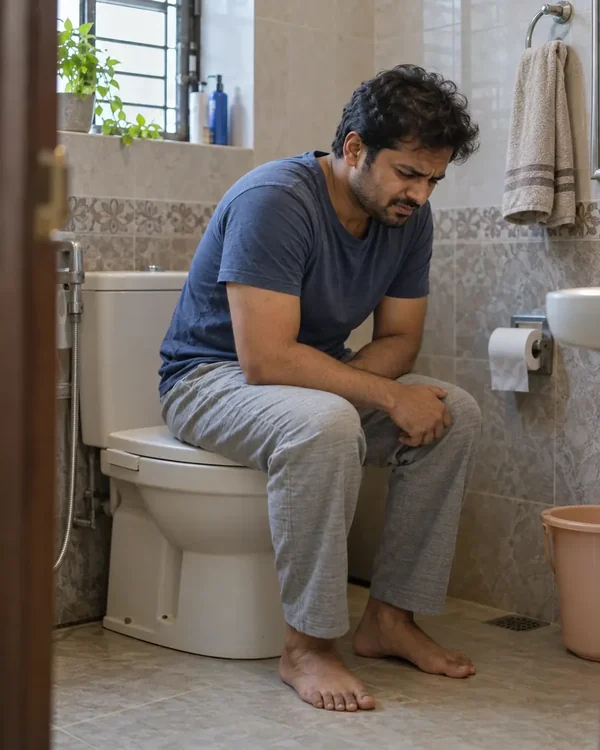
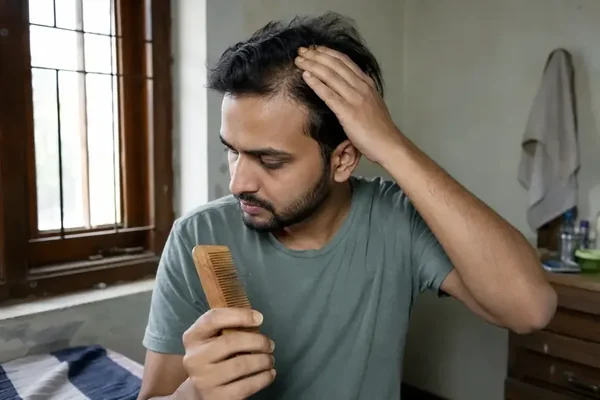
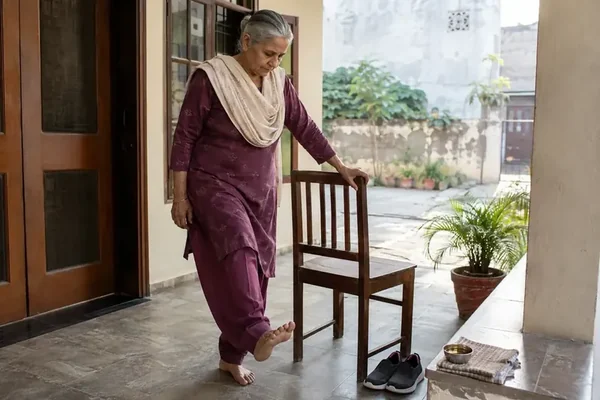
Does this sound like you?
Constipation (kabz, also written kabj, कब्ज़) means stool that is hard, infrequent or difficult to pass, and it is a change from your own usual pattern, not one slow day. It is common and usually not serious.1 This page covers home care, laxatives, isabgol and triphala, and the signs that mean you should be seen.
Urgent signs: severe or worsening stomach pain with vomiting, a hard swollen stomach with no stool or gas, black stool or heavy bleeding need care today. The full list is under “When it should not wait”.
- Stool is hard, dry or lumpy, and passing it takes effort.
- You strain, sit for a long time, or try more than once.
- After going, it feels as if the bowel hasn't fully emptied ("pet saaf nahi hota").
- You go less often than is usual for you, or the urge rarely comes.
- You have started relying on a powder, tablet or syrup to go.
These are the usual signs of kabz (kabz ke lakshan). When it keeps returning it is worth a proper look.1
Learn moreVibandha: what Ayurveda means by it, and how it compares with constipationVibandha (विबन्ध) is Ayurveda's word for a blocked, hard or irregular bowel.
What it is, and what it isn't
Doctors look at three things when they call it constipation: how hard the stool is, how often you go, and how much effort it takes12. The meaning of constipation in Hindi and Punjabi is kabz or kabj, and people also say "pet saaf nahi hota". Ayurveda's word for it is vibandha. "Kabz" can mean hard stool, no urge, straining, pain or incomplete emptying, and each leads to a different question.
| It is | It isn't |
|---|---|
| A repeated pattern of hard stool, straining or infrequent stool | One slow day after travel, a change of food or an illness |
| Often linked to fluids, fibre, activity, routine and medicines | Proof that "toxins" are building up inside you |
| Sometimes a sign of another condition that needs checking | Something to settle by taking more and more laxatives |
If the main problem is something else, these pages fit better:
- fullness and swelling: gas and bloating
- loose motions, or loose motions alternating with constipation: loose motions and IBS
- cutting pain at the back passage: anal fissure
- blood in the stool: blood in stool
In Hindi, Punjabi and Hinglish
Show the words and Hinglish questionsHide the words
| You may say or search | It means |
|---|---|
| kabz, kabj, कब्ज (also written कब्ज़), ਕਬਜ਼ | Constipation: stool that is hard, infrequent or difficult to pass.12 |
| kabj ke lakshan, कब्ज के लक्षण | The usual signs of constipation, listed in the first section. |
| pet saaf nahi hota | The feeling that the bowel hasn't fully emptied after going. |
| kabj ka ilaj | What to do about constipation: see "What treatment can and can't promise". |
| vibandha | Ayurveda's word for constipation (see vibandha). |
Common questions in Hinglish:
- Kabj kya hai, aur kabj kaise hota hai? Constipation means stool that is hard, infrequent or difficult to pass. It is often linked to fluids, fibre, activity, routine and medicines.12 Full answer: “What it is, and what it isn't”
- Kabj ke lakshan kya hain? Hard or lumpy stool, straining, a feeling of not emptying fully (pet saaf nahi hota), and going less often than is usual for you. If it keeps returning, get it looked at.1 Full answer: “Does this sound like you?”
- Kabj ka ilaj kya hai? Widely accepted steps are more fluids, gradually more fibre, regular activity and not delaying the urge.1 Full answer: “What treatment can and can't promise”
- Kabj ka gharelu upay kya hai, aur kabj kaise dur kare? Drink fluids through the day, increase fibre gradually, walk every day, and go to the toilet at a regular time without rushing. If this isn't helping, or a warning sign appears, get it checked.1 Full answer: “Kabz ka gharelu upay: what can I do at home?”
When it should not wait
Most constipation is not an emergency. These patterns are different.
Urgent signs
Get urgent in-person care now if:1
- you have severe or worsening stomach pain with vomiting
- your stomach is hard or very swollen, or you can't pass stool or gas at all
- there is heavy bleeding or black, tarry stool
- you feel faint or very weak
Arrange a prompt medical review if:13
- your bowel habit has changed for several weeks without a clear reason
- there is blood in the stool, unexplained weight loss, fever, or stomach pain that doesn't settle
- laxatives are needed more and more often, or have stopped working
A change like this may need a gastroenterologist.
Children: please don't give a child adult remedies or a reduced adult dose. A child with ongoing constipation needs a doctor who assesses them directly, usually a paediatrician.1
How Dr. Sharma assesses it
Most of it is a conversation about your usual pattern and what has changed.
- The bowel pattern. How often you go, what the stool is like, how much effort it takes, whether the urge comes, whether you feel empty afterwards, and when this began.
- What comes with it. Bloating, pain and where it sits, pain or bleeding at the back passage, appetite, and whether the pattern alternates with loose motions.
- Your day. Meal times and what you usually eat, water through the day, activity, sleep, travel, and whether you hold back the urge at work or on the move.
- Medicines and remedies. Everything you take, including painkillers, iron, antacids and any laxative or powder, and how often. Bring the strip or packet you use. Don't stop a prescribed medicine on your own.
- Tests or a referral, only when useful. You are examined or sent for a blood test only if your symptoms call for it, and the reason is explained before you decide. By video, Dr. Sharma can take the history and give guidance; an examination needs a visit.
What treatment can and can't promise
- No single powder. There is no one diet, churna or syrup that suits every cause of constipation. The plan follows the cause.
- Routine first. Widely accepted constipation treatment starts with more fluids, increasing fibre gradually, regular activity, and not delaying when the urge comes1. Sudden large amounts of fibre can make bloating worse for some people.
- After assessment. You get diet and routine guidance and, if it suits you, Ayurvedic treatment for constipation. If your symptoms need tests or a specialist, you are referred and told why.
- Laxatives reviewed, not normalised. If you rely on one, the consultation looks at why.
- About "constipation medicine" (kabj ki dawa). Laxative tablets, syrups and powders, fibre powders, tonics and Ayurvedic medicines for constipation work in different ways; which one, if any, suits you is decided after the assessment, and no product is named here. For indigestion or several problems together, see all digestion concerns.
- Diet chart. No fixed constipation diet chart suits every pattern. The fluids, fibre and routine steps in the home-care answer are the base, and food is then adapted to your pattern and your Dinacharya (daily-routine) guide after assessment.
- How long it takes. This is decided after the assessment and reviewed as you respond.
- Long-standing kabz (purani kabj). Constipation that has lasted months or years is still read from your pattern, what you take and any warning signs; a change that lasts several weeks needs a prompt review.
Your doctor

Your doctor
Dr. D.K. Sharma, the Ayurvedic doctor who sees you
Name, qualification and registration BAMS; practising since 1992 4067, Board of Ayurvedic and Unani Systems of Medicine, Punjab
Reviewed by Dr. D.K. Sharma. Approval recorded on 8 November 2026 for this exact text.
Medical content approved by Dr. D.K. Sharma.
A consultation, ₹500
If you have come to rely on a powder or syrup just to go, a consultation is the place to ask why the bowel needs it. You explain your usual pattern, when it changed and what you take. Dr. Sharma can then discuss the next step, whether any test is needed, and whether treatment at Bharat Clinic suits you. See how to book, or read how a video consultation works.
Dr. Sharma sees patients with constipation in person at Samrala Chowk or Focal Point, Gobindgarh, in Ludhiana, or by video if you cannot come to Ludhiana. A consultation usually takes 30–60 minutes, and your personalised Dinacharya (daily-routine) guide is prepared after it. Bring what you can: your usual pattern and when it changed, what you take and how often, and any reports.
The consultation
₹500In person in Ludhiana, or by video
Includes your personalised Dinacharya (daily-routine) guide, prepared after the consultation.
How booking works · no payment until step 3
- You send a request
- Suitability and a time are confirmed
- You pay ₹500
- Your slot is confirmed
- The consultation
Other costs
- Medicine, if advised
- Discussed after your consultation
- Care courses
- Discussed after your consultation
Questions before you book
How many days without going is too many?
There is no single number for everyone. What matters is a change from your usual pattern, and whether it comes with pain, vomiting, swelling, bleeding or not passing gas. Those need care sooner.1
I go every day. Can it still be constipation?
Yes. If the stool is hard, painful, or you don't feel empty afterwards, it can still be constipation.
Full answer
How easily you go matters as much as how often.
Kabz ka gharelu upay: what can I do at home?
To get relief from constipation, start with fluids, fibre, a daily walk and a regular toilet time:
Full answer
- Drink water and other fluids through the day, and avoid alcohol.1
- Increase fibre gradually: oats, wheat bran or atta with the bran left in, linseed (alsi), dal, vegetables, and fruit such as apples and grapes.1
- Walk every day. Go to the toilet at a regular time without rushing, and don't hold back when the urge comes.1
- Rest your feet on a low stool so that your knees are above your hips.1
Indian home remedies for constipation such as these are about routine and work over days, not instantly; isabgol, for example, can take up to about three days to work.4
If this isn't helping, or any warning sign above appears, get it checked.
Is curd (dahi) good for constipation?
Plain curd is a normal part of a meal, but it has not been shown to treat constipation.
Full answer
The advice for constipation puts fibre, fluids and routine first.2 Some probiotic products and fermented milks have been tested. In one trial of a probiotic fermented milk, the placebo group improved as much as the treated group. A review of probiotics found results that varied by strain.56 So a bowl of curd can sit alongside fibre and water, but it should not replace them or delay a check if constipation lasts.
Can constipation cause stomach pain?
Yes. Hard stool and trapped wind can cause cramps, bloating and a dull ache in the lower stomach.
Is it safe to take a laxative, pet saaf tablet or churna regularly?
Some laxatives are appropriate in particular situations, but frequent or increasing use without a review can hide the pattern and cause side effects.
Full answer
Tablets and powders sold to "clean the stomach" (pet saaf karne ki dawa) are usually laxatives of one kind or another, so the same caution applies. Tell the doctor what you use and how often.
Is isabgol (psyllium husk) or triphala churna good for constipation?
Isabgol is a bulk-forming fibre. This kind of laxative adds fibre to the stool to make it bigger and softer.
Full answer
It can take up to about three days to work, and it needs plenty of fluids.4 Check with a pharmacist or doctor first if you are pregnant or breastfeeding, have difficulty swallowing or a heart condition, have Crohn's disease or ulcerative colitis, or take opioid painkillers.4
Triphala and other churnas are widely used in Ayurveda. No product is recommended here, and it is sensible to ask the doctor before starting one, especially if you take other medicines. How much to take and when differs by product and person, so follow a doctor's or pharmacist's advice rather than a pack or a video.
Can constipation cause piles or a fissure?
Hard stool and straining can contribute to swelling or a tear at the back passage.
Full answer
Pain, a lump or bleeding there should be assessed rather than assumed; see piles and anal fissure.
My child is constipated. Can you advise?
Please don't give your child an adult remedy or a reduced adult dose.
Full answer
A child with ongoing constipation needs a doctor who assesses them directly, usually a paediatrician.1
Why do women get constipated more often?
Common causes of constipation in women include pregnancy and the time after giving birth.1
Full answer
The simple steps in the home-care answer above are safe to try in pregnancy, but check with a pharmacist or doctor before taking any laxative.14 Many women also notice changes around their periods, and iron tablets, too little water or holding back when away from home can add to it. If it is new and keeps going, especially with bleeding or weight loss, get it checked.
Can I start by video?
Yes. You can have the consultation by video instead of coming to Ludhiana.
Full answer
If an examination is needed, you'll be told and offered a visit.
Understand it better
Kabj kyu hoti hai? What can contribute. Usually more than one thing2:
- Fluids, fibre and meals: too little water, low fibre, irregular or skipped meals.
- Routine: little activity, travel, poor sleep, or often holding back the urge.
- Medicines: some painkillers, iron, antacids and other medicines can slow the bowel.
- Other conditions: pregnancy, thyroid problems, diabetes, pelvic-floor difficulty, or a bowel condition that needs its own tests.