
The names
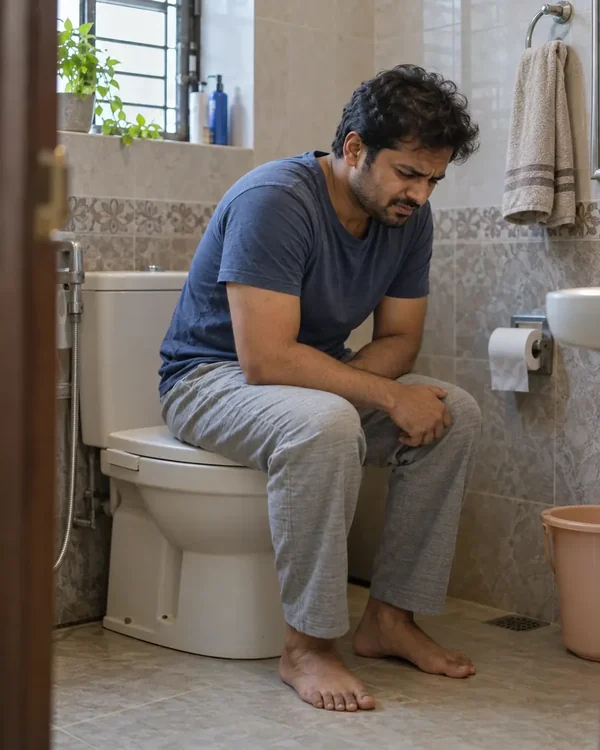
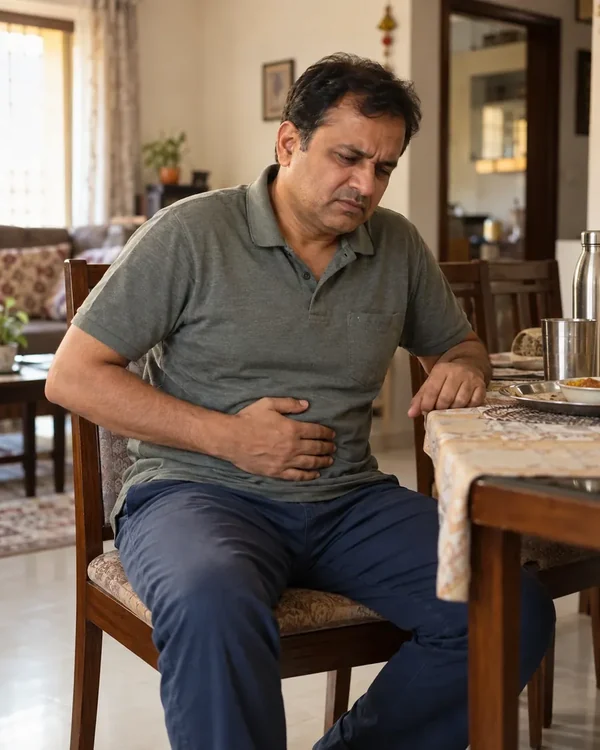
Arsha meaning in Ayurveda. Arśa means a fleshy swelling at the anal canal. It is the classical word for piles, or bawasir.
Urgent signs: Bleeding that is heavy or does not stop, black or very dark stool, or feeling faint needs care today. Bleeding that keeps returning or a change in bowel habit lasting weeks should be checked soon. The full list is under "When it should not wait" on Piles (bawasir).
| Language | Name |
|---|---|
| Sanskrit | Arśa or arśas (अर्श): a fleshy swelling at the anal canal |
| Hindi | Bawasir; khooni bawasir (bleeding), baadi bawasir (without bleeding) |
| Punjabi | Bawaseer, khooni bawaseer, baadi bawaseer (ਬਵਾਸੀਰ, ਖ਼ੂਨੀ ਬਵਾਸੀਰ, ਬਾਦੀ ਬਵਾਸੀਰ) |
| English | Piles, haemorrhoids |
How Ayurveda describes it
In Ayurveda, arsha is a fleshy swelling in the anal canal linked with weak digestion (agni) and a disturbed apāna vāyu, the downward-moving current that governs the release of stool.1 Apāna is a traditional way of describing function, not literal air or modern anatomy. The classical texts describe dry types, with pain and hard stool, and wet, bleeding types.1
The causes named include constipation, straining, long sitting, holding back the urge and heavy, hard-to-digest food.1 Care starts with correcting digestion and bowel habit through diet and routine and, where a doctor advises after examination, medicines.
How modern medicine describes it
Piles are swollen cushions of blood vessels and tissue in the anal canal. Everyone has these cushions; they cause symptoms when they enlarge or slip down.23 Internal piles may bleed bright red blood with little pain; external piles sit under the skin and can become very painful if a clot forms.2
Common contributors are constipation, straining, pregnancy and long sitting on the toilet.2 Diagnosis is by examination; further tests are used when bleeding comes with warning signs.3 Treatment ranges from more fibre and fluid, and creams, to clinic procedures such as banding and, for larger piles, surgery.4
Where they agree, and where they differ
| Ayurveda (arsha) | Modern medicine (haemorrhoids) | |
|---|---|---|
| The core problem | A fleshy swelling at the anal canal | Enlarged or slipping vascular cushions |
| Bowel habit | Central: constipation, straining, holding the urge | Central: constipation and straining |
| The mechanism | Weak agni and disturbed apāna vāyu | Pressure on the cushions and their support |
| Types | Dry and bleeding types | Internal and external, graded by examination |
| Care | Digestion, diet, routine; medicines after examination, or referral | Fibre, fluid, creams; banding or surgery when needed |
Both views put bowel habit at the centre, and both agree that the stage of the piles, found on examination, decides what is done.
What the evidence does and doesn't show
- Shown: more fibre and fluid, and not straining or sitting long on the toilet, ease symptoms for many people.23
- Not shown: that all bleeding from the back passage is piles; other causes need ruling out.3
- Limited: clinical trials of Ayurvedic treatments have mostly been few, small or not well designed, so firm conclusions about arsha cannot be drawn. 5
- Not a substitute: an Ayurvedic label doesn't replace an examination when there are warning signs (a change in bowel habit, dark or heavy bleeding, weight loss, tiredness).
What this means for you
If a lump, itching or bleeding keeps returning, the useful step is an examination to confirm what it is and how far it has gone, with a look at bowel habit and diet. Note when the bleeding happens (during stool, after, or unrelated), whether anything comes down, and which creams you have used.
This page does not describe or compare products, including any sold under the name arsha.
Read next
- Piles (bawasir): symptoms, types and treatment
- anal fissure: sharp pain during stool; blood in stool: bleeding
- parikartika: the Ayurvedic view of a fissure, or all piles and back-passage concerns
A consultation with Dr. D.K. Sharma (BAMS) is ₹500, in person in Ludhiana or by video. The questions are about how long it has been going on, the bleeding, your bowel habit and what you have tried, so that you and Dr. Sharma can decide what to look into first. A personalised Dinacharya (daily-routine) guide follows. Bharat Clinic is a clinic, not a hospital; Choosing a piles doctor in Ludhiana explains what to look for.
Sources
- Suśruta Saṃhitā, Nidānasthāna, chapter on arśas; Caraka Saṃhitā, Cikitsāsthāna, chapter on arśas (classical sources).
- NHS. Piles (haemorrhoids). nhs.uk.
- NICE Clinical Knowledge Summaries. Haemorrhoids. cks.nice.org.uk.
- American Society of Colon and Rectal Surgeons. Clinical Practice Guidelines for the Management of Hemorrhoids.
- NCCIH (US National Institutes of Health). Ayurvedic Medicine: In Depth. Last updated January 2019. nccih.nih.gov.
Medical content approved by Dr. D.K. Sharma.
Reviewed by Dr. D.K. Sharma. Approval recorded on 8 November 2026 for this exact text.