
The names
Dhat meaning in Ayurveda. In Ayurveda, dhātu means a tissue that supports the body, and śukra dhātu is the reproductive tissue. In everyday Hindi, "dhat" usually means a worry about losing semen in the urine, which modern medicine understands very differently, as Dhat syndrome.
Urgent signs: Severe pain in a testicle, the pelvis or the lower belly, fever with marked swelling, being unable to pass urine, or feeling hopeless or thinking of harming yourself needs care today. The full list is under "When it should not wait" on worry about semen loss or white discharge (Dhat).
| Language | Name |
|---|---|
| Sanskrit | Dhātu (धातु), a tissue that supports the body; śukra dhātu (शुक्र धातु), the reproductive tissue; śukrameha (शुक्रमेह), a classical urinary condition |
| Hindi | Dhat (धात), dhat girna, dhat rog, safed paani |
| Punjabi | Dhat, dhat jaana (ਧਾਤ, ਧਾਤ ਜਾਣਾ) |
| English | Dhat syndrome: worry about losing semen, in urine or at night, often with tiredness and low mood |
How Ayurveda describes it
Ayurveda describes seven dhātus, body tissues formed in sequence, with śukra the seventh.1 The everyday word dhat comes from dhātu. The classical texts list śukrameha among the urinary disorders (prameha), describing urine that looks like semen.2 An Ayurvedic doctor reads such a complaint through digestion, the urinary system and the mind, and first asks what is actually being passed.
The saying "seven drops of blood make one drop of semen" (some versions say forty) is a popular reading of the dhātu sequence, not anatomy. Ayurveda values śukra as refined tissue; it does not say that ordinary ejaculation leaves a man depleted. Nightfall (swapnadosh) has its own term entry.
How modern medicine describes it
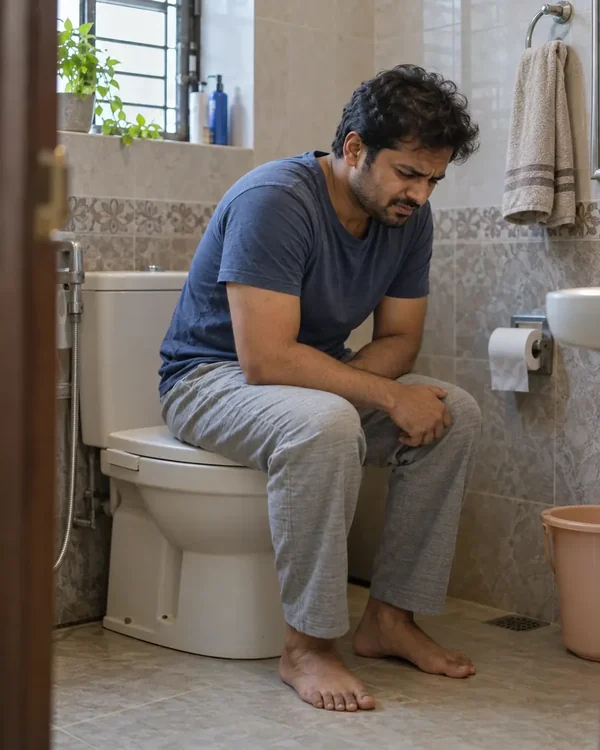
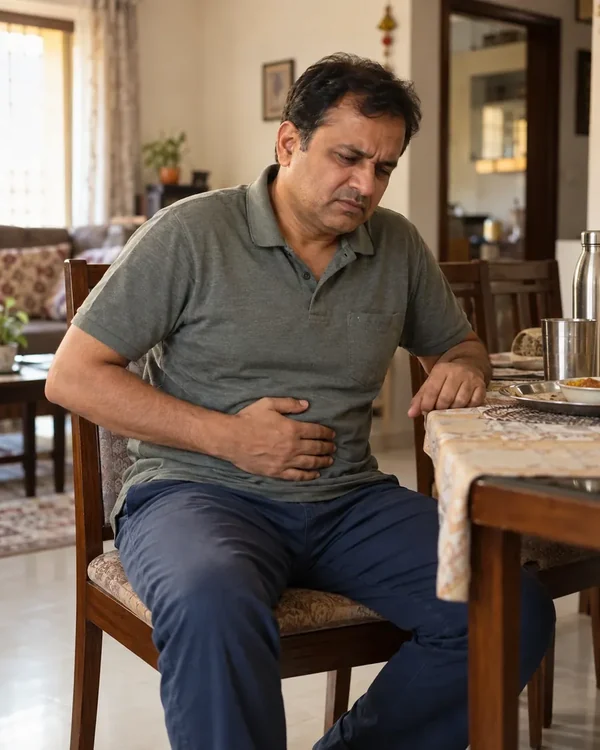
Psychiatrists describe Dhat syndrome: distress that a person links with losing semen, in urine, at night or through masturbation, with tiredness, weakness, poor concentration, body aches and worry about sexual function.34 It is described mainly in South Asia, often in young men, and often alongside anxiety or low mood.3
The distress is real and deserves care. The belief behind it, that semen loss drains strength, is not supported by modern evidence: semen is made continuously and the body is not a tank that empties.4 Cloudy or whitish urine has several ordinary causes; a urine test checks for infection when there is burning, frequency or a discharge.5
Where they agree, and where they differ
| Ayurveda (dhātu, śukrameha) | Modern medicine (Dhat syndrome) | |
|---|---|---|
| The word | Dhātu, body tissue; śukra the seventh | A recognised pattern of distress |
| Semen | Refined tissue, not used up by ordinary ejaculation | Made continuously; its loss does not drain the body4 |
| Whitish urine | Śukrameha, a classical urinary condition | Several ordinary causes; a urine test when needed5 |
| Tiredness and low mood | Read through digestion, sleep and mind | Often linked with anxiety or depression3 |
| Care | Explanation, routine, diet; medicines after assessment | Explanation, help with anxiety or low mood, urine check |
Both views look at the whole person: the worry, sleep, mood and any urinary signs, not only the discharge.
What the evidence does and doesn't show
- Shown: the worry often comes with anxiety or low mood, and a clear explanation and help with those are a recognised part of care.34
- Not shown: that semen lost through nightfall, masturbation or urine drains strength, blood or fertility.4
- Limited: clinical trials of Ayurvedic treatments have mostly been few, small or not well designed, so firm conclusions about Dhat cannot be drawn. 6
- Not a substitute: burning, pain, blood or a discharge from the penis needs a urine test and an examination.
What this means for you
If this worry has been with you for a while, it is worth talking through calmly. Before a visit, note what you actually notice and when, what you have been told it means, and how you are sleeping and feeling. Bring any reports and the tonics or tablets you have already tried.
Read next
- worry about semen loss or white discharge: what is checked and what helps
- nightfall: when the worry is about night-time release
- śukra dhātu: the wider Ayurvedic idea, or all men's health concerns
Looking for dhat ki dawa? No product is named here; worry about semen loss or white discharge explains why a medicine is considered only after assessment.
A consultation with Dr. D.K. Sharma (BAMS) is ₹500, in person in Ludhiana or by video. The conversation is private, at your pace, and covers what you notice, any urinary signs, your sleep and mood, and what you have already tried, so that you and Dr. Sharma can decide what to look into first. A personalised Dinacharya (daily-routine) guide follows.
Sources
- Suśruta Saṃhitā, Sūtrasthāna, chapter on the dhātus (classical source).
- Caraka Saṃhitā, Nidānasthāna, chapter on prameha (classical source).
- Sumathipala A, Siribaddana SH, Bhugra D. Culture-bound syndromes: the story of dhat syndrome. British Journal of Psychiatry. 2004;184:200–209.
- Prakash O, Kar SK, Sathyanarayana Rao TS. Indian story of semen loss and related Dhat syndrome. Indian Journal of Psychiatry. 2014;56(4):377–382.
- NHS. Urinary tract infections (UTIs). nhs.uk.
- NCCIH (US National Institutes of Health). Ayurvedic Medicine: In Depth. Last updated January 2019. nccih.nih.gov.
Medical content approved by Dr. D.K. Sharma.
Reviewed by Dr. D.K. Sharma. Approval recorded on 8 November 2026 for this exact text.