
The names
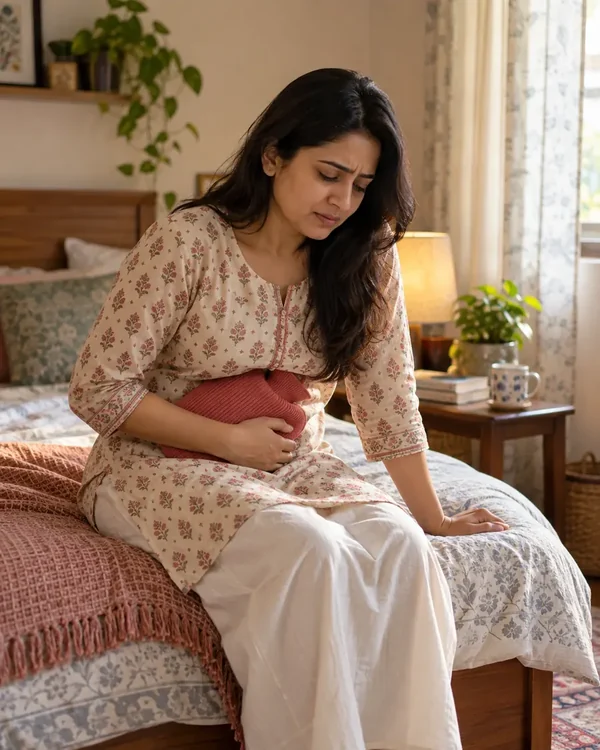
Kashtartava meaning in Ayurveda. Kaṣṭārtava means painful menstruation, and asṛgdara means heavy menstrual bleeding: the classical words for period pain and heavy periods.
Urgent signs: Bleeding that soaks through protection every hour for more than two hours, fainting, sudden severe pain, or pain or bleeding when you might be pregnant needs urgent care. Bleeding between periods or after sex, or pain that has clearly changed, needs a prompt review. The full list is under "When it should not wait" on Painful and heavy periods.
| Language | Name |
|---|---|
| Sanskrit | Kaṣṭārtava (कष्टार्तव): kaṣṭa, difficult or painful, and ārtava, menstruation; asṛgdara (असृग्दर): heavy menstrual bleeding |
| Hindi | Mahvari mein dard, periods mein zyada khoon aana |
| Punjabi | Mahvari vich dard, zyada khoon pena (ਮਾਹਵਾਰੀ ਵਿੱਚ ਦਰਦ, ਜ਼ਿਆਦਾ ਖ਼ੂਨ ਪੈਣਾ) |
| English | Painful periods (dysmenorrhoea); heavy periods (heavy menstrual bleeding) |
How Ayurveda describes it
In Ayurveda, painful menstruation is linked mainly with vāta, and especially apāna vāyu, the downward-moving force that carries the flow out.1 When its movement is obstructed or reversed, the flow is painful and difficult. The classical texts describe this within the vaginal disorders (yonivyāpad); kaṣṭārtava is the later, practical name.1
Asṛgdara is excessive or prolonged menstrual bleeding, linked in the texts with pitta and with unsuitable diet, exertion and weakness.1 Treatment in the Ayurvedic view starts with avoiding the causes, then supporting regular digestion, routine and rest and, where a doctor advises, medicines.
How modern medicine describes it
Modern medicine explains period pain through the womb tightening to shed its lining, driven by chemicals called prostaglandins.25 Pain with no underlying condition is common, especially in younger women. Pain that is new, severe or getting worse can come from endometriosis, adenomyosis, fibroids or pelvic infection.2
Heavy bleeding is judged by its effect on daily life: flooding, large clots, changing protection very often.3 Causes include fibroids, polyps, adenomyosis, thyroid problems and a copper coil. A blood count checks for anaemia, and an examination or scan is offered depending on the findings.34
Where they agree, and where they differ
| Ayurveda (kaṣṭārtava, asṛgdara) | Modern medicine (dysmenorrhoea, heavy bleeding) | |
|---|---|---|
| The core experience | Painful, difficult flow; excessive bleeding | Cramping pain; bleeding that disrupts daily life |
| The mechanism | Obstructed apāna vāyu; pitta in heavy bleeding | Prostaglandins; conditions of the womb and hormones |
| Daily life | Diet, exertion, routine and rest named as factors | Activity and heat ease pain for many2 |
| Tests | Not part of the classical description | Blood count; examination or scan when needed |
| Weakness | Named as a result of heavy flow | Iron-deficiency anaemia checked3 |
| Treatment | Avoid causes, restore balance; medicines after assessment | Pain relief, hormonal and non-hormonal options, treating a cause |
Both views agree that pain or bleeding that disrupts life is not something to simply put up with, and that routine and overall strength matter.
What the evidence does and doesn't show
- Shown: heat on the lower tummy, gentle exercise and anti-inflammatory pain relief ease period pain for many people.2
- Not shown: that severe pain is "normal" and needs no assessment; it can point to endometriosis or another cause.2
- Limited: clinical trials of Ayurvedic treatments have mostly been few, small or not well designed, so firm conclusions about kaṣṭārtava and asṛgdara cannot be drawn. 6
- Not a substitute: an Ayurvedic label doesn't replace a blood count for heavy bleeding, or an examination when pain is new or worsening.34
What this means for you
If a period is late, or you might be pregnant, pain or bleeding is checked for pregnancy first. Otherwise, keep a note of the days of pain, how heavy the flow is, any clots, tiredness and anything that eases it.
Read next
- Painful and heavy periods: what is too much, what helps and what cannot wait
- shweta pradara: another classical term from the same group of disorders
- women's health
A consultation with Dr. D.K. Sharma (BAMS) is ₹500, in person in Ludhiana or by video. Dr. Sharma asks about the pain, the bleeding, your cycle and whether pregnancy is possible, which helps decide whether a blood count or an examination should come first. A personalised Dinacharya (daily-routine) guide follows.
Sources
- Caraka Saṃhitā, Cikitsāsthāna, chapter on yonivyāpad, including asṛgdara (classical source).
- NHS. Period pain. nhs.uk.
- NHS. Heavy periods. nhs.uk.
- NICE. Heavy menstrual bleeding: assessment and management (NG88).
- American College of Obstetricians and Gynecologists. Dysmenorrhea: Painful Periods (patient FAQ). acog.org.
- NCCIH (US National Institutes of Health). Ayurvedic Medicine: In Depth. Last updated January 2019. nccih.nih.gov.
Medical content approved by Dr. D.K. Sharma.
Reviewed by Dr. D.K. Sharma. Approval recorded on 8 November 2026 for this exact text.