



Low sperm count and male fertility

Low sperm count or a worrying semen report: does this sound like you?
A low sperm count means a laboratory found fewer sperm than its reference limit. A low value is a reason to look further, not a verdict. Many causes can be found and some can be changed. This page explains how to read the report, what can affect sperm count, and when it makes sense to be assessed by Dr. D.K. Sharma.
- Your semen analysis says "low count" or "oligospermia", and you do not understand the other values.
- You have been trying for a baby for a while and nothing has happened yet.
- Your semen looks thinner or less than before, and you wonder what that means.
- Someone told you nightfall or masturbation has lowered your count.
Urgent signs: a low count is not an emergency, but sudden severe pain in a testicle, especially with swelling or nausea, needs care now. The full list is under “When it should not wait”.
A low sperm count usually causes no symptoms or signs of its own. Often the first sign is that a pregnancy has not happened after a year of trying, or after six months if the woman is older than 35. Pain, swelling or a lump in a testicle, or signs of a hormone problem, are different and worth being seen about.
If you are trying for a baby, assessing both partners is often more useful. 3
Learn moreŚukra dhātu (shukra dhatu): what Ayurveda means by it, and how it compares with modern sexual and reproductive healthŚukra dhātu (शुक्र धातु) is Ayurveda's name for reproductive tissue.

What a low sperm count is, and what it is not
Sperm count usually means how many sperm there are in each millilitre of semen, read against the laboratory's reference limit1. Only a laboratory test, called a semen analysis or sperm count test, can measure it. One test is a snapshot, and values vary from sample to sample.12 Reports may call a low count oligospermia or oligozoospermia; in Hindi it is often called shukranu ki kami (शुक्राणु की कमी).
What a semen analysis report shows, in plain words:
- Volume: how much fluid there was.
- Concentration (count): how many sperm in each millilitre.
- Motility: how many sperm are moving, and how well.
- Morphology: how many have the typical shape.
- Other notes: whether sperm are alive, and any sign of infection.
Each value is read against reference limits from the WHO laboratory manual1. A value below the limit is one piece of the picture. Your sperm count report usually prints the laboratory's own reference range, its normal range, next to each value, and that column is the one to use.
For orientation, the sixth edition of the WHO manual (2021) gives these lower reference limits, taken from men whose partners conceived within a year1:
- sperm concentration, the figure usually meant by a normal sperm count: at least 16 million per millilitre;
- total number: at least 39 million sperm in the whole sample;
- sperm motility (progressive motility): at least 30%;
- sperm morphology (normal shape): at least 4% of sperm.
They mark the lower end of the normal range. They are not set by age, so there is no age chart for these values, and they are not a line between fertile and infertile men. A value below one is read together with the other values and your history. For a couple trying to conceive, these limits are the closest thing to a normal sperm count to get pregnant, but they are not a pass mark.
| It is | It is not |
|---|---|
| A laboratory finding | Something you can judge from how semen looks |
| Changeable between tests, with fever, a short gap or an incomplete sample | Proof that you cannot father a child |
| One part of a couple's fertility picture | Caused by nightfall or ordinary masturbation |
When it should not wait
A low count is not an emergency, but these signs are different.
Urgent signs
Get in-person care now if:
- there is sudden severe pain in a testicle, especially with swelling or nausea;
- there is a significant injury;
- there is fever with a painful, swollen scrotum.
Arrange a prompt medical review if:
- you feel a new lump in a testicle;
- the report shows no sperm at all;
- there is a history of an undescended testicle, mumps affecting the testicles, groin surgery, cancer treatment, or testosterone or bodybuilding steroid use.2
How Dr. Sharma assesses it
The assessment is a one-to-one conversation. No photographs are needed, and an examination, if one is useful, is explained before it starts.
- The report. The full report with its date and laboratory, how many days you abstained before the sample, and whether all of it was collected.
- Your history. How long you have been trying; any previous pregnancy; childhood surgery, an undescended testicle, mumps, injury or infections.
- Daily life. Heat (hot baths, tight clothing, a laptop on the lap, working near furnaces), smoking, alcohol, weight, sleep and stress.
- Medicines and supplements. Especially testosterone or gym products, which can lower sperm production. 2
- The next step. A repeat test, an examination at a visit, hormone tests, or referral to a urologist or a fertility specialist. Why each is suggested is explained before you decide.
Low sperm count treatment: what it can and cannot promise
Many things that influence sperm production, such as heat, smoking, weight, some medicines and some medical causes, can be identified, and some can be changed. That is why the report is only the beginning. Daily habits and foods (kya khayein) that support sperm health are covered in the guide Sperm count kaise badhaye.
- No promise of a pregnancy, or of a number. A report guides the next question; it cannot predict the future.
- Changes take time to show. Sperm take around three months to develop, so the effect of any change is judged on a later test, not next week. 1
- Within scope, or referred. Treatment for a low sperm count at Bharat Clinic is Ayurvedic, with daily-routine and diet guidance, when the cause suits it. A referral to a urologist or fertility specialist is made when a cause needs one, such as a blockage, a hormone problem or a swollen vein in the scrotum. 2
- Both partners. Fertility is shared. The most useful plan usually includes both people's assessments.3
- Follow-up. Each review looks at new reports and adjusts the plan if things are not improving.
- About "medicine to increase sperm count". A medicine is considered only if it fits the cause identified in your assessment, and its effect is judged on a later test. No product is named here.
If you have already tried shilajit or a fertility supplement, bring the box or note its name and how long you took it. Some products affect hormones or sperm production, so the doctor needs to know.
Your doctor
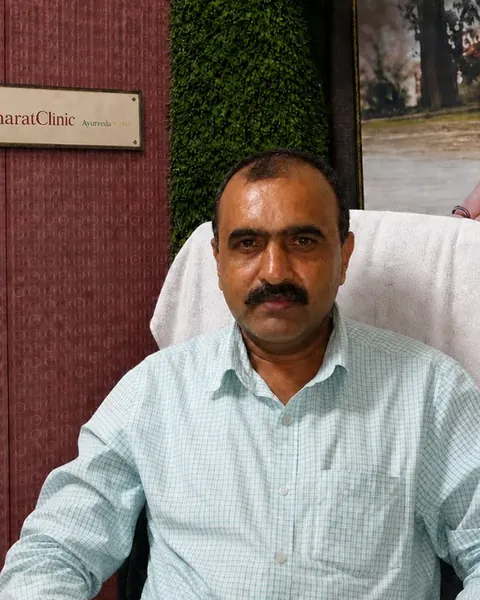
Your doctor
Dr. D.K. Sharma, the Ayurvedic doctor who sees you
Name, qualification and registration BAMS; practising since 1992 4067, Board of Ayurvedic and Unani Systems of Medicine, Punjab
Reviewed by Dr. D.K. Sharma. Approval recorded on 8 November 2026 for this exact text.
Medical content approved by Dr. D.K. Sharma.
A private consultation, ₹500
A consultation gives you time to go through every report, your history and what you have already tried. Dr. Sharma can explain the values and discuss the sensible next step: a repeat test, a referral to a specialist, or Ayurvedic care at Bharat Clinic.
Useful details to have ready: every semen report you have, with dates; how long you have been trying; past surgery or illness; and the medicines and supplements you take. The consultation is in person in Ludhiana (usually 30–60 minutes) or by video, and your personalised Dinacharya (daily-routine) guide follows it. See how booking works.
The consultation
₹500In person in Ludhiana, or by video
Includes your personalised Dinacharya (daily-routine) guide, prepared after the consultation.
How booking works · no payment until step 3
- You send a request
- Suitability and a time are confirmed
- You pay ₹500
- Your slot is confirmed
- The consultation
Other costs
- Medicine, if advised
- Discussed after your consultation
- Care courses
- Discussed after your consultation
Looking for a sexologist in Ludhiana? Who you will see, and what to check
Related reading
Questions before you book
Is one low report enough for a diagnosis?
Not always. Semen values vary, so a second test, collected properly, is often advised before drawing conclusions.
Full answer
The whole report and your history are read together.2
We are trying for a baby. Should both of us come?
Often, yes. Fertility involves both partners, and assessing both early saves time. You can also start alone.3
Does watery semen mean a low count?
No. How semen looks, including its colour or thickness, cannot tell you the count. Only a laboratory test can.1
Can nightfall or masturbation lower my count?
No. Ordinary masturbation, ejaculation or nightfall does not lower sperm count over time.
Full answer
A very short gap before a test can make one sample look lower, which is why labs give instructions.1
What if the report says there are no sperm at all?
No sperm in the sample is called azoospermia, and it needs a urologist or a fertility specialist to look for the cause.
Full answer
The consultation goes through the report with you and explains which specialist to see and what to ask.
How should I give the sample?
Follow the laboratory's instructions. Most ask for a gap of about two to seven days without ejaculation, and the whole sample collected in their container.1
What can affect sperm count
What can contribute. Doctors think in three areas2:
- Making sperm: hormones, the testicles themselves, genes, or a swollen vein in the scrotum (varicocele).
- Delivering sperm: a blockage along the tubes that carry them.
- General health: heat, smoking, heavy alcohol, excess weight, a recent fever, some medicines and steroids.
Often no single cause is found. That is common, and it does not mean nothing can be done.
Three common myths.
- "Thick semen means strong fertility." Thickness says little about sperm.
- "Nightfall drains sperm." The testicles keep making sperm throughout adult life.
- "Infertility is always the woman's side." Male factors play a part in many couples, which is why both are assessed. 3
The Ayurvedic view. Ayurveda places fertility under śukra dhātu and the branch called vajikarana, as a way of looking at the whole person. It does not replace a semen analysis. The nightfall worry has its own page: Nightfall (swapnadosh) and wet dreams.