



Menopause and perimenopause: hot flushes, poor sleep, mood and changing periods
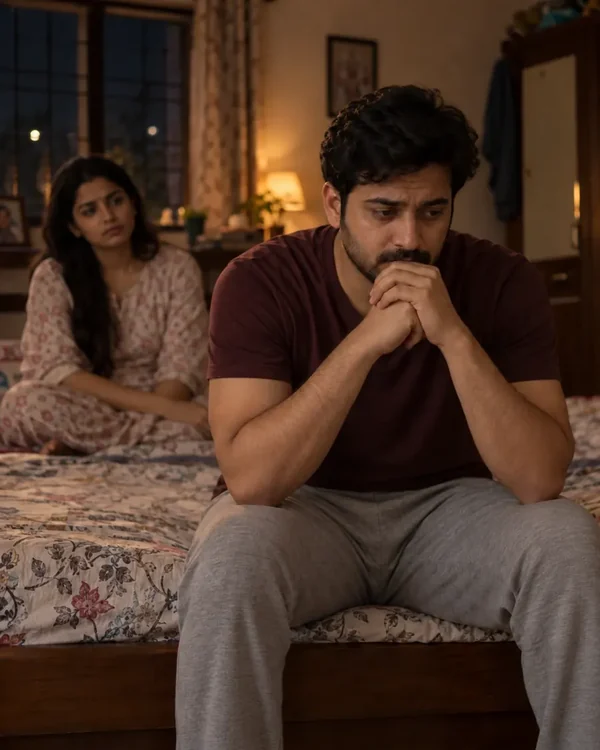
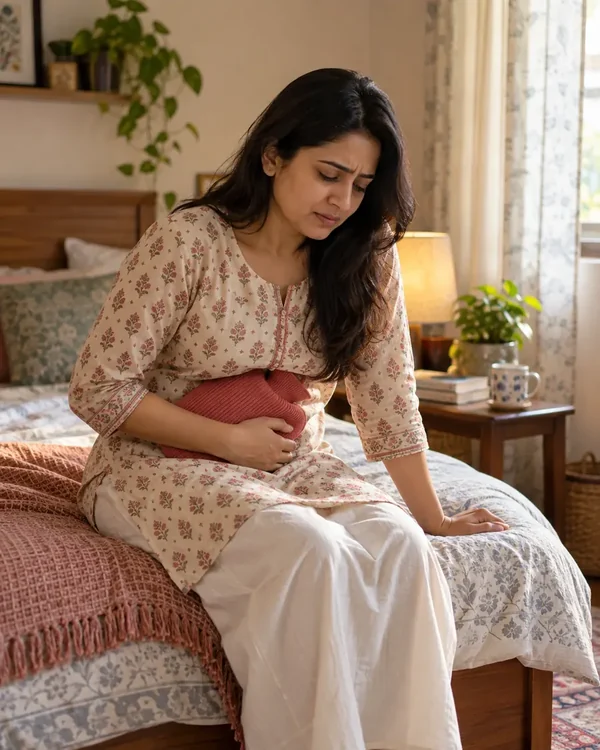
Does this sound like you?
Menopause is when periods stop because the ovaries make less oestrogen. It is confirmed after 12 months without a period and usually happens between 45 and 55; in the years before (perimenopause), hot flushes, poor sleep, mood changes and changing periods often begin.1
Urgent signs: bleeding that soaks through protection every hour, fainting, or severe pain needs care today, and any bleeding after menopause needs a prompt check. The full list is under “When it should not wait”.13
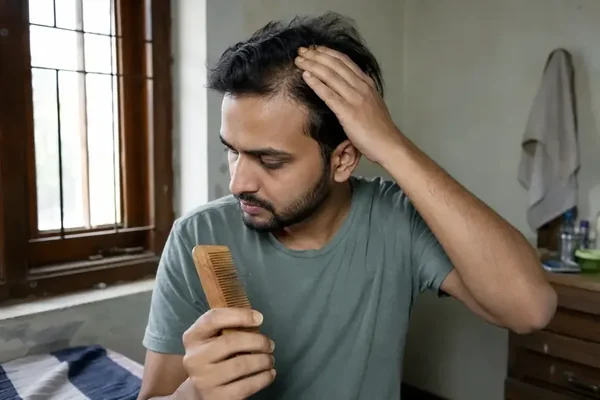
- Your periods have become irregular, closer together or further apart, lighter or heavier.
- Sudden waves of heat in the face and chest, or sweating at night.
- Waking at night, then tired and short-tempered in the day.
- Low mood, anxiety or forgetfulness that feels new.
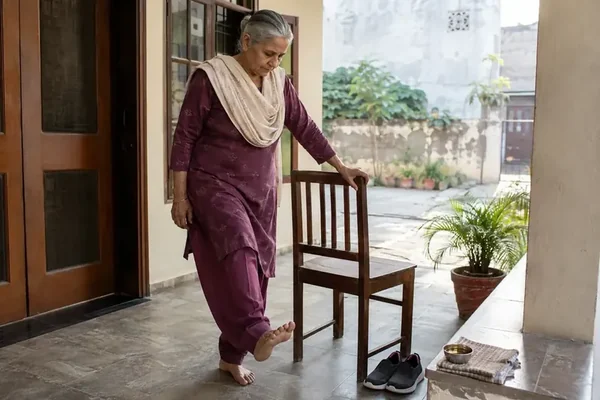
- Aching joints, vaginal dryness, discomfort during sex, or needing to pass urine more often.
- Someone said "it's just your age", and you would like a proper conversation about it.
These are common in your forties and fifties, and "it's just your age" is not a full answer.1
What it is, and what it isn't
Menopause (rajonivritti, रजोनिवृत्ति, in Hindi) is when periods stop because the ovaries make less oestrogen. It is confirmed once you have had no period for 12 months1. Perimenopause is the time before that, often several years, when symptoms begin and periods change. Postmenopause is the time after menopause is confirmed, and any bleeding then needs a prompt medical review.13 Symptoms usually last 7 to 9 years, sometimes longer, and some, such as joint pain and vaginal dryness, can carry on after menopause.1 Menopause before 40 is called premature and needs a doctor's assessment12.
| It is | It isn't |
|---|---|
| A natural stage of life | An illness, or a sign that something is wrong with you |
| Different for every woman, from mild to disruptive | Something you have to suffer in silence |
| A time when bone and heart health deserve attention | A reason to ignore new bleeding or a lump |
In Hindi, Punjabi and Hinglish
Show the words and Hinglish questionsHide the words
The words below are the ones people commonly say or search.
| You may say or search | It means |
|---|---|
| rajonivritti (रजोनिवृत्ति) | menopause: when periods stop because the ovaries make less oestrogen1 |
| perimenopause | the time before menopause, often several years, when symptoms begin and periods change |
| premenopausal | before menopause: all the years before it, though people often use it loosely for perimenopause |
| postmenopausal | the years after menopause is confirmed, which is once you have had no period for 12 months1 |
| menopause ke lakshan | the signs of menopause, such as hot flushes and night sweats; see the questions below |
| menarche | a girl's first period; menopause is when periods stop for good |
Common questions in Hinglish:
- Menopause kya hota hai? It is when periods stop for good, which usually happens between 45 and 55.1 Full answer: “What it is, and what it isn't”
- Menopause ke lakshan kya hain? Falling oestrogen around the menopause causes hot flushes, night sweats, vaginal dryness, poor sleep, mood changes and irregular periods.1 Full answer: “Does this sound like you?”
- Perimenopause kya hota hai? Perimenopause is the time before menopause, often several years, when symptoms begin and periods change. A doctor usually recognises it from your age and symptoms.2 Full answer: “How do I know if I am in perimenopause?”
When it should not wait
Pregnancy is still possible in perimenopause. If a period is late, consider a pregnancy test before anything else.1
Urgent signs
Get urgent in-person care now if:
- bleeding soaks through protection every hour
- you faint or feel very dizzy
- there is severe pain, or pain and bleeding when you might be pregnant3
Arrange a prompt medical review if:
- there is any bleeding after menopause (after 12 months without a period), even spotting
- there is bleeding between periods or after sex
- periods become much heavier (see painful and heavy periods)
- you find a breast lump
- you have thoughts of harming yourself, which need help the same day13
How Dr. Sharma assesses it
A private conversation comes first. An examination happens only if it is needed.
- Your periods. When they began to change, the date of your last period, cycle length, flow, and any bleeding between periods or after sex.
- Your symptoms. Hot flushes and night sweats, sleep, mood, memory, joints, energy, weight, vaginal dryness, sex, and bladder changes. What bothers you most, and how much.
- Health that matters. Blood pressure, sugar, thyroid, cholesterol, digestion, stress, smoking, a family history of fractures, heart disease or breast cancer, and every medicine or supplement you take. Don't stop one on your own.
- Your reports, and tests only when useful. For example thyroid, sugar, haemoglobin or cholesterol. Blood tests are usually not needed to diagnose menopause after 45.2 A scan is needed only if bleeding or another sign suggests it.
If an examination would help, it is explained first and done only with your consent. If the doctor's gender matters to you, say so before booking, and the clinic will tell you what is possible. By video, Dr. Sharma can go through your history and reports. Video cannot replace an examination.
What treatment can and can't promise
- Symptoms, not the stage. Menopause itself is not treated away; the aim is to make the symptoms that bother you easier to live with.
- Routine first. Sleep, food, movement, stress and cooling strategies help many women1. For hot flushes, that means light clothing, a cool bedroom, a fan or a cool shower, and cutting down on triggers such as spicy food, caffeine, hot drinks, smoking and alcohol.1 Your personalised Dinacharya (daily-routine) guide follows the consultation.
- Ayurvedic care, if it suits you. Ayurvedic treatment for menopause aims at the symptoms that bother you most, such as hot flushes, sleep or aching joints; a medicine is considered only after assessment, alongside anything you already take, and no product is named here.
- HRT is your decision. Hormone replacement therapy (HRT) is an option for many women, with benefits and risks that depend on your age and health. It is discussed with a gynaecologist or physician, who can prescribe and monitor it.2 Your choice is respected either way.
- Honest outcomes. For many women symptoms ease over time, at different speeds; how long that takes can't be predicted before assessment.
Your doctor
Your doctor
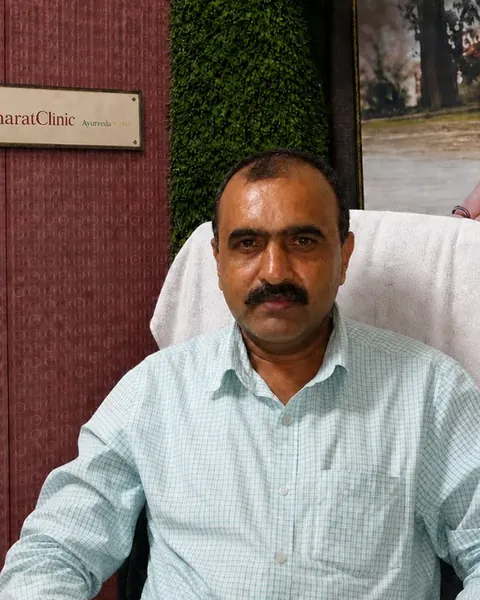
Dr. D.K. Sharma, the Ayurvedic doctor who sees you
Name, qualification and registration BAMS; practising since 1992 4067, Board of Ayurvedic and Unani Systems of Medicine, Punjab
Reviewed by Dr. D.K. Sharma. Approval recorded on 8 November 2026 for this exact text.
Medical content approved by Dr. D.K. Sharma.
A private consultation, ₹500
A consultation is useful when symptoms disturb your sleep, work or relationships, your periods are changing in ways you are unsure about, or you want to weigh your options, including whether HRT is something to discuss with a gynaecologist or physician. Dr. Sharma goes through what bothers you most and what you have already tried, then discusses which symptoms to work on first, whether a test or a gynaecologist should come first, and whether treatment at Bharat Clinic fits your needs. You can see him in person in Ludhiana, or by video from elsewhere.
Bring what you can:
- the date of your last period
- a short note of your main symptoms, and which bothers you most
- any blood, thyroid, bone or scan reports
- a list of medicines and supplements
To start, book a consultation in Ludhiana or by video.
The consultation
₹500In person in Ludhiana, or by video
Includes your personalised Dinacharya (daily-routine) guide, prepared after the consultation.
How booking works · no payment until step 3
- You send a request
- Suitability and a time are confirmed
- You pay ₹500
- Your slot is confirmed
- The consultation
Other costs
- Medicine, if advised
- Discussed after your consultation
- Care courses
- Discussed after your consultation
Questions before you book
How do I know if I am in perimenopause?
If you are in your forties and your periods are changing, with hot flushes, night sweats, poor sleep or mood changes, perimenopause is likely.
Full answer
A late period can also mean pregnancy, so why periods are late is worth reading too. A doctor usually recognises it from your age and symptoms; a blood test is rarely needed after
What are the symptoms of low oestrogen?
Falling oestrogen around the menopause causes hot flushes, night sweats, vaginal dryness, poor sleep, mood changes and irregular periods.1
Full answer
Low oestrogen at a younger age has other possible causes, such as very low weight, intense exercise or an ovary or pituitary problem. A doctor needs to look for the reason, especially if periods stop.
Is bleeding after menopause normal?
No. Any bleeding after 12 months without a period, even a small amount, needs a prompt medical review.
Full answer
It is often from something minor, but it must be checked.13 Spotting, or a pink or brown discharge, counts as bleeding here.1 Other changes in discharge after menopause, such as a new smell, itching or soreness, are covered in white discharge.
Should I take HRT?
It is a personal decision, made with a gynaecologist or physician who knows your health.
Full answer
HRT helps many women with symptoms and has risks that depend on age and history.2 Dr. Sharma can help you prepare your questions.
What can I do for my bones?
After menopause, bone loss speeds up. Weight-bearing exercise such as walking, enough calcium and vitamin D, not smoking, and limiting alcohol all help protect bones.14
Full answer
If you have had a fracture from a minor fall, say so.
Do I need a menopause specialist?
Often a doctor who takes a full history and looks at the whole picture helps: sleep, mood, joints, bones and heart health together.
Full answer
A gynaecologist is the right person for HRT, for heavy or unusual bleeding, and for any bleeding after menopause. You are told plainly when that is the next step. Dr. Sharma is an Ayurvedic doctor, not a gynaecologist, and sees women with menopause symptoms in person in Ludhiana, or by video.
Can menopause affect mood?
Yes. Mood swings, low mood, anxiety, irritability and poor concentration are common around menopause, often alongside poor sleep.1
Full answer
They deserve attention in their own right, and thoughts of self-harm need help the same day. If your mood changes come and go with your monthly cycle, they may be part of PMS, which painful and heavy periods explains.
Understand it better
Why symptoms happen. As oestrogen levels fall and fluctuate, the body's temperature control, sleep, mood, joints, skin and the tissues of the vagina and bladder can all be affected. 1
Longer-term health. Lower oestrogen speeds bone loss and raises the risk of osteoporosis, and heart health becomes more important to watch. 14 Blood pressure, sugar and cholesterol checks are worth keeping up.
Myths.
- "It's all in your head." The symptoms are real and physical.
- "Vaginal dryness is something to put up with." It is common and can be helped; ask.
- "You can't get pregnant once periods are irregular." You can, until menopause is confirmed. Keep using contraception for 1 year after your last period if you are 50 or over, or for 2 years if you are 40 to 49.1