






Loose motions and IBS (dast): a sudden upset or a pattern that keeps returning

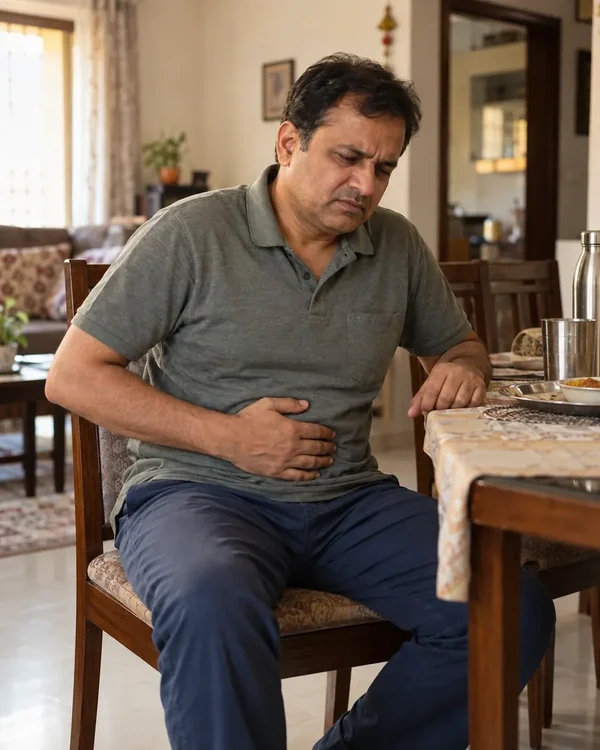
Does this sound like you?
A sudden bout of loose motions (dast, diarrhoea) usually settles within days, and the main job is to replace fluids. A pattern that keeps returning, including IBS, needs a proper history.12 This page tells the two apart, explains what to do about dehydration, and covers when to be seen.
Urgent signs: not keeping fluids down, very little urine, dizziness or faintness, blood or black stool, or severe worsening stomach pain need care today, and babies and young children dehydrate fast. The full list is under “When it should not wait”.14
- Loose or watery stool, or going much more often than usual ("dast", "patla motion").
- A sudden urge, and a worry about being far from a toilet.
- Cramps or stomach pain that ease, or get worse, after going.
- Loose motions that alternate with constipation.
- It settles, then keeps coming back, after certain meals, travel or stressful days.
If loose motions keep returning or shape your day, see a doctor.1
Learn moreGrahani (grahaṇī) and atisāra: what Ayurveda means by them, and how they compare with IBS and loose motionsGrahaṇī (ग्रहणी) is Ayurveda's name for a recurring, unsettled bowel; atisāra (अतिसार) for loose motions.
What it is, and what it isn't
Loose motions (diarrhoea, called dast in Hindi) means loose or watery stool, often with more trips to the toilet than usual.1 A sudden episode is usually an infection or something eaten, and often settles on its own.2 Irritable bowel syndrome (IBS) is different: a long-running pattern of stomach pain or discomfort linked to bowel movements, with a change in stool, after other causes have been considered.3 Loose stool alone doesn't mean IBS.
| It is | It isn't |
|---|---|
| A sudden upset, or a pattern that returns over months | One diagnosis because the word "dast" is the same |
| Often linked to infection, food, medicines, stress or a bowel condition | Something to stop at any cost when the cause is unclear |
| IBS only after a history and the right checks3 | A label to accept without anyone asking questions |
If another symptom leads, these pages fit better:
- blood or black stool: blood in stool
- hard stool and straining: constipation
- swelling and wind: gas and bloating
- pain as the main problem: stomach pain
In Hindi, Punjabi and Hinglish
Show the words and Hinglish questionsHide the words
| You may say or search | It means |
|---|---|
| dast, दस्त, loose motion, patla motion | Loose or watery stool, or going more often than usual: diarrhoea.1 |
| IBS | Irritable bowel syndrome: a long-running pattern of stomach pain or discomfort linked to bowel movements.3 |
| dast ka ilaj, loose motion ka ilaj | What to do about loose motions. In a sudden upset, fluids come first. |
| loose motion ki dawai | A medicine to stop loose motions; tablets that stop them can hide the cause. |
Common questions in Hinglish:
- Dast kyu lagte hain, aur loose motion kyu hota hai? "Dast" describes loose motions, not one cause. A sudden episode is usually an infection or something eaten, and often settles on its own.2 Full answer: "Dast (दस्त) kyu lagte hain?"
- Dast ka ilaj kya hai, aur loose motion kaise thik kare? Take small, frequent sips of fluid, use an oral rehydration drink if you feel dry or weak, and eat when you feel able. Get help sooner if you can't keep fluids down, see blood, or it lasts over a week.1 Full answer: “What should I do for loose motions?”
- Loose motion me kya khana chahiye, aur kya khaye? Eat when you feel able, in small amounts, and keep drinking fluids. Avoid fatty or spicy food, fruit juice and fizzy drinks.1 Full answer: “What should I eat with loose motions?”
- Loose motion kaise roke, aur loose motion ki dawai konsi hai? Nothing safely stops a bout instantly; fluids matter most. Ask a pharmacist first, and do not use a medicine that slows the bowel if there is blood in the stool or fever. Uncontrolled vomiting or dehydration needs a doctor.1 Full answer: “Is there a way to stop loose motions quickly?”
- IBS ke lakshan kya hain? IBS usually means repeated stomach pain or cramps that ease after going to the toilet, with bloating and diarrhoea, constipation or both. It is diagnosed only after other causes have been considered. Full answer: “What are the symptoms of IBS?”
When it should not wait
Most short episodes settle. Dehydration and these signs are different.
Urgent signs
Get urgent in-person care now if:14
- you can't keep fluids down
- you pass very little urine, or feel dizzy, confused or faint
- there is blood in the stool, or it is black
- you have severe or worsening stomach pain, a hard swollen stomach or repeated vomiting
- you have a high fever, especially if you are pregnant, frail or have a weak immune system
Arrange a prompt review, often with a gastroenterologist, if:13
- loose motions last more than a week, keep returning or wake you at night
- you are losing weight without trying
- you have a lasting bowel change, especially later in life, or a family history of bowel cancer
Children and babies: dehydration can come on quickly. Please don't give adult remedies or a reduced adult dose; see a paediatrician or urgent care.1
How Dr. Sharma assesses it
Most of it is a conversation about how it began and how it behaves.
- Onset and pattern. When it started, how many times a day, whether it fully settles between episodes, night symptoms, and whether it alternates with constipation.
- What comes with it. Pain and where it sits, whether it eases after going, urgency, fever, vomiting, mucus, blood or black stool, and weight change.
- Fluids. How much you can drink and keep down, how often you pass urine, thirst and dizziness.
- Exposures and routine. Travel, outside food or water, meal times, stress, sleep, and the meals that seem to repeat it.
- Medicines. Recent antibiotics, painkillers, any medicine started lately, and anything you take to stop the loose motions. Bring the strip or packet you use.
- Tests or a referral, only when useful. For example a stool or blood test, with the reason explained first. By video, Dr. Sharma can take the history and give guidance; an examination needs a visit.
What treatment can and can't promise
- Safety first. In a sudden upset, loose motion treatment starts with fluids: keep drinking in small, frequent sips, and get care if you can't keep them down or signs of dehydration appear.14
- No single tablet or food list. There is no one medicine, probiotic or diet that fits every cause. The plan follows your pattern. Tablets that stop loose motions can hide the cause, and are unsafe with fever or blood in the stool.
- After assessment. Diet and routine guidance and, if they suit your pattern, Ayurvedic treatment. A pattern that needs tests or a specialist is referred, and you are told so before anything starts.
- Honest outcomes. The aim is to understand the pattern, not just silence every bowel movement. How long it takes is decided after assessment and reviewed by how you respond.
Your doctor

Your doctor
Dr. D.K. Sharma, the Ayurvedic doctor who sees you
Name, qualification and registration BAMS; practising since 1992 4067, Board of Ayurvedic and Unani Systems of Medicine, Punjab
Reviewed by Dr. D.K. Sharma.
Medical content approved by Dr. D.K. Sharma.
A consultation, ₹500
If loose motions keep returning, a consultation helps separate a pattern from a one-off upset. You describe when it began, how often it happens, what sets it off and what you take, because tablets that only stop the motions can hide the cause. Dr. Sharma can then discuss the next step, whether any test is needed, and whether treatment at Bharat Clinic suits you. See how to book, or read how a video consultation works.
In person at Samrala Chowk or Focal Point, Gobindgarh, in Ludhiana, or by video. Usually 30–60 minutes, with your personalised Dinacharya (daily-routine) guide, prepared after the consultation. Bring what you can: when it began, how often, what comes with it, what you take, and any test reports.
The consultation
₹500In person in Ludhiana, or by video
Includes your personalised Dinacharya (daily-routine) guide, prepared after the consultation.
How booking works · no payment until step 3
- You send a request
- Suitability and a time are confirmed
- You pay ₹500
- Your slot is confirmed
- The consultation
Other costs
- Medicine, if advised
- Discussed after your consultation
- Care courses
- Discussed after your consultation
Questions before you book
Is recurring loose stool always IBS?
No. IBS means repeated stomach pain or discomfort linked to bowel movements, with a change in stool, after other causes have been considered.3
Full answer
Infection, food, medicines and other bowel conditions may need checking first.
Dast (दस्त) kyu lagte hain?
"Dast" describes loose motions, not one cause. Note whether it began suddenly, followed food, travel or a medicine, comes with fever or vomiting, or keeps returning.
Full answer
Those details point to different routes. The usual causes are listed under "Understand it better".
What should I do for loose motions?
Home remedies for loose motion in adults start with fluids: drink plenty in small, frequent sips, use an oral rehydration drink if you feel dry or weak, and eat when you feel able.1
Full answer
Most bouts settle within five to seven days, so treatment at home is mainly fluids and food.1 If vomiting comes with the loose motions, the same small, frequent sips apply.1 Get help sooner if you can't keep fluids down, pass very little urine, see blood, or it lasts more than a week.1 A pharmacist can supply oral rehydration powder. Medicines that slow the bowel are covered in the question on stopping loose motions quickly.
What should I eat with loose motions?
Eat when you feel able, in small amounts, and keep drinking fluids.
Full answer
It may help to avoid fatty or spicy food. Don't have fruit juice or fizzy drinks, which can make diarrhoea worse.1
Is there an Ayurvedic medicine for loose motions?
No product is named here. In a sudden upset, fluids come first, and no medicine, Ayurvedic or otherwise, replaces them.1
Full answer
A sudden bout with blood, high fever, repeated vomiting or dehydration needs a doctor, not a home remedy. For a pattern that keeps returning, any medicine is chosen after the history and examination, and only if it suits you.
Is there a diet chart for IBS?
There is no single IBS diet chart that suits everyone. A limited low-FODMAP trial may improve symptoms.
Full answer
It is a structured, short-term step: certain foods are taken out for a time and then added back slowly, ideally with a clinician or dietitian.56 The evidence for it is weak (a conditional recommendation, with very low certainty), and it is not meant to be a long list of banned foods.5 A short note of meals and symptoms is the most useful thing to bring.
Is there a way to stop loose motions quickly?
Nothing safely stops a bout of loose motion instantly. Fluids matter most, and most diarrhoea stops within five to seven days.1
Can stress affect my bowel?
Stress can change bowel sensitivity and urgency. That doesn't mean repeated symptoms are "just stress"; medical, food and medicine causes still need checking.
I have been told I have IBS. Can you help?
A consultation can look at a recurring bowel pattern like this, at the clinic in Ludhiana or by video.
Full answer
If the diagnosis hasn't been confirmed, or a test is needed first, you'll be told before anything starts.
IBS treatment in Ayurveda looks at the pattern, meals, sleep and stress, with medicines only if they suit you. It aims at fewer and milder flares, with no promise that they stop for good. Ayurveda's name for a recurring pattern like this is grahaṇī.
What are the symptoms of IBS?
The full form of IBS is irritable bowel syndrome. IBS symptoms are usually repeated stomach pain or cramps that ease after going to the toilet, with bloating and either diarrhoea, constipation or both.
Full answer
It comes and goes, and often flares with food or stress. It is diagnosed only after other causes have been considered, so a new pattern needs a proper check.3
Can I start by video?
Yes, for a recurring pattern. A sudden upset with dehydration or warning signs needs in-person care, not a video call.
Understand it better
What causes diarrhoea or loose motions? It depends on whether it is sudden or long-running23:
- Sudden: an infection, or food or water that didn't agree with you, often with cramps, nausea or fever.
- Medicines: antibiotics and some other medicines can loosen stool.
- Recurring: IBS, food intolerances, or conditions such as coeliac disease or inflammatory bowel disease, which need their own tests.
- Stress and routine: irregular meals, poor sleep and stress can make a sensitive bowel worse.
Foods. Which foods seem to set it off differs from person to person; cutting out many at once can cause confusion and poor nutrition. Changes are worked out from your pattern.