







Frozen shoulder: symptoms, stages and treatment

Does this sound like you?
Short answer: in frozen shoulder the tissue around the shoulder joint becomes inflamed and tight, so the shoulder hurts and loses movement.4 It usually gets better, but slowly, and gentle exercise suited to your stage is a core part of care.1
Urgent signs: shoulder or arm pain with chest pain or tightness, breathlessness, sweating or feeling sick can be a heart attack and needs emergency care now.3 The full list is under “When it should not wait”.
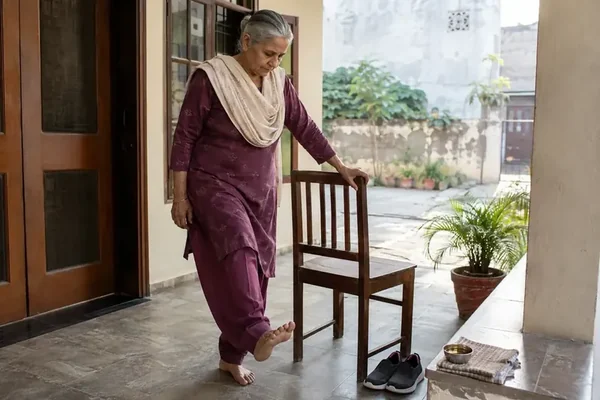
Frozen shoulder usually announces itself in small tasks: a hand that will not reach behind to fasten a blouse or kurta, a sleeve that is hard to get into, a night broken by turning onto that side.
- Your shoulder has become painful and stiff, and you can't lift your arm above your head.
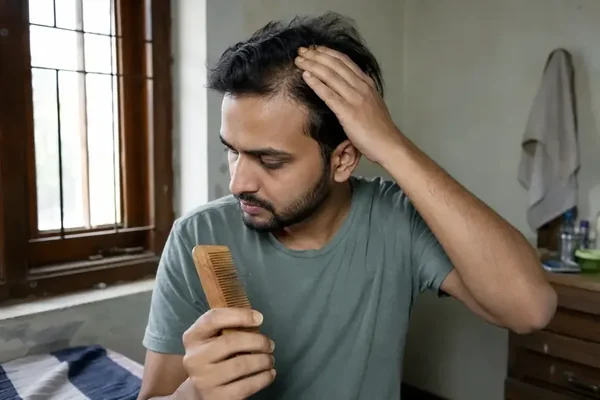
- Reaching behind your back, combing your hair, or putting on a shirt or dupatta has become hard.
- The pain is worse at night, and lying on that side wakes you.
- It started slowly, with or without an injury.
- You have diabetes or thyroid problems, and kandhe ka dard has crept in over weeks.
These are typical signs of frozen shoulder. It is painful and slow, but it usually gets better with time, and there are ways to ease it.1 For other bone and joint problems, see all bones and joints concerns.
What it is, and what it isn't
Frozen shoulder (adhesive capsulitis) happens when the tissue around the shoulder joint becomes inflamed, thickened and tight, so the shoulder loses movement.4 In Hindi, people say "kandha jam ho gaya" (the shoulder has gone stiff) for a frozen shoulder; "kandhe ka dard" is the everyday phrase for any shoulder pain. It is most common between 40 and 60, and more common in people with diabetes.4
The three stages4:
- Freezing: pain builds and movement slowly reduces, over weeks to months.
- Frozen: pain may ease, but the shoulder stays very stiff.
- Thawing: movement gradually returns.
| Frozen shoulder | Rotator cuff problem or tear | |
|---|---|---|
| Start | Pain builds slowly; it can follow an injury or surgery when the shoulder was kept still4 | An injury, such as a fall on an outstretched arm or a heavy jerking lift, or gradual wear of the tendon with age5 |
| Movement | Limited when you move the shoulder and when someone else moves it4 | Weakness when lifting or rotating the arm, and pain when lifting and lowering it5 |
| Pain | Dull or aching; can be worse at night and disturb sleep14 | Pain at rest and at night, especially lying on that shoulder; some tears are painless5 |
Night pain can occur in both, so the pain pattern alone does not separate them.15
When it should not wait
Urgent signs
Get emergency care now if shoulder or arm pain comes with chest pain or tightness, breathlessness, sweating or feeling sick. This can be a heart attack, especially in the left shoulder.3
Get urgent care the same day if:
- you can't move your arm after a fall or injury;
- the shoulder looks out of shape;
- it is hot or badly swollen, or you feel feverish or unwell.2
Arrange a prompt review if:
- you have numbness or tingling down the arm;
- you notice a lump;
- you have weight loss you can't explain;
- the pain hasn't improved after a few weeks of care.2
How Dr. Sharma assesses it
Your shoulder is examined in person: how far it moves when you lift it and when it is moved for you, where it hurts, and your neck.
- How it began. Slowly or after an injury; how long ago; and whether pain or stiffness is the main problem now.
- The stage. Whether pain is still building, or the shoulder is mainly stiff.
- Your health. Diabetes and how well controlled it is, thyroid, recent surgery or a period when the arm was kept still, and heart problems.14
- What you have tried. Painkillers, oils, physiotherapy, injections, and how each helped.
- Reports, only when useful. An MRI or ultrasound is not needed to diagnose frozen shoulder; an X-ray or scan may be suggested to look for other causes, such as arthritis or a rotator cuff tear.245 Neck pain spreading to the shoulder is a different problem; neck pain and cervical spondylosis covers it.
What treatment can and can't promise
What helps a frozen shoulder in general
- What treatment aims for. It aims to ease pain and keep as much movement as possible while the shoulder slowly recovers.1
- Physiotherapy and gentle exercise. Shoulder exercises suited to your stage are a core part of care. Forcing a painful shoulder too hard early on can make it worse.1
- When a specialist helps. If pain is severe or progress stalls, an orthopaedic specialist may offer a steroid injection, a procedure to stretch the joint, or, less often, surgery.4
- Diabetes control. Keeping blood sugar well controlled matters for your health in general and is part of the plan.
- Follow-up. A follow-up visit reviews how far the arm now lifts and reaches behind you, and your night pain, and adjusts the plan.
- Honest outcomes. Some people keep a little stiffness long-term.1
Where Ayurvedic care fits. Ayurvedic support means warmth, daily routine and treatment decided after assessment, alongside exercise and physiotherapy and never instead of them. If your shoulder needs an injection, a procedure or an orthopaedic opinion, you are told so plainly and referred. No product is named here.
Your doctor
Your doctor
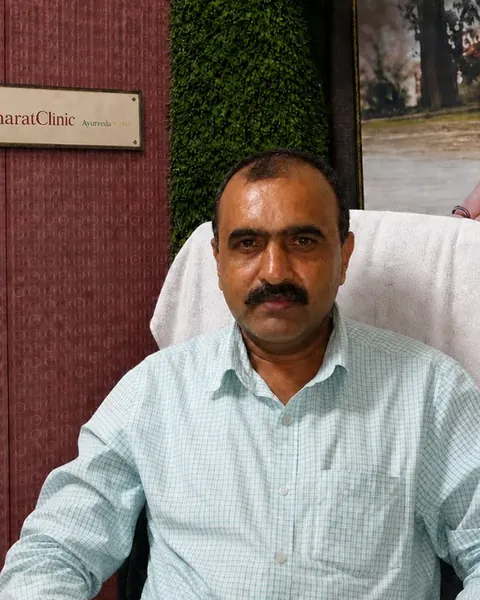
Dr. D.K. Sharma, the Ayurvedic doctor who sees you
Name, qualification and registration BAMS; practising since 1992 4067, Board of Ayurvedic and Unani Systems of Medicine, Punjab
Reviewed by Dr. D.K. Sharma. Approval recorded on 8 November 2026 for this exact text.
A consultation, ₹500
Bring any X-ray or scan reports and your sugar results. You describe how it began and what you can no longer do, such as lifting the arm or reaching behind you, and the shoulder is examined. Dr. Sharma can then discuss the appropriate next step, when a physiotherapist or an orthopaedic opinion would help, and how supportive Ayurvedic care might sit alongside.
Looking for a frozen shoulder doctor near you? The consultation is with Dr. D.K. Sharma (BAMS), in person in Ludhiana or by video. A shoulder needs to be examined, so most first consultations are in person, and video can go through your history and reports first. Your personalised Dinacharya (daily-routine) guide follows the consultation. You can book a consultation or read how a video consultation works.
The consultation
₹500In person in Ludhiana, or by video
Includes your personalised Dinacharya (daily-routine) guide, prepared after the consultation.
How booking works · no payment until step 3
- You send a request
- Suitability and a time are confirmed
- You pay ₹500
- Your slot is confirmed
- The consultation
Other costs
- Medicine, if advised
- Discussed after your consultation
- Care courses
- Discussed after your consultation
Questions before you book
How long does frozen shoulder last?
It can take months to a few years, through the freezing, frozen and thawing stages; full recovery may take up to about three years.14
Full answer
Treatment can ease pain and help movement along the way.
Why is frozen shoulder more common with diabetes?
People with diabetes are more likely to get frozen shoulder, and it may last longer.1 The exact reason isn't fully understood.
Is it frozen shoulder or a torn muscle?
The main clue is whether the shoulder is stiff even when someone else moves it.4
Full answer
A rotator cuff problem more often shows as weakness or pain when lifting or rotating the arm.5 The table under "What it is, and what it isn't" sets out the other differences, and an examination tells them apart.
What exercises can I do at home for frozen shoulder?
Keep the shoulder moving gently and within comfort, because holding it still tends to make the pain worse.1
Full answer
Do the exercises a physiotherapist or doctor gives you for your stage, and avoid forcing strenuous stretches on your own. Stop any movement that brings sharp pain. A heat pack for up to 20 minutes at a time can ease stiffness.1
What medicine helps frozen shoulder, and will I need an injection?
Painkillers can help with the pain, and a doctor may prescribe stronger ones or a steroid injection.
Full answer
Stronger pain relief is usually short-term because of side effects.1 A steroid injection is not always needed; it may help when pain is severe, and an orthopaedic specialist decides. The next question covers Ayurvedic treatment.
Is there an Ayurvedic treatment for frozen shoulder?
Ayurvedic treatment may be considered after assessment, alongside exercise and physiotherapy. No product is named here.
Can I get frozen shoulder in my 30s?
It is less common under 40, so a stiff shoulder at that age deserves an examination to find the cause.
Full answer
An old injury, diabetes, a thyroid problem or a rotator cuff problem can look similar.
Understand it better
- People aged 40 to 60, women more often than men.
- People with diabetes, and sometimes thyroid problems.
- After a period when the arm was kept still, such as after an injury or surgery.