



Neck pain and cervical spondylosis: causes, treatment and when to worry
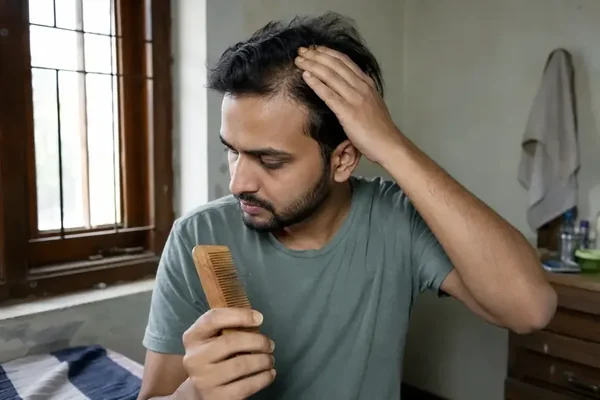
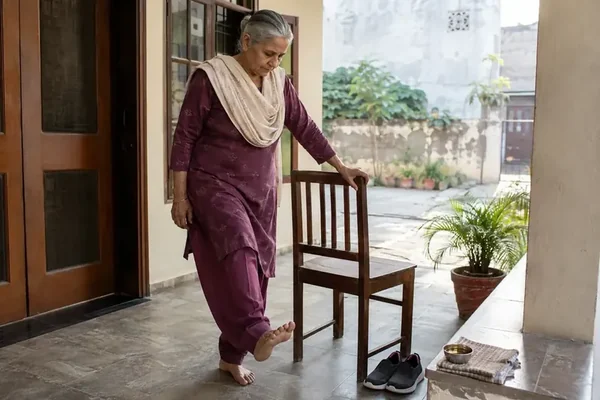
Does this sound like you?
Short answer: Neck pain is common and usually not caused by anything serious.1 Gentle movement and staying active usually help more than holding the neck still.1
Urgent signs: neck pain after a fall or blow to the head, new weakness in an arm or leg, or a stiff neck with fever, severe headache or a rash needs emergency care now.1 The full list is under “When it should not wait”.
The symptoms of cervical pain, or neck pain, often show up when you turn to check traffic, or on waking with a neck that will not move.
- Your neck is stiff and painful, especially after long hours on a phone, laptop or two-wheeler.
- Turning your head to look back while driving or check traffic has become hard.
- Your cervical pain is not limited to the neck area: it spreads into the shoulder, between the shoulder blades or up into the head.
- You wake with a stiff neck, or it clicks or grates when you turn.
- Your cervical pain is felt in the arm or hand too, with tingling or numbness in the fingers.
When it keeps returning, spreads into the arm, or comes with any sign in the next section, it is worth a proper look. If it is your lower back or a joint that hurts, start from joint, back and neck pain.
Learn moreManyāstambha: what Ayurveda means by it, and how it compares with neck pain and cervical spondylosisManyāstambha (मन्यास्तंभ) is Ayurveda's name for a stiff, painful neck.
What it is, and what it isn't
Most neck pain comes from the muscles, joints and discs of the neck, often linked to posture and strain.1 "Cervical pain" is the everyday name for pain from the neck part of the spine (the cervical spine). Cervical spondylosis is age-related wear in the neck's discs and joints. It is very common with age, and many people who have it on an X-ray have little or no pain.2
| It is | It isn't |
|---|---|
| Pain and stiffness that change with posture and movement | Explained by "cervical" on an X-ray alone |
| More likely with long desk, phone or driving hours | A reason to wear a collar for weeks without advice |
| Sometimes pain or tingling into one arm from a nerve | The same as a shoulder joint problem, though they can feel alike; see frozen shoulder |
In Hindi, Punjabi and Hinglish
Show the words and Hinglish questionsHide the words
This page is in English. These are the words people use and what they mean here.
| You may say or search | It means |
|---|---|
| cervical pain (सर्वाइकल दर्द) | pain from the neck part of the spine |
| gardan akad gayi (गर्दन अकड़ गई) | the neck has gone stiff |
| cervical ho gaya | an everyday way to say "I have neck pain" |
| lakshan (लक्षण) | symptoms or signs |
| kya hota hai | what it is |
| ilaj (इलाज) | treatment or care |
Common questions in Hinglish
- Cervical pain kya hota hai? It is pain from the neck part of the spine, most often from its muscles, joints and discs.1 The types are under "What are the types of neck (cervical) pain?"
- Cervical pain ke lakshan kya hain? Neck pain and stiffness that change with posture, sometimes spreading to the shoulder or into an arm with tingling. Worsening numbness or weakness in an arm needs urgent care the same day.1 Full answer: "Does this sound like you?" and "When it should not wait"
- Cervical pain ka ilaj kya hai? Treatment usually starts with gentle movement and posture changes; the full answer is under "What is the treatment for cervical pain?"1
When it should not wait
Neck pain is usually not an emergency. These patterns are different.
Urgent signs
Get emergency care now if:
- neck pain follows a fall, an accident or a blow to the head;
- you have new weakness in an arm or leg, trouble walking or balancing, or loss of bladder or bowel control;
- a stiff neck comes with fever, a severe headache, a rash or dislike of bright light.1
Get urgent care the same day if:
- the pain is sudden and severe;
- you have a fever and feel unwell;
- numbness, pins and needles or weakness in an arm is getting worse.1
Arrange a prompt review if: your hands feel clumsy (buttons, writing), you are losing weight without trying, you have had cancer, or the pain is constant and worse at night.2
How Dr. Sharma assesses it
Your neck, shoulders and arms are examined in person: how the neck turns, where it is tender, and the strength and feeling in your arms and hands.
- Where and since when. The neck alone or into the shoulder, arm or head; after an injury or gradually.
- The pattern. Morning stiffness and how long it lasts; night pain; tingling, numbness or weakness; dizziness or headache; what eases or worsens it.
- Work and posture. Screen, phone and desk hours, driving, pillows and sleep position, lifting, activity.
- Health and medicines. Diabetes, thyroid or other joint problems; every painkiller, muscle relaxant, collar or oil you have used, and for how long. Bring the strips or bottle.
- Reports, and tests only when useful. Bring any X-ray or MRI. A scan is suggested when nerve signs, a warning sign or the examination calls for it, not routinely.2
What treatment can and can't promise
- No single oil, pillow or tablet. The plan follows the cause and the pattern.
- Keep the neck moving. For neck pain treatment, gentle movement and staying active usually help more than holding the neck still.1
- Within scope, or referred. Once you have been assessed, you get posture, work and routine guidance, and Ayurvedic treatment where it suits you. A physiotherapist, an orthopaedic surgeon or a neurologist is suggested when that is right.
- Honest outcomes. Neck pain often eases with the right routine. Wear changes in the spine stay, and some pain returns with strain. How long it takes is decided after assessment.
- Cervical pain medicine and tablets. Painkillers and muscle relaxants are usually the first thing tried; they can ease a bad spell but don't change posture or strain. An Ayurvedic medicine is considered only after assessment, and no product is named here.
- Follow-up. At a review, Dr. Sharma asks whether the changes to screen time and sleep have helped, re-checks strength and feeling in the arms, and adjusts the plan.
Your doctor
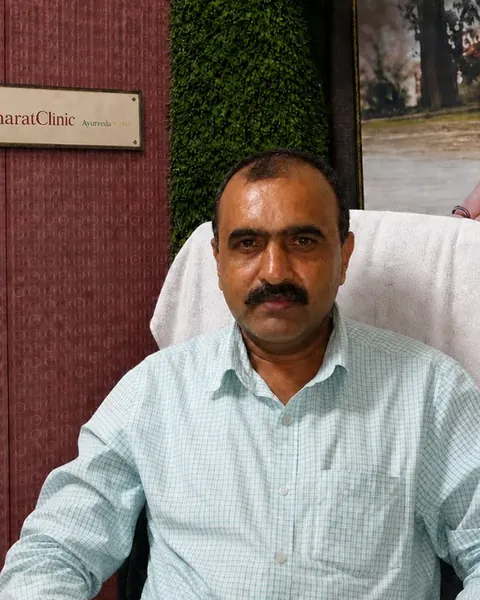
Your doctor
Dr. D.K. Sharma, the Ayurvedic doctor who sees you
Name, qualification and registration BAMS; practising since 1992 4067, Board of Ayurvedic and Unani Systems of Medicine, Punjab
Reviewed by Dr. D.K. Sharma. Approval recorded on 8 November 2026 for this exact text.
Medical content approved by Dr. D.K. Sharma.
A consultation, ₹500
You explain your daily posture and routine: screen hours, how you sleep, how you travel to work. Your neck and arms are examined. Dr. Sharma then explains the next step: whether an X-ray or MRI is useful, and whether treatment at Bharat Clinic suits you.
You can book a consultation or read how a video consultation works. For cervical pain, the doctor you see is Dr. D.K. Sharma, an Ayurvedic doctor: the consultation is in person at Samrala Chowk or Focal Point, Gobindgarh, in Ludhiana, or by video to begin. Neck pain with arm symptoms needs an examination, so most first consultations are in person. The visit usually takes 30 to 60 minutes. Your personalised Dinacharya (daily-routine) guide follows the consultation. Bring your X-ray or MRI and the medicines you use.
The consultation
₹500In person in Ludhiana, or by video
Includes your personalised Dinacharya (daily-routine) guide, prepared after the consultation.
How booking works · no payment until step 3
- You send a request
- Suitability and a time are confirmed
- You pay ₹500
- Your slot is confirmed
- The consultation
Other costs
- Medicine, if advised
- Discussed after your consultation
- Care courses
- Discussed after your consultation
Questions before you book
My X-ray says cervical spondylosis. Is that why my neck hurts?
Not necessarily. Wear changes are common with age and are often found in people without pain.2
Full answer
The examination and your pattern decide how much the X-ray explains. Cervical spondylosis treatment aims to manage the pain so that you stay active, often with physiotherapy exercises that stretch and strengthen the neck muscles.2
What is the treatment for cervical pain?
Gentle movement, posture and work changes, and exercises suited to you usually come first.1
Full answer
Ayurvedic treatment is added after assessment, if it suits you. Arm weakness, numbness, or trouble with walking or balance needs a prompt examination.
What exercises or home care help cervical pain?
To get relief from cervical pain, keep your neck moving within comfort.
Full answer
Cervical pain treatment at home also means sitting upright with your shoulders relaxed, sleeping on a low, supportive pillow, and using a warm pack for up to 20 minutes at a time.1
Gentle exercises can help: turn your head slowly from side to side, and tilt your ear towards each shoulder. Stop if the pain spreads down the arm or brings tingling.
Most cervical pain settles within a few weeks; physiotherapy helps if it doesn't, and no single oil, pillow or tablet cures it.1
What are the types of neck (cervical) pain?
Doctors usually group the types of cervical pain by their cause: muscle and posture strain, wear in the neck bones and discs, an irritated nerve, or an injury.
Full answer
- Muscles and posture: the commonest, which often follows long desk or phone hours.
- Wear-related change in the neck bones and discs (cervical spondylosis).
- Pain or tingling that travels into an arm from an irritated nerve (cervical radiculopathy).
- Pain after an injury, such as whiplash.
Which one it is decides what helps.
Should I wear a cervical collar?
Not routinely. Keeping the neck gently moving is usually advised for ordinary neck pain.1
Full answer
A collar is a decision for after an examination, especially after an injury.
Can neck problems cause dizziness or headache?
Neck strain can come with a headache. Dizziness has many causes, some unrelated to the neck, so it is assessed rather than assumed to be "cervical".
Full answer
Dizziness with weakness, trouble walking or a severe headache needs urgent care (see the warning signs above).
Understand it better
What can contribute. The causes of cervical pain are usually more than one thing13:
- Posture and screens: long hours looking down at a phone or laptop, or a poor driving position.
- Strain and sleep: a sudden movement, carrying loads, an unsuitable pillow, stress.
- Wear with age: disc and joint changes (cervical spondylosis) can narrow the space for a nerve.
- Less common causes: injury, inflammatory arthritis, infection or a growth, which is why the warning signs matter.