







Gout and high uric acid: symptoms, diet and treatment
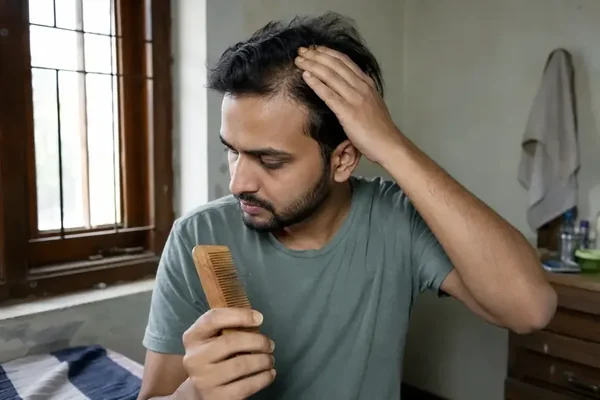
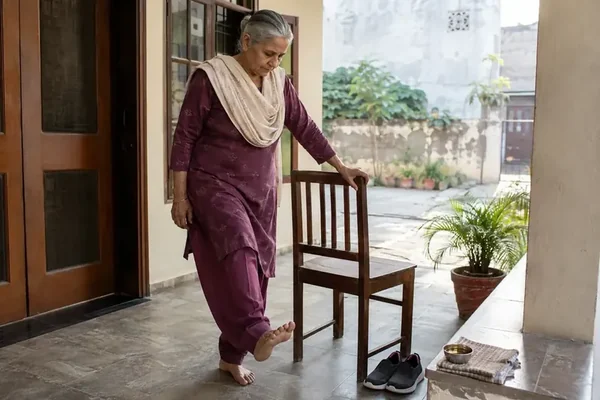
Does this sound like you?
Short answer: gout is a type of arthritis in which uric acid crystals form in a joint and cause sudden pain, swelling and heat, often at the base of the big toe.1 A high uric acid report on its own does not mean you have gout.5
Urgent signs: a hot, red, swollen joint with a fever or feeling unwell can be a joint infection and needs a hospital today.3 The full list is under “When it should not wait”.
You may be here for one of two reasons: a toe that turned hot and too tender to touch overnight, or a lab report with a high uric acid number and a list of foods to give up. For other joint problems, see all bones and joints concerns.
- A joint, often the base of the big toe, became suddenly and severely painful, often overnight.
- It is swollen, red, hot and too tender even for a bedsheet.
- It settled after some days, then came back in the same or another joint.
- A report says your uric acid is high, and you want to know what it means.
- You have been told to stop eating dal, tomatoes or paneer, and you are not sure why.
A gout attack is very painful but usually settles; repeated attacks are worth assessing so they can be prevented.1
Learn moreVātarakta: what Ayurveda means by it, and how it compares with goutVātarakta (वातरक्त) is Ayurveda's name for painful, red, swollen joints from vāta and blood.
What it is, and what it isn't
Gout is a type of arthritis. When uric acid builds up in the blood, it can form tiny crystals in a joint, which cause sudden pain, swelling and heat.1 People also say "uric acid badh gaya" or call it gathiya. Uric acid itself is a waste product formed when the body breaks down purines, substances found in some foods and made in the body. The kidneys remove most of it in urine.1
Reading a uric acid report. These are facts, not advice for your own case.
- Normal ranges differ by laboratory and by sex, so use the range printed on your report.4 The guide Uric acid kitna hona chahiye? gives reference figures and explains how to read the report.
- A high level does not mean you have gout. A raised reading often never leads to an attack.5
- A normal level does not rule gout out. Uric acid can fall during an attack, so the test may need repeating at least two weeks after it settles.2
- For people on long-term treatment, guidelines aim for a level below 360 micromol/L (about 6 mg/dL), and lower for some.2
In Hindi, Punjabi and Hinglish
Show the words and Hinglish questionsHide the words
This page is in English. These are the words people use and what they mean here.
| You may say or search | It means |
|---|---|
| uric acid (यूरिक एसिड) | a waste product in the blood; too much can lead to gout |
| uric acid badh gaya | the uric acid level on a report is high |
| gathiya (गठिया) | an everyday word for gout and other joint pain |
| lakshan (लक्षण) | symptoms or signs |
| kaise badhta hai | how it goes up, or why |
Common questions in Hinglish
- Uric acid kya hota hai? A waste product in the blood that the kidneys remove in urine.1 Full answer: “What it is, and what it isn't”
- Uric acid badhne ke lakshan kya hain? Usually none; when high uric acid does cause trouble, the usual sign is a sudden, very painful gout attack.1 Full answer: “What are the symptoms of high uric acid?”
- Uric acid kaise badhta hai? Usually several things add up, such as weight, alcohol, kidney health and some medicines.1 Full answer: “Why does uric acid go up?”
When it should not wait
Urgent signs
Get urgent care the same day if:
- a joint is hot, red and swollen and you have a fever or feel unwell; a joint infection can look like gout and needs a hospital3;
- a first attack is severe;
- a joint hurts after a fall.
Arrange a prompt review if: attacks keep returning; there are lumps under the skin near joints or on the ears (called tophi); you have kidney stones or kidney problems; or a new medicine was started just before the attack.12
How Dr. Sharma assesses it
Your joints are examined in person, especially during or soon after an attack.
- Where and since when. Which joint; how fast it came on; how many attacks, and how often.
- The pattern. Swelling, redness, warmth; fever; how long each attack lasts; any joint that never fully settles.
- What may set it off. Alcohol, especially beer, sugary drinks, large meat or seafood meals, fasting, dehydration or an illness.
- Wider health and medicines. Weight, blood pressure, diabetes, kidney health and thyroid; every medicine, including water tablets, aspirin, painkillers and steroids. Don't stop a prescribed medicine on your own.
- Reports, and tests only when useful. Bring every uric acid, kidney and sugar report, with dates. Sometimes fluid from the joint is tested, or an X-ray or scan is suggested, with the reason explained.2
What treatment can and can't promise
- Gout treatment has two parts: treating the attack, and preventing the next one. For an attack, it is usually a prescribed anti-inflammatory painkiller (an NSAID), and a doctor may add steroids if the pain and swelling do not improve. Resting and raising the joint, and holding an ice pack wrapped in a towel for up to 20 minutes at a time, can ease the pain.1 Preventing further attacks is a separate decision, described below.
- Pattern and report together. A number alone doesn't decide treatment; your attacks, joints and health do.
- Prevention is a medical decision. Long-term medicine to lower uric acid is recommended for some people with gout, and that decision is made with you, with regular blood tests.2
- Diet and routine. Weight, alcohol, sugary drinks and meal patterns may affect attacks for some people; which changes matter for you is worked out in the consultation.
- Within scope, or referred. After assessment, Dr. Sharma tells you whether Ayurvedic care suits you, or whether a rheumatologist or a kidney specialist should see you.
- About "uric acid medicine". Medicines that lower uric acid are prescribed and monitored with blood tests2; please don't stop one on your own. An Ayurvedic medicine for uric acid is considered only after assessment, alongside that care where relevant, and no product is named here.
- Follow-up. A follow-up visit reviews how many attacks you have had since the last visit and your repeat uric acid and kidney reports, with their dates, and adjusts the plan.
- Honest outcomes. With the right plan, attacks often become less frequent. How long that takes is decided after assessment.
Your doctor
Your doctor
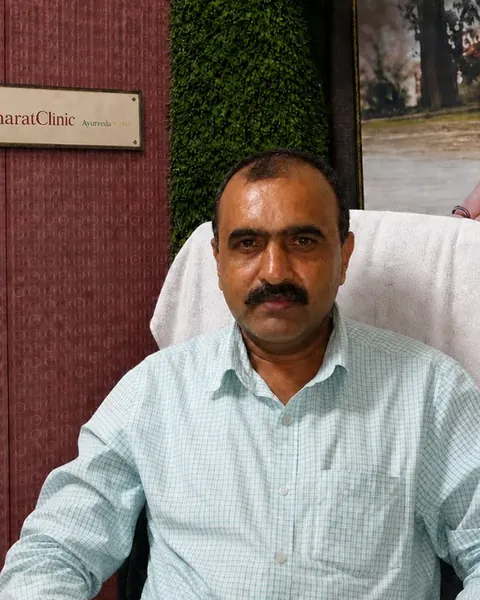
Dr. D.K. Sharma, the Ayurvedic doctor who sees you
Name, qualification and registration BAMS; practising since 1992 4067, Board of Ayurvedic and Unani Systems of Medicine, Punjab
Reviewed by Dr. D.K. Sharma. Approval recorded on 8 November 2026 for this exact text.
Medical content approved by Dr. D.K. Sharma.
A consultation, ₹500
Bring every uric acid report with its date and all your medicines, and be ready to describe your attacks and what you eat and drink. Dr. Sharma can then discuss what your numbers mean for you, the appropriate next step, and whether treatment at Bharat Clinic suits you.
The consultation is in person at Samrala Chowk or Focal Point, Gobindgarh, in Ludhiana, or by video to begin. A swollen joint needs examining in person, while going through reports suits video. The visit usually takes 30 to 60 minutes. Your personalised Dinacharya (daily-routine) guide follows the consultation. You can book a consultation or read how a video consultation works.
The consultation
₹500In person in Ludhiana, or by video
Includes your personalised Dinacharya (daily-routine) guide, prepared after the consultation.
How booking works · no payment until step 3
- You send a request
- Suitability and a time are confirmed
- You pay ₹500
- Your slot is confirmed
- The consultation
Other costs
- Medicine, if advised
- Discussed after your consultation
- Care courses
- Discussed after your consultation
Questions before you book
Is my uric acid level normal?
That depends on the laboratory and on sex, so use the range printed on your report.4
Full answer
For people being treated for gout, guidelines aim for below about 6 mg/dL.2 The guide Uric acid kitna hona chahiye? explains the normal range, what level of uric acid is dangerous, and what a high number does and does not mean.
What are the symptoms of high uric acid?
Often none. A high reading on its own usually causes no symptoms, and it does not always lead to gout.
Full answer
When it does cause trouble, the usual sign is gout: sudden, severe pain in a joint, often the big toe, with hot, swollen, red skin.1 Uric acid can also form kidney stones.
Why does uric acid go up?
The common causes of high uric acid include being overweight, alcohol, kidney problems, high blood pressure and some medicines, such as water tablets.1
Full answer
It often runs in families, and large amounts of beer, red meat, organ meat and sugary drinks add to it.
Do I have to stop eating dal and paneer?
Not necessarily. Advice to cut whole food groups is common but often not needed.
Full answer
Which foods matter for you is worked out from your attacks, weight and other health, rather than a fixed list. The foods that raise uric acid most, including some seafood, are listed in the next answer. Questions about tomatoes, lemon or a particular vegetable are best answered against your own reports, so bring them to the consultation.
Which foods should I avoid with high uric acid?
To control or reduce uric acid, limit alcohol, especially beer, sugary drinks, and large amounts of red meat, organ meat and some seafood, which raise uric acid the most.1
Full answer
- To reduce uric acid naturally, drink enough water and, if you need to, lose weight steadily.
- No single remedy cures high uric acid, and your doctor decides whether long-term medicine is needed.2
- Dal and dairy usually don't need to be cut out, as the question above explains.
A "low-purine" diet simply means limiting the richest sources of purines, natural substances in some foods that the body breaks down into uric acid. Juices, herbs or home remedies sold online for "flushing out" uric acid are no substitute for tests, or for prescribed treatment when it is needed.
My uric acid is high but nothing hurts. Do I need treatment?
Not always. A high reading without gout is common.5 What it means for you depends on your kidneys, other health and family history, which is what the consultation looks at.
Understand it better
What can contribute. Usually more than one thing15:
- Body and family: gout is more common in men, after menopause in women, and when it runs in the family.
- Weight and health: extra weight, high blood pressure, diabetes and kidney problems.
- Drinks and meals: alcohol, especially beer and spirits, sugary drinks, and large amounts of red meat, organ meat or seafood.
- Medicines: some, such as water tablets, can raise uric acid. Don't stop one on your own.