



Arthritis and osteoarthritis (gathiya): joint stiffness, causes and care

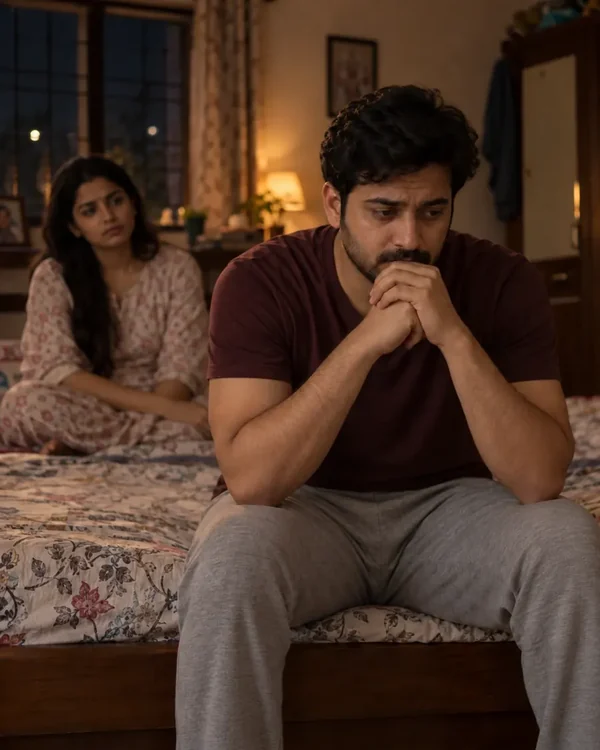
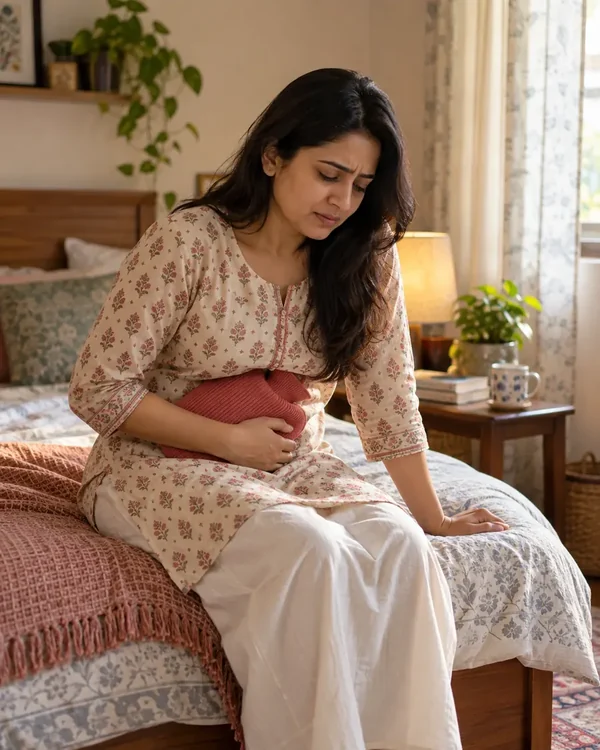
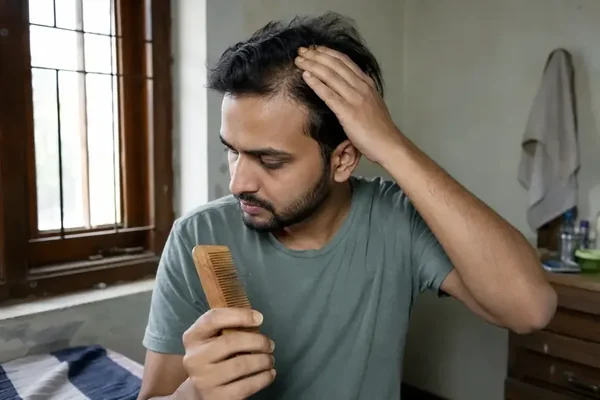
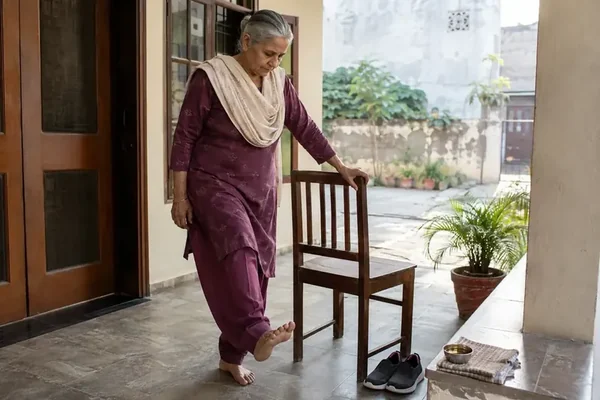
Does this sound like you?
Short answer: "gathiya" can mean wear in a joint (osteoarthritis) or inflammation (such as rheumatoid arthritis). Morning stiffness of 30 minutes or less suggests wear3; swollen small joints or stiffness that lasts much longer need a rheumatologist promptly.25
Urgent signs: one hot, red, swollen and very painful joint, especially with a fever, can be a joint infection and needs a hospital today.4 The full list is under “When it should not wait”.
Joint pain means pain in one or more joints, sometimes with stiffness, swelling or warmth. You may notice:
- Your joints are stiff when you wake, and it takes a while to get going.
- More than one joint aches: fingers, wrists, knees, feet or shoulders.
- A joint swells, looks puffy or feels warm.
- Gripping, opening a jar, buttoning or climbing stairs has become harder.
- Someone has called it gathiya, but nobody has said which kind.
Joint pain and stiffness are common, and the pattern matters: how many joints, which ones, and how long the morning stiffness lasts.12 For back, neck, knee and other problems, see all bones and joints concerns.
Learn moreĀmavāta: what Ayurveda means by it, and how it compares with rheumatoid arthritisĀmavāta (आमवात) is Ayurveda's name for swollen, stiff joints with heaviness.
What it is, and what it isn't
Arthritis means a joint that is painful and inflamed or worn; it is a group of conditions, not one disease.1 The two seen most often are osteoarthritis, from wear of the joint surfaces, and inflammatory arthritis, such as rheumatoid arthritis, where the immune system affects the joint lining. People also say "gathiya" or "jodon ka dard" for both, and for gout.
| Wear (osteoarthritis) | Inflammatory (for example rheumatoid arthritis) |
|---|---|
| Pain with use, better with rest | Pain and stiffness often worse after rest |
| Morning stiffness of 30 minutes or less3 | Morning stiffness that often lasts longer2 |
| Usually knees, hips, hands; often one side more | Often small joints of the hands and feet, both sides2 |
| Slow change over years | Swelling, warmth, tiredness; can damage joints early2 |
If it is one knee, read knee pain and osteoarthritis. Sudden severe pain in one joint, often the big toe, may be gout; see gout and uric acid.
In Hindi, Punjabi and Hinglish
Show the words and Hinglish questionsHide the words
This page is in English. These are the words people use and what they mean here.
| You may say or search | It means |
|---|---|
| jodon ka dard (जोड़ों का दर्द) | pain in the joints |
| gathiya (गठिया) | an everyday word for several joint problems, not one diagnosis |
| jodon mein dard ka karan | the reasons for joint pain |
| ilaj | treatment or care |
Common questions in Hinglish
- Jodon ka dard kya hota hai? It means pain in one or more joints, and arthritis is a common cause.12 Full answer: “Does this sound like you?”
- Jodon mein dard ka karan kya hai? Wear, inflammatory arthritis, gout, injury or overuse, and rarely infection. Full answer: “What causes joint pain, and what is the treatment?”
- Gathiya ka ilaj kya hai? Wear-related gathiya and inflammatory arthritis are treated differently, so the first step is knowing which you have.35 Full answer: “Is there Ayurvedic treatment for arthritis?”
- Gathiya aur arthritis ek hi hain? Not quite: gathiya is an everyday word for several joint problems. Full answer: “Is gathiya the same as arthritis?”
When it should not wait
Urgent signs
Get urgent care the same day if:
- one joint becomes hot, red, swollen and very painful, especially with a fever or feeling unwell; this can be a joint infection and needs a hospital4;
- the pain is sudden and severe;
- a joint looks out of shape after a fall or an injury.
See a rheumatologist promptly if:
- joints have been swollen for more than a few weeks;
- small joints of the hands or feet are affected;
- more than one joint is swollen;
- morning stiffness lasts a long time.
Early specialist care matters in inflammatory arthritis.5 Unexplained weight loss, fever or a new rash with joint pain also needs a prompt review.
How Dr. Sharma assesses it
Your joints are examined in person: which are swollen, warm or tender, and how each one moves.
- Which joints and since when. How many; one side or both; after an injury, an illness or gradually.
- The pattern. Morning stiffness and how long it lasts; swelling, redness, warmth; night pain; what eases or worsens it; tiredness.
- Wider health. Skin rashes such as psoriasis, eye or bowel problems, diabetes, thyroid; family history of arthritis; work, weight and activity.
- Medicines. Every painkiller, steroid tablet or injection, and prescribed arthritis medicine, and for how long. Never stop a prescribed arthritis medicine on your own.
- Reports, and tests only when useful. Bring X-rays and blood reports (rheumatoid factor, anti-CCP, ESR, CRP, uric acid). Which tests help depends on the pattern; a normal blood test does not rule out inflammatory arthritis.5
What the consultation can and can't promise
- A clear route first. The aim is to tell wear from inflammation, and to send inflammatory arthritis to a rheumatologist without delay.5
- Alongside, never instead. Medicines prescribed by a rheumatologist protect the joints; nothing here replaces them. Whether any Ayurvedic care has a place alongside is decided only after assessment.
- Movement and weight. For osteoarthritis, exercise suited to you and weight loss if you are overweight are core care.3
- Honest outcomes. Joint damage that has happened does not undo; the work is protecting function and daily life. How long anything takes is decided after assessment.
- Follow-up. A follow-up visit reviews stiffness, swelling and daily tasks, and keeps your specialist in the picture. At a review he asks how long the morning stiffness now lasts and re-checks which joints are swollen.
Your doctor
Your doctor
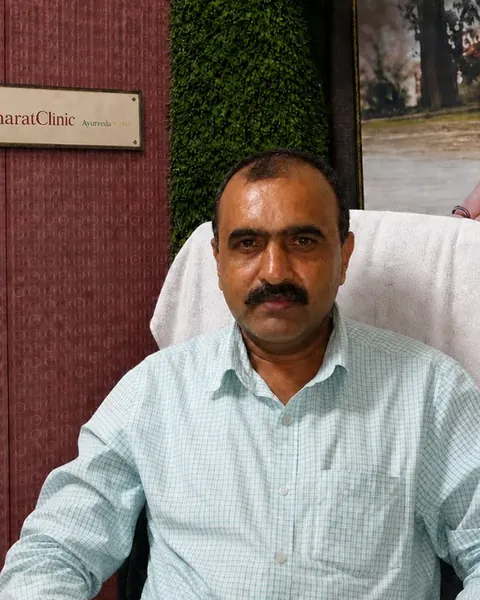
Dr. D.K. Sharma, the Ayurvedic doctor who sees you
Name, qualification and registration BAMS; practising since 1992 4067, Board of Ayurvedic and Unani Systems of Medicine, Punjab
Reviewed by Dr. D.K. Sharma. Approval recorded on 8 November 2026 for this exact text.
Medical content approved by Dr. D.K. Sharma.
A consultation, ₹500
Bring what helps separate wear from inflammation: which joints hurt, how long the morning stiffness lasts, your blood reports and X-rays, and every medicine you take. Dr. Sharma can then talk through which tests make sense, tell you plainly when a rheumatologist should be involved, and discuss whether Ayurvedic care at Bharat Clinic fits alongside.
Looking for an arthritis or joint pain doctor near you? For joint pain, the doctor you see is Dr. D.K. Sharma, an Ayurvedic doctor. A rheumatoid arthritis doctor is a specialist called a rheumatologist.5 The consultation is in person at Samrala Chowk or Focal Point, Gobindgarh, in Ludhiana, or by video to begin. Swollen joints need examining, so most first consultations are in person. The visit usually takes 30 to 60 minutes. Your personalised Dinacharya (daily-routine) guide follows the consultation. You can book a consultation or read how a video consultation works.
The consultation
₹500In person in Ludhiana, or by video
Includes your personalised Dinacharya (daily-routine) guide, prepared after the consultation.
How booking works · no payment until step 3
- You send a request
- Suitability and a time are confirmed
- You pay ₹500
- Your slot is confirmed
- The consultation
Other costs
- Medicine, if advised
- Discussed after your consultation
- Care courses
- Discussed after your consultation
Related reading
Questions before you book
What causes joint pain, and what is the treatment?
Joint pain can come from wear in the joint (osteoarthritis), from inflammatory arthritis, from gout, from an injury or overuse, and rarely from infection.
Full answer
In the fingers, the usual causes are osteoarthritis, which often affects the hands, and inflammatory arthritis such as rheumatoid arthritis, which often affects the small joints of the hands and feet.23
Treatment depends on which it is. Exercise and weight help wear-related pain3, and inflammatory arthritis needs a rheumatologist.5 Painkillers can ease a flare but do not tell you the cause. An Ayurvedic medicine is considered only after assessment, and no product is named here.
Joint pain with fever, or one hot swollen joint, is covered in the urgent box above.
Is gathiya the same as arthritis?
Gathiya is an everyday word used for several joint problems, including osteoarthritis, rheumatoid arthritis and gout.
Full answer
It is not one diagnosis; the table under "What it is, and what it isn't" shows how the two commonest kinds differ.
Is there Ayurvedic treatment for arthritis?
Gathiya ka ilaj (arthritis treatment) depends on which kind it is.
Full answer
For osteoarthritis, exercise, weight and Ayurvedic treatment, if it suits you, can make daily life easier. Inflammatory arthritis needs a rheumatologist's medicines to protect the joints, and any Ayurvedic care sits alongside them, never instead.
Can arthritis be cured?
Osteoarthritis can't be reversed, but exercise, weight and treatment can make daily life much easier.3
Can arthritis be prevented?
Not always. To prevent arthritis where it can be prevented, and to slow wear in some joints, keep to a healthy weight, stay active, protect joints from injury and do not smoke, which raises the risk of rheumatoid arthritis.
Full answer
Most inflammatory types cannot be reliably prevented, but early treatment protects the joints.
What are the main types of arthritis?
The commonest is osteoarthritis, wear-related change in a joint.1 The others are:
How is arthritis diagnosed?
There is no single test that detects arthritis. A doctor starts with your history and an examination of the joints.
Full answer
An X-ray shows wear in osteoarthritis. Blood tests such as rheumatoid factor, anti-CCP, ESR and CRP, or uric acid (see how to read a uric acid report), are added when an inflammatory type or gout is possible. A normal blood test does not rule out inflammatory arthritis, so the pattern matters as much as the tests.5
Is arthritis hereditary, and can young people get it?
Family history can raise the chance of some kinds of arthritis, such as rheumatoid arthritis and some wear-related arthritis.
Full answer
Having a relative with arthritis does not mean you will get it.
Arthritis is not only a condition of older age. The causes of arthritis in young adults are more often an inflammatory type or gout, or a joint injury, so lasting joint swelling or morning stiffness at any age deserves an assessment.
My rheumatoid factor is negative. Does that rule out rheumatoid arthritis?
No. Some people with rheumatoid arthritis have a negative test, and some people without it test positive.5
Full answer
The examination and the pattern of swollen joints matter as much as the report.
I take medicine from a rheumatologist. Can I still consult?
Yes. Bring the prescription. Nothing is changed or stopped without your rheumatologist, and the plan is made to sit alongside theirs.
Understand it better
Why the type matters. Osteoarthritis develops slowly and is managed mainly with movement, strength and weight.3 Inflammatory arthritis can damage a joint within months, which is why early specialist treatment is recommended.5
What can contribute. What causes arthritis depends on the type:
- Osteoarthritis: age, past injury, extra weight, and repetitive load on a joint.
- Inflammatory arthritis: the immune system, family history and smoking; psoriasis is linked to one type.
- Gout: a build-up of uric acid crystals; see gout and uric acid.