
The names
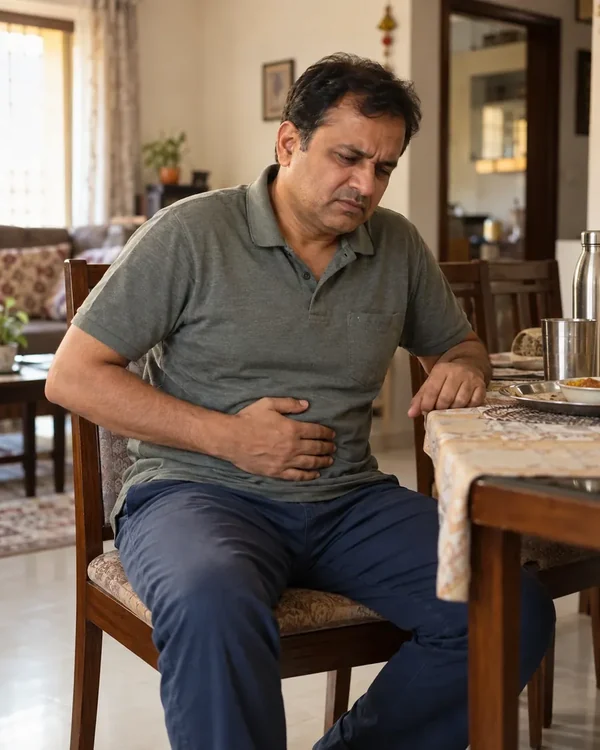
Adhmana meaning in Ayurveda. Ādhmāna means a blown-up, distended belly, and ānāha is distension with stool and wind held back: what people call pet phoolna, gas or afara.
Urgent signs: Severe or worsening pain with vomiting, a hard or very swollen stomach, or not passing stool or wind at all needs urgent care. Bloating for three weeks or more, a swelling that keeps growing, weight loss or blood in the stool needs a review.24 The full list is under "When it should not wait" on Gas and bloating (pet phoolna).
| Language | Name |
|---|---|
| Sanskrit | Ādhmāna (आध्मान): blown up, distended; ānāha (आनाह): distension with stool and wind held back |
| Hindi | Pet phoolna, gas banna, afara |
| Punjabi | Pet phullna, afara, gas banni (ਪੇਟ ਫੁੱਲਣਾ, ਅਫ਼ਾਰਾ, ਗੈਸ ਬਣਨੀ) |
| English | Bloating, wind, abdominal distension |
How Ayurveda describes it
In Ayurveda, ādhmāna is a swelling of the abdomen with gas, gurgling, pressure and discomfort, described as vāta, the principle of movement, becoming trapped instead of moving downward.1 Ānāha is the closely related state in which stool and wind are also held back, so the fullness comes with constipation (see vibandha).1
The classical texts link both with heavy, dry or hard-to-digest food, eating before the last meal has settled, weak digestion (agni) and holding back natural urges.1 Treatment in the Ayurvedic view starts with avoiding the causes, then restoring regular digestion and the bowel's downward movement with diet, routine and, where a doctor advises, medicines.
How modern medicine describes it
Modern medicine describes bloating as a feeling of fullness, tightness or pressure in the stomach, sometimes with visible swelling (distension), wind and belching.2 Gas comes from swallowed air and from bacteria in the large bowel breaking down some foods.3 Common contributors include eating fast, fizzy drinks, certain foods, constipation, and conditions such as IBS or coeliac disease.23
Some people feel normal amounts of gas more strongly. Bloating that lasts, keeps returning or comes with other signs is checked, sometimes with tests or a scan.24
Where they agree, and where they differ
| Ayurveda (ādhmāna, ānāha) | Modern medicine (bloating) | |
|---|---|---|
| The core experience | Swollen, gassy, gurgling abdomen | Fullness, pressure, visible distension |
| Link with the bowel | Ānāha joins bloating with held-back stool | Constipation is a common reason for lower bloating2 |
| Food | Heavy, dry, hard-to-digest food named as causes | Some foods make more gas; which ones differs by person3 |
| The mechanism | Trapped vāta and weak agni | Swallowed air, gas from bacteria, gut sensitivity |
| Tests | Not part of the classical description | For lasting bloating or warning signs |
| Treatment | Avoid causes, restore digestion and routine; medicines after assessment | Eating habits, treating constipation, food changes, treating any cause |
Both views agree that how and when you eat matters, that the bowel pattern is part of the picture, and that food advice should fit the person.
What the evidence does and doesn't show
- Shown: eating more slowly, fewer fizzy drinks and treating constipation reduce bloating for many people.2
- Not shown: that one food list suits everyone; foods that cause gas differ from person to person.3
- Limited: clinical trials of Ayurvedic treatments have mostly been few, small or not well designed, so firm conclusions about ādhmāna or ānāha cannot be drawn. 5
- Not a substitute: an Ayurvedic label doesn't replace tests when there are warning signs (bloating for three weeks or more, a swelling that keeps growing, weight loss, blood in the stool, repeated vomiting, feeling full very quickly).24
What this means for you
If bloating keeps returning, note when it starts, what you ate and how fast, your bowel habit, sleep, stress and medicines, and check the warning signs above. A swelling that doesn't settle should not be called gas until it has been checked.
Read next
- Gas and bloating (pet phoolna): what helps and when to be seen
- vibandha for held-back stool, and agni
- all digestion concerns
A consultation with Dr. D.K. Sharma (BAMS) is ₹500, in person in Ludhiana or by video. Dr. Sharma asks when the swelling starts, how fast you eat and about your bowel pattern, so that you and Dr. Sharma can decide what to look into first. A personalised Dinacharya (daily-routine) guide follows.
Sources
- Mādhava Nidāna, chapter on udāvarta and ānāha (classical source).
- NHS. Bloating. nhs.uk.
- National Institute of Diabetes and Digestive and Kidney Diseases. Symptoms and Causes of Gas in the Digestive Tract.
- NICE. Suspected cancer: recognition and referral (NG12).
- NCCIH (US National Institutes of Health). Ayurvedic Medicine: In Depth. Last updated January 2019. nccih.nih.gov.
Medical content approved by Dr. D.K. Sharma.
Reviewed by Dr. D.K. Sharma. Approval recorded on 8 November 2026 for this exact text.