







Eczema, psoriasis, white patches and skin allergy
Does this sound like you?
Short answer: Eczema, psoriasis, vitiligo (white patches, safed daag) and skin allergy are different conditions, and the right care depends on which it is. Eczema, psoriasis and vitiligo are not infections, so they don't spread to other people.123 Psoriasis, vitiligo and unclear rashes often need a dermatologist, and you are told when.
Urgent signs: a rash with swelling of the lips, tongue or throat, trouble breathing or faintness needs emergency care now.4 The full list is under “When it should not wait”.
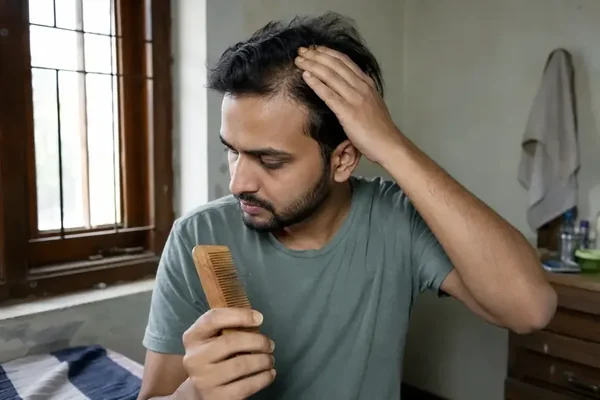
Skin that itches enough to wake you, patches that flake and return after every cream, or pale patches that are slowly getting bigger come from different conditions. White patches in particular bring worry about what others will think.
- Dry, itchy, red skin in the folds of the elbows or knees, on the hands or on the face, that flares and settles.
- Thick, raised patches with silvery scales on the elbows, knees, scalp or lower back.
- Pale or white patches (safed daag) that are slowly getting bigger.
- Itchy raised welts, or a rash after a new soap, cream, metal, food or medicine.
- You scratch at night, and khujli is affecting your sleep or work.
Long-lasting skin problems are common, and they are not a sign of poor hygiene.
What it is, and what it isn't
The four can look alike at first, but they usually differ in these ways.
| Eczema (atopic dermatitis) | Psoriasis | Vitiligo (white patches) | Skin allergy | |
|---|---|---|---|---|
| What it is | Dry, sensitive skin that becomes inflamed | The immune system speeds up skin cell growth | Skin loses its colour where pigment cells stop working | A reaction to something the skin touches or the body takes in |
| Typical look | Itchy, dry, red or darker patches, often in skin folds | Raised, well-defined patches with silvery scale | Smooth, pale or milk-white patches, not itchy | Itchy rash or welts that appear after a trigger |
| Pattern | Flares and settles, often since childhood | Flares and settles; can affect nails and joints | May stay stable or spread slowly | Comes with the trigger, settles when it is avoided |
| It is | It isn't |
|---|---|
| Usually long-term, with flares and calm spells12 | Caught from someone else |
| Often helped by daily skin care and avoiding triggers1 | Caused by eating fish with milk |
| Worth an accurate diagnosis first | Something one cream suits in every case |
For flaking that is only on the scalp, see dandruff and an itchy scalp. For skin that is darker rather than paler, see pigmentation and dark spots.
When it should not wait
Urgent signs
Get emergency care now if:
- a rash comes with swelling of the lips, tongue or throat, difficulty breathing, or faintness;
- your skin blisters or peels over a large area, especially after a new medicine.4
Get urgent care the same day if eczema suddenly becomes very painful with clusters of blisters or open sores and fever, or red, hot, swollen skin is spreading. These can be signs of infection.1
Arrange a prompt review with a dermatologist if:
- psoriasis comes with painful, swollen joints;
- the rash covers much of your body;
- a white or coloured patch looks different from the rest, or a mole changes;
- nothing has helped after a few weeks.2
How Dr. Sharma assesses it
Most of it is a private conversation, followed by a look at the skin. By video, you do not need to send a photograph beforehand; the doctor may ask you to show the area on camera during the call. You can decline, and a visit is offered instead.
- What it looks like. Where it started, how it has spread, whether it itches, scales, weeps or has lost colour.
- The pattern. Since when, what makes it flare (season, sweat, stress, soaps, food, work), and family history of eczema, asthma, allergies, psoriasis or vitiligo.
- Everything you have applied. Creams, steroid creams, home remedies and oils, and for how long. Bring the tubes. Some mixed creams sold over the counter contain strong steroids that can thin the skin.
- Your health and medicines. Thyroid, diabetes, joint pain, and any new medicine before the rash began.
- When a dermatologist is needed. Psoriasis that is widespread or affects joints, vitiligo, an unclear rash, or one that may need a skin test or biopsy goes to a dermatologist.
What treatment can and can't promise
- Diagnosis first. The plan depends on which condition it is, and some rashes look alike.
- Eczema: daily care matters most. Moisturising often with a plain emollient, gentle washing, and avoiding known triggers are the base of eczema care.1 Whether Ayurvedic treatment is added is decided after assessment (see the questions below). No product is named here.
- Psoriasis and vitiligo. Both are long-term. Treatment can calm psoriasis and, for some people, bring colour back in vitiligo, but neither has a guaranteed cure, and a dermatologist is often involved.23
- Skin allergy. Finding and avoiding the trigger is the most useful step; patch testing by a dermatologist can help.4
- Don't stop prescribed treatment. If a dermatologist has prescribed tablets or creams, keep using them as advised and bring them to the consultation.
- Honest outcomes. Flares can return even when the skin is clear. The aim is fewer, milder flares and better sleep.
Dr. Sharma assesses itchy, scaly and patchy skin conditions, explains what is known about them and reviews what you already use. For psoriasis, vitiligo and any rash that needs tests, a biopsy or prescription treatment, you are referred to a dermatologist or care is shared with the dermatologist you already see. Ayurvedic treatment for eczema and itching may be considered after assessment.
Your doctor
Your doctor
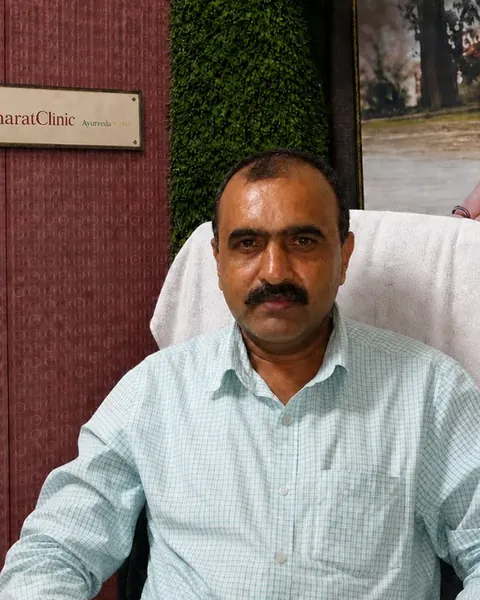
Dr. D.K. Sharma, the Ayurvedic doctor who sees you
Name, qualification and registration BAMS; practising since 1992 4067, Board of Ayurvedic and Unani Systems of Medicine, Punjab
Reviewed by Dr. D.K. Sharma. Approval recorded on 8 November 2026 for this exact text.
Medical content reviewed by
A consultation, ₹500
Long-lasting skin changes are easier to manage with the whole picture in one place. In the consultation, you can go through what you have already tried and explain how the skin affects your sleep and your day. Dr. Sharma can then discuss the next step, tell you plainly when a dermatologist should see you, and explain how Ayurvedic care might fit alongside.
The consultation is with Dr. D.K. Sharma (BAMS), in person in Ludhiana or by video. Skin is best seen in person; video can go through your history and reports first. Book a consultation when you are ready, or start by video. Your personalised Dinacharya (daily-routine) guide is prepared after the consultation. Bring every cream, oil and medicine you use, and any dermatologist's notes.
The consultation
₹500In person in Ludhiana, or by video
Includes your personalised Dinacharya (daily-routine) guide, prepared after the consultation.
How booking works · no payment until step 3
- You send a request
- Suitability and a time are confirmed
- You pay ₹500
- Your slot is confirmed
- The consultation
Other costs
- Medicine, if advised
- Discussed after your consultation
- Care courses
- Discussed after your consultation
Questions before you book
Is it eczema or psoriasis?
Eczema is usually very itchy, dry and less clearly edged, often in skin folds.
Is eczema contagious, and does it spread?
No. Eczema is not contagious, so you cannot catch it or pass it on.1
Full answer
During a flare it can show up in different areas, and it settles between flares.
What triggers eczema?
Common triggers include soaps and detergents, sweat and heat, dry winter air, wool, stress, and for some people dust mites or certain foods.1 Triggers differ from person to person.
Is there an Ayurvedic treatment for eczema?
Ayurvedic treatment may be considered for eczema and itching after assessment, alongside daily moisturising and avoiding triggers.
Full answer
Safed daag ka ilaj: are white patches treated here?
White patches have several causes, and vitiligo usually needs a dermatologist.3
Full answer
The cause is looked at first. When a dermatologist is the right next step, you are told so plainly. The Ayurvedic and modern views of white patches are compared in shvitra.
Is vitiligo contagious, autoimmune, or caused by food?
It is not contagious, and it is not caused by eating fish with milk or any other food.3
Full answer
The most common type is thought to be an autoimmune condition. It usually starts as small pale or white patches that may slowly get bigger. No one can predict how far the patches will spread, and treatment cannot promise to stop that. The NHS lists possible triggers: stressful events, skin damage such as severe sunburn or cuts, hormonal changes such as puberty, and contact with certain chemicals.3
Are hives contagious?
No. Hives (itchy raised welts) are a reaction in the skin, not an infection you catch from another person.
Full answer
The NHS lists foods, medicines, insect bites, heat, cold, stress and sometimes an infection among the triggers.5 Hives with swelling of the lips, tongue or throat, or trouble breathing, need emergency care now; see "When it should not wait".
Understand it better
Living with it. Long-term skin conditions can affect sleep, confidence and mood, and that is part of what is worth talking about.23