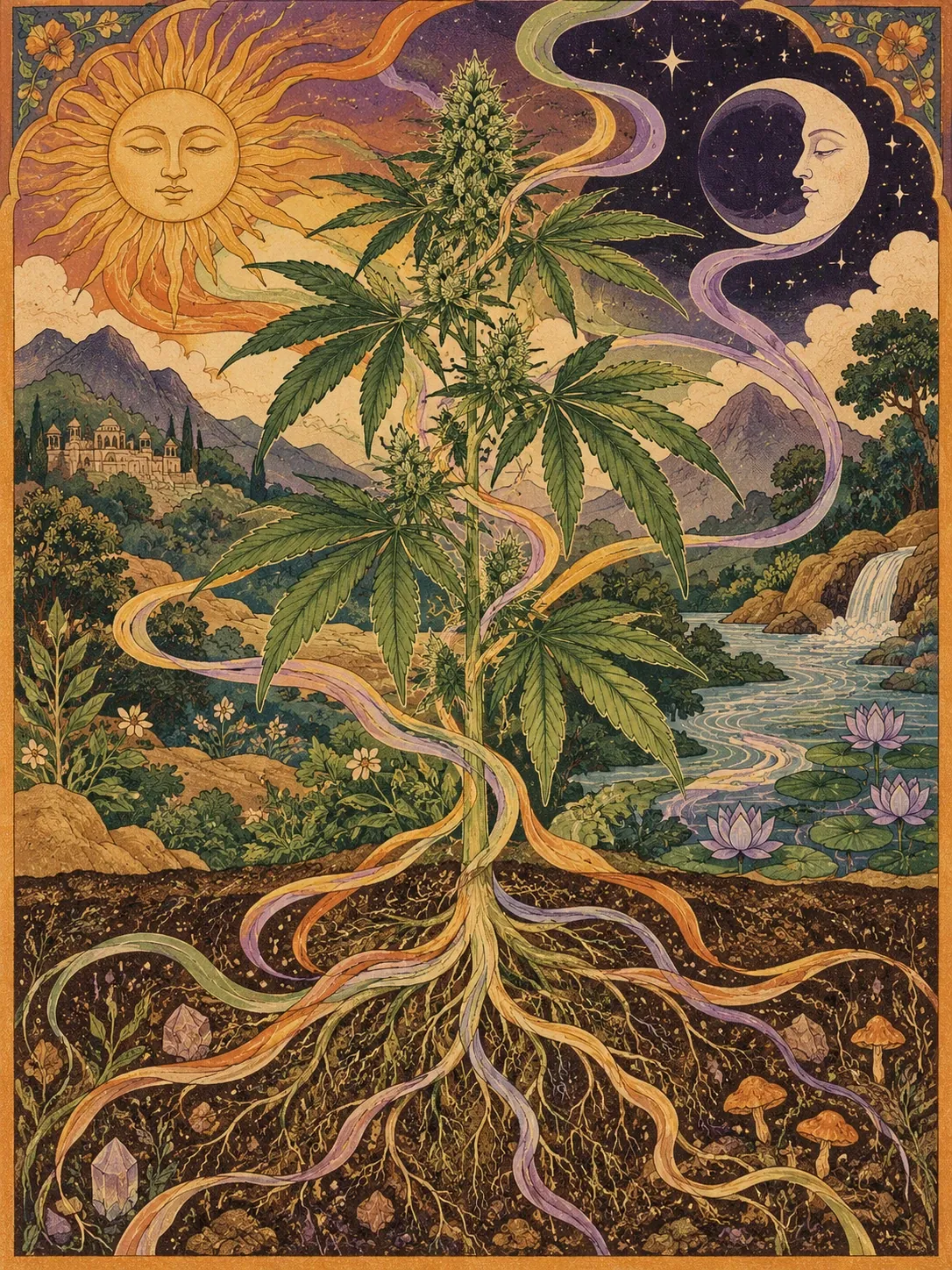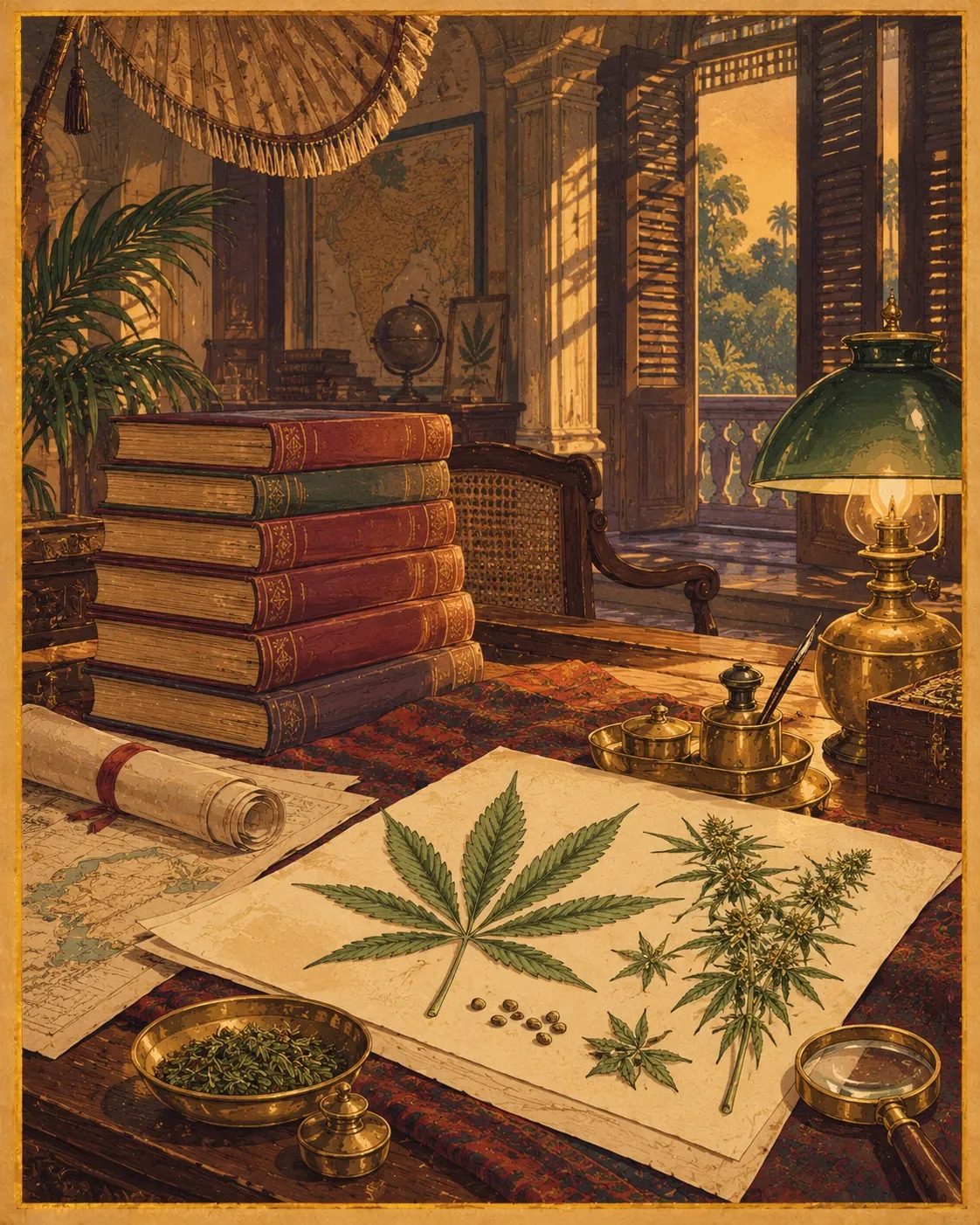
A room inside Health Guidesविजया · भांगਭੰਗ · ਵਿਜਯਾ

Vijaya

also called marijuana and cannabis, bhang or ganja

The plant India has argued about for three thousand years.

What the old books said, what the gods are said to have loved, and what doctors know today. Both sides, no lecture.

We don’t sell cannabis. We don’t preach either.

For adults · educational, not encouragement

What is this room, and who is it for?

Vijaya is the old name for cannabis, the plant behind bhang, ganja and charas. This room is written for adults. It gives the traditional view and the medical view side by side, and it explains rather than preaches.

Urgent signs: chest pain, fainting, severe vomiting that will not stop, confusion, or seeing or hearing things that are not there after any cannabis product need the nearest emergency department now. The details are under "Where can I get help?"3

We don't sell cannabis, hemp or CBD products, and nothing on these pages is an offer of any product. Nothing here is a reason to start, and nothing here tells you how to use it. If you or someone at home already uses cannabis, the guides below explain what is happening and where to get help.

Prologue

The churning of the ocean समुद्र मंथन

Before the plant, the story most Indians hear first, in ten scenes from the ocean of milk to a drop of amrit. Every character is named as they appear.

Keep scrolling: the story moves with youStill frames from the live scene. Names appear as each one enters the story.

  1. 01Told in the Puranas

    The ocean of milk क्षीर सागर

    Long ago the devas, the gods, lost their strength to a sage's curse, and the asuras, the demons, began to win. Vishnu, the preserver, gave the devas a plan: churn the ocean of milk, and amrit would rise, the nectar that defeats death. The work was too big for one side, so gods and demons agreed to pull together and share the prize.

  2. 02Told in the Puranas

    A mountain for a rod, a serpent for a rope मंदराचल · वासुकि

    For a churning rod they set Mount Mandara in the sea. For a rope they asked Vasuki, king of the serpents, to coil around the mountain. The asuras took his head; the devas held his tail. Pull by pull, the way butter is churned in a pot, the mountain would turn.

  3. 03Told in the Puranas

    The tortoise beneath कूर्म

    The mountain was too heavy and began to sink into the sea bed. So Vishnu dived into the ocean and took a new form: Kurma, a tortoise as wide as the mountain, who carried it on his shell. Now the churning could begin.

  4. 04Told in the Puranas

    The churning मंथन

    The asuras pulled, then the devas pulled, and the mountain spun one way, then the other. The ocean roared and foamed, for a thousand years, the stories say. Vasuki's hot breath scorched the asuras at his head.

  5. 05Told in the Puranas

    Halahala हलाहल

    The first thing to rise was not nectar but poison: halahala, so dark and deadly it could burn all three worlds. Gods and demons dropped the rope and ran.

  6. 06Told in the Puranas

    Neelkantha नीलकंठ

    Only Shiva could help. He gathered the poison in his palm and drank it to save the world. In many tellings Parvati, his wife, held his throat so it went no further. It stayed there and turned his throat blue: he is remembered as Neelkantha, the blue-throated one.

  7. 07Folk and sadhu tradition

    Bhang and datura भांग · धतूरा

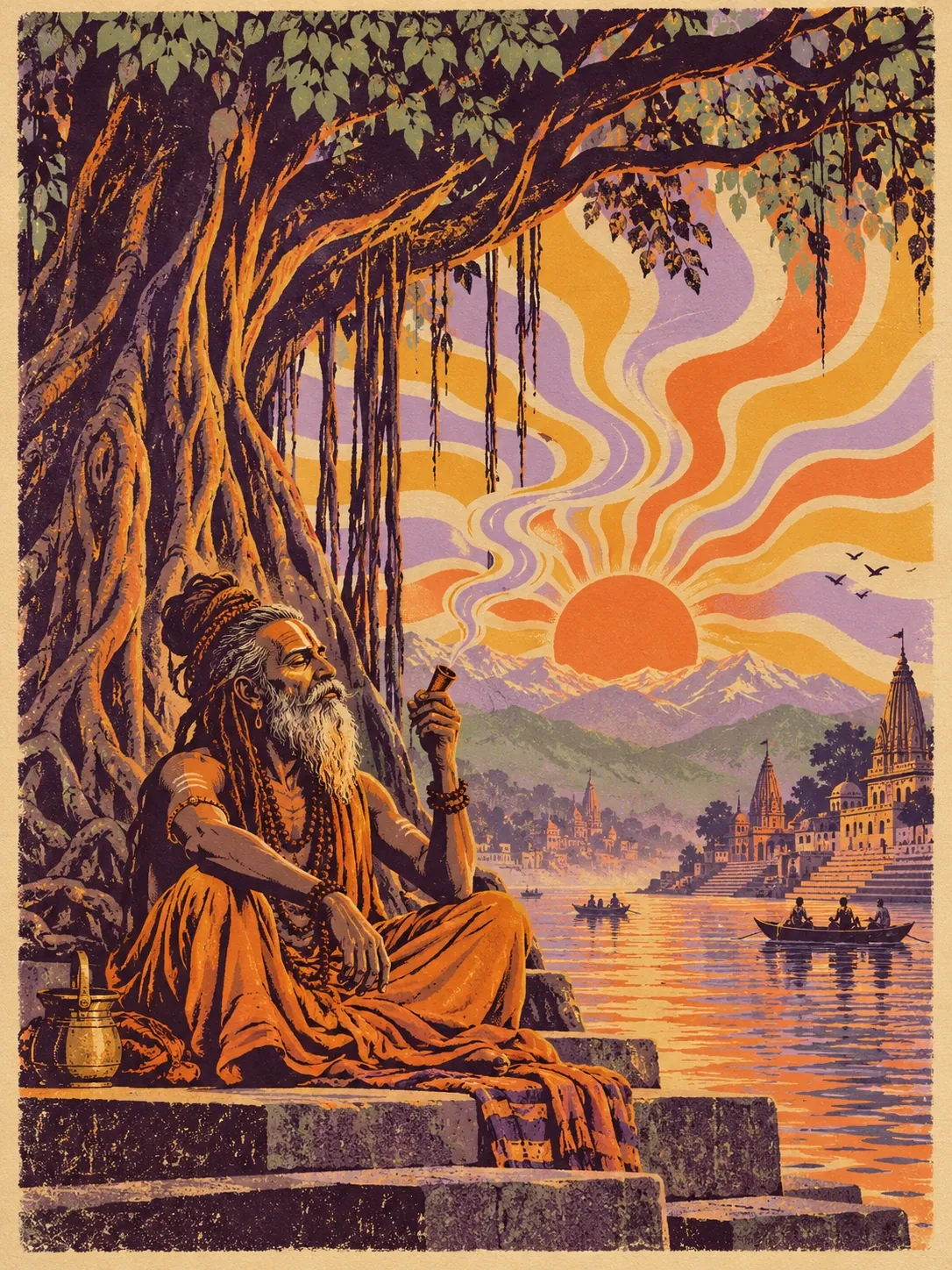
    Folk tellings add an ending of their own. The poison burned in his throat, so the devas brought what grew wild on the mountains: cooling bhang, which is cannabis, with datura and bilva leaves. He drank the bhang and, the sadhus say, smoked the chillum, and the fire settled. Devotees say this is why they still offer bhang, datura and bilva to Shiva.

    Read the other view

  8. 08Told in the Puranas

    The treasures चौदह रत्न

    Then the churning began again, and wonders rose from the ocean: Kamadhenu, the cow that grants wishes; Uchchaihshravas, the flying white horse; Airavata, the white elephant; the Kaustubha jewel; Kalpavriksha, the wish-granting tree; the moon; and Lakshmi, goddess of fortune, on her lotus.

  9. 09Told in the Puranas

    Dhanvantari धन्वंतरि

    Last of all rose Dhanvantari, a form of Vishnu and physician of the gods, holding the pot of amrit. The asuras snatched it, but Vishnu, as the enchantress Mohini, won it back and served the nectar to the devas, who grew strong again. Ayurveda honours Dhanvantari as the god of medicine; National Ayurveda Day began on his festival, Dhanteras.

  10. 10Folk legend

    A drop of amrit अमृत · विजया

    A folk legend says a drop of amrit fell to earth as the pot was carried away, and where it fell, Vijaya grew: the plant this room is about. Many devotees reject any link between Shiva and intoxication. Both views have a place here.

    Read the other view

Open the picture: Samudra Manthan, the churning of the cosmic ocean

The whole churning in one picture

Every character at once: the devas and asuras at the rope, Vasuki, Mandara on Kurma, Shiva with the halahala, the treasures, and the pot of amrit.

The churning is told in the Bhagavata Purana, the Vishnu Purana and the Mahabharata. The bhang and datura ending, and Shiva's chillum, come from folk and sadhu tradition. Tellings differ in order and detail.

What do the names mean?

  • Bhang: a paste or drink made from the leaves, often linked with Holi and Mahashivratri.
  • Ganja: the dried flowering tops of the plant, usually smoked.
  • Charas: the resin rubbed from the plant, also smoked, and usually stronger.
  • Hemp: types of the plant grown for seed, oil and fibre, with very little of the part that makes people high.
  • THC: the main substance in cannabis that causes the "high".1
  • CBD: another substance in the plant, which does not cause a high in the same way.2

Indian law treats these differently. Before you rely on what you have heard, read the law in plain words. For the difference between the three in more detail, see bhang, ganja and charas compared.

One plant, six names

Bhang, ganja, charas, hemp, CBD, THC. People use these words as if they mean the same thing. They don’t, and the law treats each one differently.

Read the plant

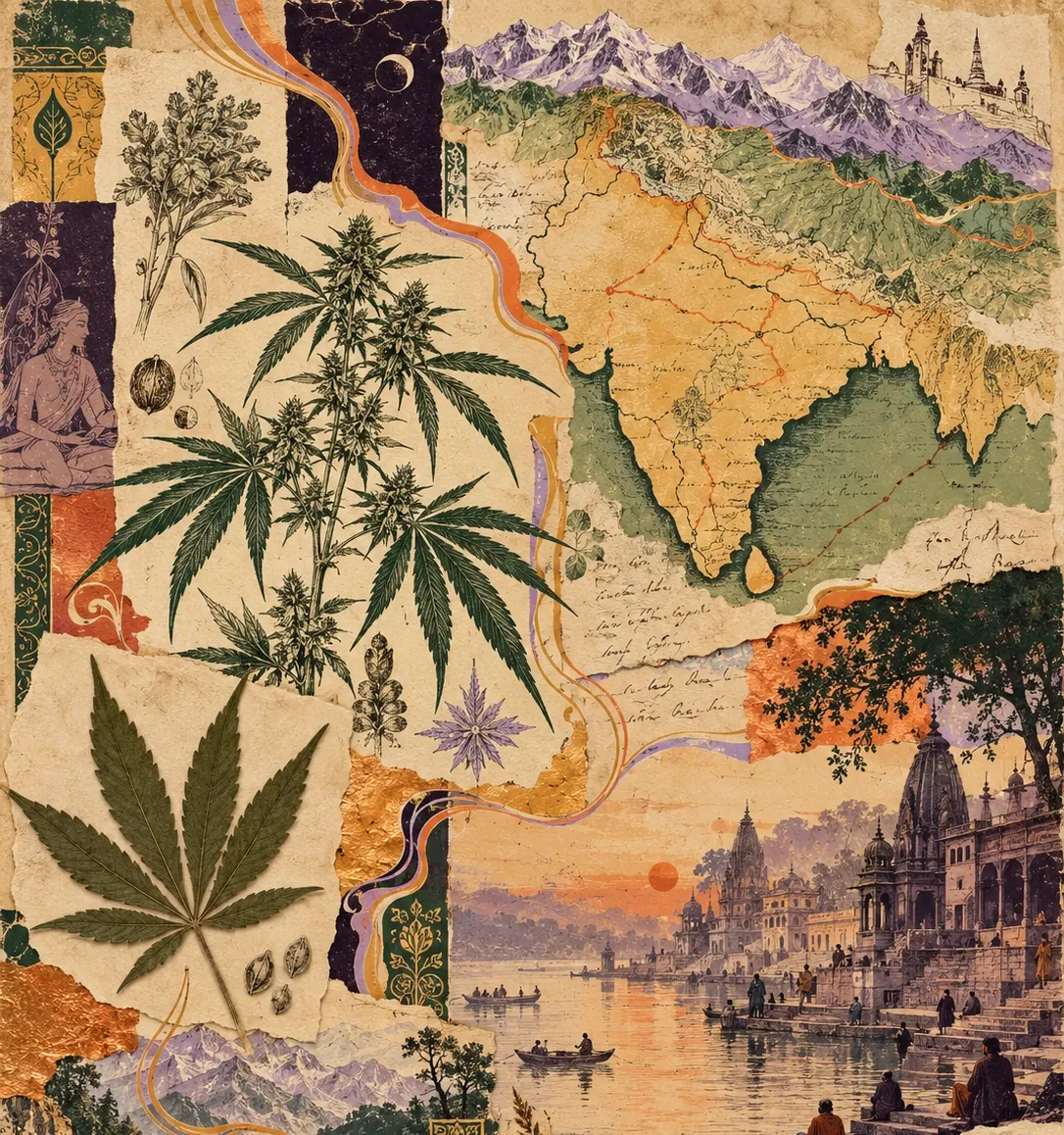
One plant, drawn once

Touch a part. Bhang, ganja, charas and hemp are not four plants. They are four parts of one, and four different answers from the law.

resin glandsseedsflowering topfan leavesstalk
Touch or click a part of the plant, or pick one below.

The fan leaves

Bhang भांग

Ground to a green paste with milk, almonds and spice, the leaves become the bhang of Holi and Mahashivratri: offered to Shiva, then shared as prasad. Leaves carry far less of the active resin than the flowers do.

In India
Named in tradition and folk practice, and left out of the NDPS Act's list, so each state decides. Some states license bhang shops. Many do not.
In the West
Hardly sold on its own. In licensed markets the trade is in flower and its extracts, not leaf.
State excise rules

The seeds

Hemp seed भांग के बीज

A seed is a small hard nut with almost no THC. Roasted and ground it is the base of the hill chutney of Uttarakhand. Pressed, it gives hemp oil.

In India
Seeds and leaves, when they are not travelling with the flowering tops, fall outside the Act's definition of ganja. Hill kitchens have used them for food for generations.
In the West
Hulled hemp hearts sit on supermarket shelves as a food, in places that allow industrial hemp.
Food use permitted, verify

The flowering top

Ganja गांजा

The unfertilised female flowering top, dried and cured. A top without seeds is called sinsemilla, “without seed”. Cali bud is the trade name for that top as California’s growers shape it: dense, trimmed, seedless and graded by its look and its lab-tested strength.

In India
Ganja: the top, usually field-grown, loosely packed and often seeded. Prohibited under the NDPS Act except under a licence.
In the West
Flower: sold in licensed shops in California and some other places, with a test label on the pack. US federal law and state laws do not match.
Prohibited (NDPS)

The resin glands

Charas चरस

Tiny glands on the flowers and the leaves around them make a sticky resin, and THC and CBD are made there. Rubbed off the living plant by hand in the Himalayan foothills it is charas. Pressed elsewhere, it is hashish.

In India
Himalayan charas, hand-rubbed in valleys such as Parvati, is the best known. Prohibited under the NDPS Act.
In the West
Hash and concentrates: sold in licensed markets, tested and labelled, and often much stronger than the old hand-rubbed resin.
Prohibited (NDPS)

The stalk

Hemp fibre भांग का रेशा

The tough outer fibre of the stalk makes rope, cloth and now building blocks. Hill weavers in Uttarakhand and Himachal have spun it for centuries.

In India
Crops grown for fibre and seed need a state licence. A few states, Uttarakhand among them, have begun to issue them.
In the West
Industrial hemp, with very little THC, is an ordinary farm crop: fibre, seed, oil and hempcrete.
Licence needed, verify

THC and CBDBoth are made in the resin glands. THC is the one that makes a person high. CBD does not. Seeds and stalk carry almost none of either.

Botanical plate: the leaf, the flowering top and the seed.
  • Bhang भांग

    Leaves and seeds.

    State excise rules
  • Ganja गांजा

    Flowering tops.

    Prohibited (NDPS)
  • Charas चरस

    Hand-rubbed resin.

    Prohibited (NDPS)
  • Hemp

    Seed, oil, fibre.

    Food use permitted, verify
  • CBD

    Non-intoxicating compound.

    Only in licensed products, verify
  • THC

    The compound that makes you high.

    Context-dependent, verify

Side by side

India and the West

Same plant, two histories. The words differ, the soil differs, and so do the rules.

TopicIndiaThe West, with California as the example

Words

IndiaBhang is the drink. Ganja is the flower. Charas is the resin. Vijaya is the Ayurvedic name.

The WestWeed, flower, hash. “Cali” means California-style flower: seedless, trimmed, graded.

Soil and climate

IndiaMostly outdoors, hill and plain. Cool, rain-fed mountain loam in Kullu and Uttarakhand. Hot, humid red and alluvial soil in the plains. A lot of it grows wild along field edges.

The WestCalifornia summers are dry and sunny. Outdoor farms in the northern hills lean on spring and well water, and a good share of the flower is grown under cover, in beds of coco or peat rather than field soil.

The plant

IndiaOld local strains, called landraces: tall, hardy and usually seeded.

The WestNamed cultivars grown from cuttings, seedless females, tested for THC and for flavour compounds called terpenes.

Finish

IndiaSun-dried. Charas rubbed by hand in the hills.

The WestHand-trimmed, slow-cured, packed and labelled.

Law

IndiaNDPS Act, 1985: ganja and charas prohibited. Leaves and seeds left to the states.

The WestCalifornia licenses sales to adults of 21 and over, since 2018. US federal law still differs.

Medicine

IndiaAyurveda purifies Vijaya (shodhana) and a physician uses it, in classical formulas.

The WestIsolated CBD and THC are studied. One CBD medicine is approved for some forms of epilepsy.

In the old books

Ayurveda never treated Vijaya casually. The texts purify it (shodhana) before use and pair it with other herbs.

  • Atharvaveda अथर्ववेद

    Where bhanga is first named.

    Read the pages: Atharvaveda

    अथर्ववेद

    Atharvaveda

    the fourth Veda: hymns, charms and healing verses

    c. 1200–900 BCE, approximate

    About this book


    What
    A collection of some seven hundred hymns, many of them charms for health, safety and peace.
    Language
    Vedic Sanskrit.
    Where bhanga appears
    Book 11, hymn 6: a charm against distress that names five plants.

    Atharvaveda 11.6.15

    पञ्च राज्यानि वीरुधां सोमश्रेष्ठानि ब्रूमः ।
    दर्भो भङ्गो यवः सह ते नो मुञ्चन्त्वंहसः ॥


    pañca rājyāni vīrudhāṃ somaśreṣṭhāni brūmaḥ |
    darbho bhaṅgo yavaḥ saha te no muñcantvaṃhasaḥ ||

    Five realms of plants we name, with soma the chief of them: darbha, bhanga, barley and saha. Let them free us from distress.

    Verse as commonly cited. Wording and numbering to be checked against the edition.

    What it professed


    The hymn lists five “realms” of plants, soma first among them, and says that darbha, bhanga, barley and saha free a person from amhas: narrowness, anguish, distress.

    It is a charm, not a recipe. It names the plant and its place among the sacred plants. It says nothing about how it was used.

    सोमsomaदर्भdarbhaभङ्गbhaṅgaयवyavaसहsahafive
    The five plants of the hymn. Bhanga is marked.

    Reading notes


    • Most Indian commentators read bhanga as cannabis. Some scholars are less sure.
    • The verse comes down in more than one recension, and the numbering differs.
  • Bhavaprakasha भावप्रकाश

    Bhavamishra’s description of bhanga.

    Read the pages: Bhavaprakasha

    भावप्रकाश

    Bhāvaprakāśa

    Bhavamishra’s compendium of Ayurvedic medicine and materia medica

    c. 16th century CE, approximate

    About this book


    What
    A late classical textbook that gathers the older works into one: the body, its illnesses and the drugs that treat them.
    Language
    Sanskrit.
    Where bhanga appears
    In the nighaṇṭu, the list of drugs, with its names and qualities.

    Bhāvaprakāśa Nighaṇṭu, as commonly cited

    भङ्गा गञ्जा मातुलानी मादिनी विजया जया ।
    भङ्गा कफहरी तिक्ता ग्राहिणी पाचनी लघुः ।
    तीक्ष्णोष्णा पित्तला मोहमदवाग्वह्निवर्धिनी ॥


    bhaṅgā gañjā mātulānī mādinī vijayā jayā |
    bhaṅgā kaphaharī tiktā grāhiṇī pācanī laghuḥ |
    tīkṣṇoṣṇā pittalā mohamadavāgvahnivardhinī ||

    Bhanga, ganja, matulani, madini, vijaya, jaya: these are its names. Bhanga lessens kapha. It is bitter, binding, digestive and light. Sharp and hot, it raises pitta, brings on intoxication, and increases speech and the digestive fire.

    Verse as commonly cited. Wording and location to be checked against the edition.

    What it professed


    The text gives the plant six names, among them Vijaya: “the victorious”.

    Then it describes it the Ayurvedic way: by taste, quality and potency, and by what it does to the doshas. This is a physician’s description to reason with. It is not a dose and not a recommendation.

    kaphaकफpittaपित्तtastebitterतिक्त tiktaqualitylight · sharpलघु laghu · तीक्ष्ण tīkṣṇapotencyhotउष्ण uṣṇaactsdigests · holdsपाचनी pācanī · ग्राहिणी grāhiṇīalsointoxicatesमद mada
    The verse, drawn as qualities.

    Reading notes


    • Bitter, light, sharp and hot: a physician reads those words as a profile, then chooses, adjusts or avoids.
    • The classical texts also describe purifying Vijaya before use. See the next book.
  • Shodhana शोधन

    How the leaf is purified before it becomes medicine.

    Read the pages: Shodhana

    शोधन

    Śodhana

    purification: the step before any medicine

    a practice described across many texts

    About this practice


    What
    In Ayurveda, strong raw materials (some minerals, metals and plants) are purified before they go into medicine. The word is shodhana.
    Language
    Sanskrit.
    For Vijaya
    Described in the classical texts. The methods differ from text to text.

    A folio left blank

    This page is left blank on purpose.

    What it professed


    Before use, the leaf is cleaned, soaked, dried and prepared by a physician. The steps and the liquids named differ by text and by teacher.

    The idea is the point. In these books the plant is never taken as it is picked. A trained hand stands between the plant and the patient.

    1gather2wash & soak3dry4prepareoutline only: methods differ by text and by physicianthis is not a set of instructions
    Purification, as an outline.

    Reading notes


    • Nothing on these pages is a method to follow.
    • If you want to know whether Ayurveda has a place for Vijaya in your care, ask a physician.
  • Anandakanda आनंदकंद

    A classical text that describes Vijaya.

    Read the pages: Anandakanda

    आनन्दकन्द

    Ānandakanda

    a medieval Sanskrit work on rasa-shastra: medicine made with minerals and herbs

    medieval; date and authorship uncertain

    About this book


    What
    A large compendium of rasa-shastra, the branch of Ayurveda that works with mercury, minerals and herbs.
    Language
    Sanskrit.
    Where Vijaya appears
    Cited in the literature as describing Vijaya.

    A folio left blank

    This page is left blank on purpose.

    What it professed


    Rasa-shastra is the workshop side of Ayurveda: furnaces, vessels and long preparation. Vijaya is cited there as an ingredient in prepared medicines.

    वैदिकAtharvavedac. 1200–900 BCEशास्त्रthe classicaltexts (samhitas)भावप्रकाशBhāvaprakāśac. 16th centuryआजtodayAYUSH licensingdates are approximate
    Where the books sit in time.

    Reading notes


    • The books are centuries apart. In each, the plant is named, described and handled by people who trained for it.
    • Today, licensed Ayurvedic products are made to a classical formula, under AYUSH rules.

Classical formulations that contain purified Vijaya

  • Kameshwar Modak
  • Jatiphaladi Churna
  • Bilwadi Churna

What did the old books say about Vijaya?

Ayurveda did not treat Vijaya casually. The classical texts name the plant, describe its qualities in the language of the doshas, and describe purifying it before it was ever used in medicine. These were physicians' notes written for physicians, not advice for home use. A mention in an old book is not proof that something is safe or useful today.

Myth, devotion and the other view

Shiva, Holi and the sadhus are why most Indians first hear of bhang. We tell the stories as stories, and we give space to devotees who reject the link.

A short history

From the Vedas to the Hippie Trail to today’s AYUSH-licensed oils.

  1. Vedic

    Atharvaveda names bhanga among sacred plants.

  2. Classical

    Ayurvedic texts list Vijaya, always purified first.

  3. Mughal

    Court paintings show bhang being prepared.

  4. 1894

    The Indian Hemp Drugs Commission reports.

  5. 1961

    The UN Single Convention.

  6. 1960s–70s

    The Hippie Trail: the West’s counterculture arrives in Kathmandu and Goa.

  7. 1985

    NDPS Act: flowers and resin banned, leaves and seeds left to the states.

  8. 2020

    UN vote moves cannabis out of its strictest list.

  9. Today

    AYUSH-licensed Vijaya products, and a lot of confusion.

Open the whole collage. The poster reads: “Shiva is looking at the world through your eyes. Are you showing Him a good time?”

Mahadeva भोलेनाथ

He drank the poison. He kept the leaf.

In folk and sadhu tradition, bhang belongs to Shiva. It is his offering on Mahashivratri, passed round as prasad, and painted on a thousand bazaar posters with the chillum in his hand.

That is how the tradition pictures him. It is a story about a god, not advice to a person.

The poster is the owner’s collage, concept art. Tradition, not instruction. For adults.

The wall

A room needs a wall: posters, plates, prints and the odd postcard from the Hippie Trail. Tap a frame to see it whole.

Which guide answers my question?

Pick the question closest to yours:

The reads

Every guide here takes one claim and gives it a verdict: myth, true, or it depends.

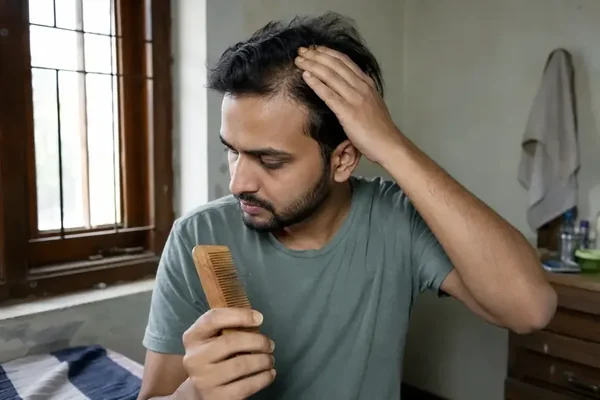
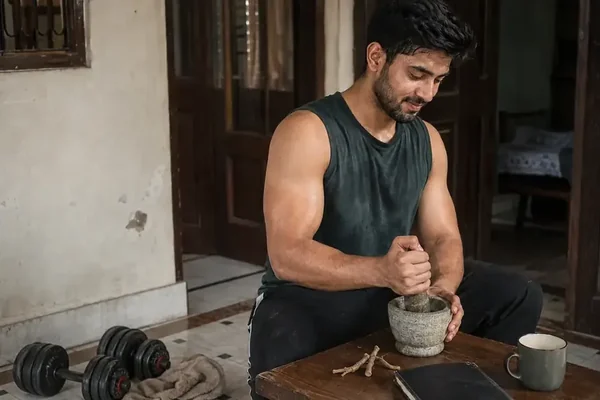
Sex and the body

Links into the Men’s hub. Each guide hands off to its condition page. 2 reads.

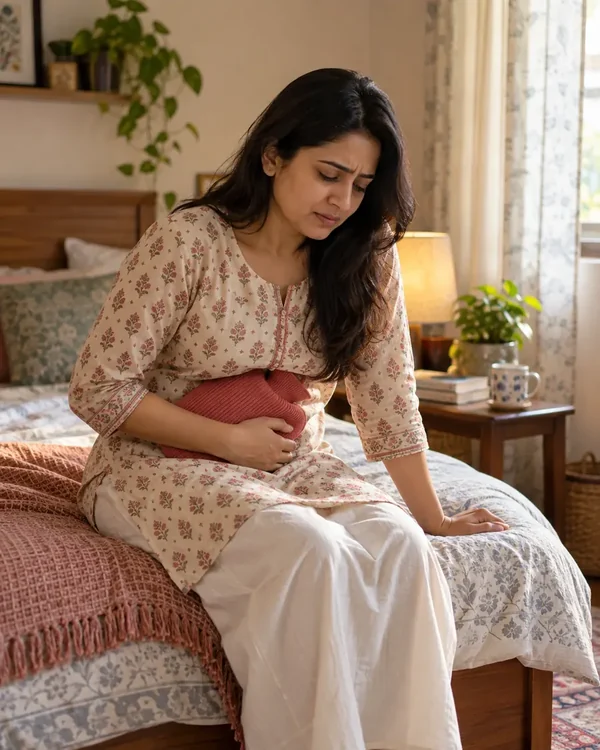
Mind and sleep

Links into the Sleep & Stress hub. 2 reads.

Gut and appetite

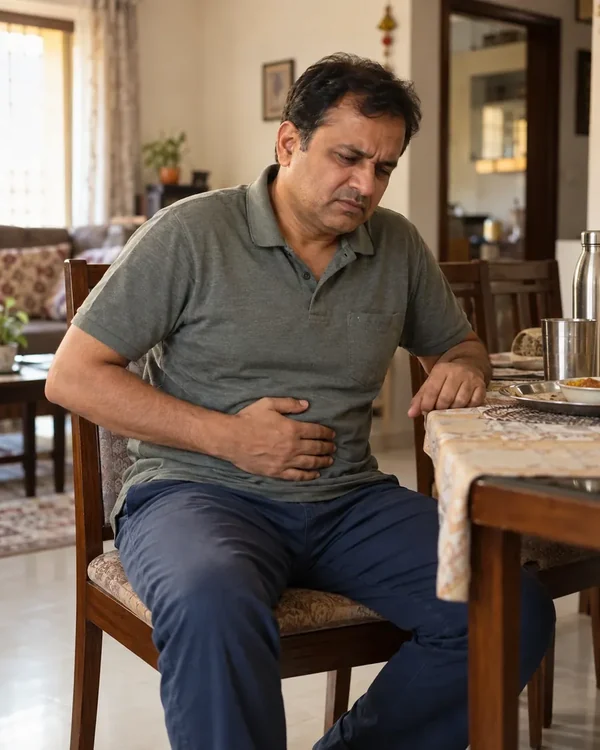
Links into the Digestive hub. 1 read.

Law, safety and cutting down

Links to the consultation path when use has become a problem. 2 reads.

Culture and myth

Stays inside the room. Cross-links to the history timeline. 1 read.

Where can I get help?

If cannabis has stopped feeling optional, or you think it is behind poor sleep, worry or a sexual problem, a confidential conversation is a good first step. Dr. D.K. Sharma (BAMS) consults in person in Ludhiana or by video.

Urgent signs

Go to the nearest emergency department now for chest pain, fainting, severe vomiting that will not stop, confusion, or seeing or hearing things that are not there after using any cannabis product.3

To book, send a booking request. The clinic checks that your concern is one it should handle and offers a time. You pay ₹500 and receive written confirmation, and then you consult. Your personalised Dinacharya (daily-routine) guide follows the consultation.

Sources

  1. NIDA (NIH). Cannabis (marijuana) DrugFacts. nida.nih.gov.
  2. MedlinePlus. Cannabidiol (CBD). medlineplus.gov.
  3. CDC. Cannabis and public health: health effects. cdc.gov.

For adults. Educational, not encouragement. BharatClinic does not sell cannabis products.

Leave the roomBack to Health GuidesNine guides: Men’s intimate wellness and sleep & stress.

Opens in a new tab.

Drag, swipe, or use the arrow keys

AI-generated concept art.