


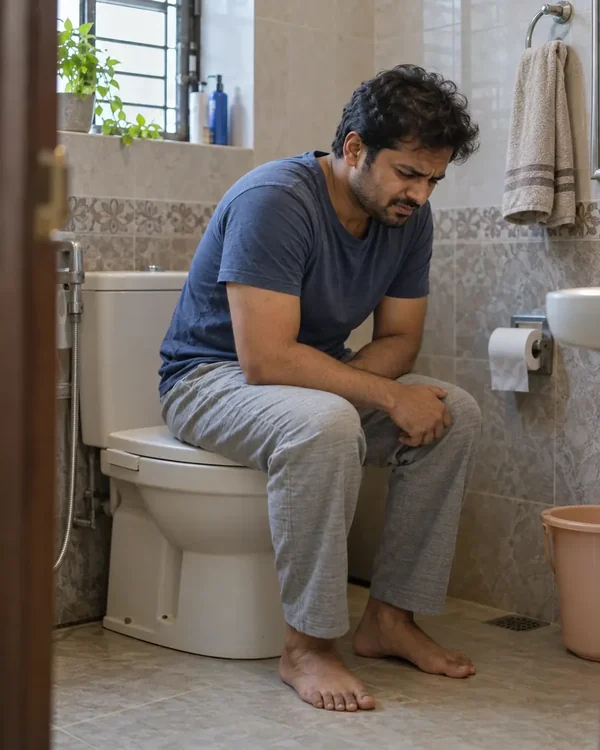






Fibroids, endometriosis and pelvic pain

Does this sound like you?
Fibroids are non-cancerous growths in or on the womb, and many need only watching. Endometriosis is tissue like the womb lining growing elsewhere in the pelvis, and it can cause pain. Most scan findings are not emergencies; your symptoms decide the next step.12
Urgent signs: sudden, severe pelvic pain, pain with a positive pregnancy test or a missed period, shoulder-tip pain, or fainting needs emergency care now. The full list is under “When it should not wait”.45
- An ultrasound report says "fibroid" or "bachedani mein ganth", and you are worried about what it means.
- Your periods are very heavy, last longer than a week, or you pass large clots (see also painful and heavy periods).
- Period pain is so bad that painkillers don't help and you miss work or college.
- You have pain or a feeling of heaviness in the lower stomach or pelvis on most days, or pain during or after sex.
- You have been trying for a baby, and someone mentioned endometriosis.
These are common and real, and they deserve a proper assessment, not years of waiting.

What it is, and what it isn't
Fibroids are non-cancerous growths of muscle in or on the womb (uterus). They are very common, and many cause no symptoms at all.1 When they do, the usual problems are heavy periods, pain in the tummy or lower back, a feeling of pressure, or passing urine often.1 Fibroids are described by where they sit: intramural (in the wall of the womb), submucosal (just under the lining, inside the womb), subserosal (on the outer surface) or cervical (in the neck of the womb). Another word for a fibroid is myoma. A report may also say which wall of the womb it is on, such as anterior (front) or posterior (back).
Endometriosis is a condition where tissue similar to the lining of the womb grows in other places, such as the ovaries or the lining of the pelvis.2 It can cause painful periods, pelvic pain, pain during sex, and difficulty getting pregnant.23 When endometriosis forms a cyst on an ovary it is called an endometrioma, sometimes a "chocolate cyst". Adenomyosis is a related condition in which tissue like the womb lining grows into the muscle wall of the womb itself, rather than outside the womb.
Pelvic pain is pain below the belly button. It has many causes, from periods and infections to the bowel or bladder, so the pattern matters.4
| It is | It isn't |
|---|---|
| Fibroids: usually benign, often without symptoms1 | Fibroids: a cancer; they almost never are1 |
| Endometriosis: long-term, but its symptoms can be managed2 | Endometriosis: "just bad period pain" to put up with |
| Pelvic pain: a sign worth investigating | Always caused by the womb |
In Hindi, Punjabi and Hinglish
Show the words and Hinglish questionsHide the words
The words below are the ones people commonly say or search.
In Hindi the womb (uterus) is garbhashay or bachedani (गर्भाशय, बच्चेदानी), and the neck of the womb is the cervix (bachedani ka munh). The womb lining is the endometrium (garbhashay ki andar ki parat). The womb is the muscular organ low in the belly where a baby grows in pregnancy, and its lining is shed in the monthly period. The ovaries (andashay, अंडाशय) are the two organs on either side of the womb that release eggs. Rasoli (रसौली) is an everyday word for a lump or swelling; in the womb it usually means a fibroid (bachedani mein ganth), and on the ovary a cyst.
| You may say or search | It means |
|---|---|
| bachedani mein sujan | People use it for a womb that looks larger than expected on a scan (a "bulky uterus"), and sometimes for a womb infection (PID). |
| myoma | another word for a fibroid, the growth often called rasoli or bachedani mein ganth |
| cervicitis | inflammation of the cervix (bachedani ka munh) |
Common questions in Hinglish:
- Utras (uterus) kya hai, aur kahan hota hai? Utras is the uterus, or womb: the organ low in the belly where a baby grows in pregnancy. Full answer: “What it is, and what it isn't”
- Fibroid kya hota hai (bachedani mein ganth)? Fibroids are non-cancerous growths of muscle in or on the womb. They are very common, and many cause no symptoms at all.1 Full answer: “What it is, and what it isn't”
- Bulky uterus kya hota hai? It means the womb is larger than expected on the scan, often from fibroids, adenomyosis or a recent pregnancy. It is not a diagnosis on its own. Full answer: “My scan says "bulky uterus". What does that mean?”
- Endometriosis kya hota hai? Endometriosis is a condition where tissue similar to the lining of the womb grows in other places, such as the ovaries or the lining of the pelvis.2 Full answer: “What it is, and what it isn't”
- Ovarian cyst kya hota hai, aur kya ilaj chahiye? It is a fluid-filled sac on an ovary, and most go away within a few months without treatment.6 Sudden, severe tummy pain needs urgent care.6 Full answer: “What is an ovarian cyst, and does it need treatment?”
- Haemorrhagic cyst kya hota hai? It is a cyst that has bled into itself, and it often settles over weeks to months; a repeat scan checks this.6 Sudden severe one-sided pain or fainting needs urgent care.6 Full answer: “What is a haemorrhagic ovarian cyst?”
- Endometrial thickness kya hoti hai? The endometrium is the womb lining, and it becomes thicker and thinner through the cycle, so a measurement means little without the day of the cycle and your age. Full answer: “My scan mentions endometrial thickness, a polyp or hyperplasia. What does it mean?”
- Pid kya hai? PID (pelvic inflammatory disease) is an infection of the womb, tubes and ovaries. It can cause lower tummy pain, unusual discharge and sometimes fever. See a doctor promptly, and urgently for severe pain.7 Full answer: “What is PID, and how serious is a womb infection (uterus infection)?”
When it should not wait
Urgent signs
Get emergency care now if: you have sudden, severe pain in the lower stomach or pelvis; pain with a positive pregnancy test or a missed period; pain in the tip of the shoulder; or you feel faint or collapse. These can be signs of an ectopic pregnancy or a twisted or burst ovarian cyst.45
Get urgent care the same day if bleeding soaks a pad or tampon every hour for more than two hours. The same applies to pelvic pain with fever, unusual discharge, or pain passing urine.4
Arrange a prompt review with a gynaecologist if: bleeding comes after menopause or between periods; a fibroid is growing quickly; or heavy periods leave you tired and breathless, which can mean low haemoglobin.1
How Dr. Sharma assesses it
A private conversation first. Any examination is explained before it starts and done only with your consent. If the doctor's gender matters to you, say so before booking.
- The pain and the bleeding. When pain comes in your cycle, where it is, how heavy periods are, clots, and how many days you need painkillers.
- Other patterns. Pain with sex, with passing stool or urine, and bowel changes around periods.
- Pregnancy and plans. Whether pregnancy is possible, and whether you hope to have children soon.
- Your reports. Ultrasound reports with the size and position of any fibroid, haemoglobin, and any earlier operation notes.
- What comes next. A pelvic ultrasound is the usual first scan. Fibroids cannot be confirmed at home; the scan shows whether they are there, how many there are, where they are and how big they are.1 Endometriosis often needs a gynaecologist's assessment, and sometimes keyhole surgery (laparoscopy) to confirm it.23
What treatment can and can't promise
- Many fibroids only need watching. If a fibroid causes no symptoms, regular check-ups may be all that is needed.1
- When a gynaecologist decides. Heavy bleeding, large or growing fibroids, severe endometriosis, or fertility concerns may need hormone treatment, a procedure or surgery, decided by a gynaecologist.13 When that is the right step, you are told so plainly and referred.
- No medicine dissolves a fibroid. Be careful of anyone who promises that a tablet or kadha will "melt" one.
- Supportive care. This can include advice on pain relief, food, movement, sleep and stress; any Ayurvedic treatment is decided only after assessment. Your personalised Dinacharya (daily-routine) guide follows the consultation.
- Honest outcomes. Endometriosis is long-term; treatment aims to ease pain and protect fertility, not to promise it will never return.2
Your doctor
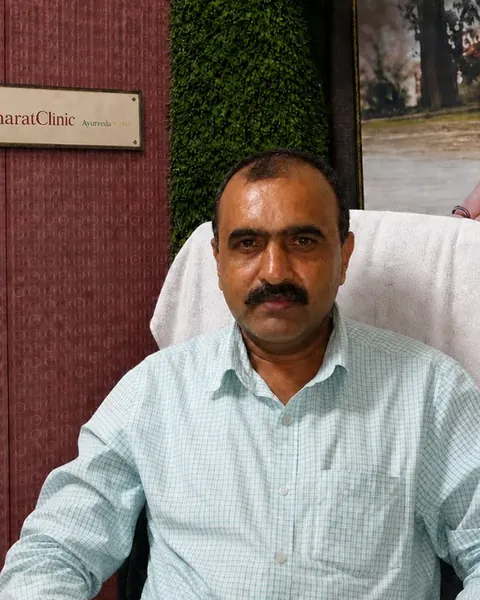
Your doctor
Dr. D.K. Sharma, the Ayurvedic doctor who sees you
Name, qualification and registration BAMS; practising since 1992 4067, Board of Ayurvedic and Unani Systems of Medicine, Punjab
Reviewed by Dr. D.K. Sharma. Approval recorded on 8 November 2026 for this exact text.
Medical content reviewed by
A private consultation, ₹500
A consultation is useful when a scan report was never explained, pelvic pain keeps returning, or heavy periods leave you tired. Dr. Sharma goes through your reports and symptoms, explains what the scan words mean, tells you plainly when a gynaecologist should see you, and explains how supportive Ayurvedic care might fit alongside. If you are looking for an endometriosis, fibroid or ovarian cyst specialist, that is usually a gynaecologist; Dr. Sharma is an Ayurvedic doctor and does not perform procedures or surgery.
With Dr. D.K. Sharma (BAMS), in person in Ludhiana or by video. Video works well to go through your history and scan reports first; an examination, if needed, is in person. Your personalised Dinacharya (daily-routine) guide is prepared after the consultation. Bring ultrasound reports, blood tests, and the dates of your last few periods.
To start, book a consultation in Ludhiana or by video.
The consultation
₹500In person in Ludhiana, or by video
Includes your personalised Dinacharya (daily-routine) guide, prepared after the consultation.
How booking works · no payment until step 3
- You send a request
- Suitability and a time are confirmed
- You pay ₹500
- Your slot is confirmed
- The consultation
Other costs
- Medicine, if advised
- Discussed after your consultation
- Care courses
- Discussed after your consultation
Related reading
Questions before you book
Are fibroids dangerous?
Full answer
Most women with fibroids have a normal pregnancy, but fibroids can sometimes make it harder to get pregnant or cause problems during pregnancy, so tell the doctor if you are pregnant or trying.1
Size alone does not decide whether a fibroid is dangerous. What matters is the symptoms (heavy bleeding, pain, pressure), whether the fibroid is growing quickly or after menopause, and where it sits. A gynaecologist decides after a scan.
Do fibroids always need surgery?
No. Fibroids without symptoms often only need watching.1 Surgery or a procedure is considered when symptoms are troublesome or fertility is affected, and a gynaecologist decides.
How is endometriosis diagnosed?
It starts with your symptoms and an examination, and a scan may help.
Can endometriosis stop me getting pregnant?
It can make pregnancy harder for some women, but many with endometriosis conceive.2
Full answer
If you are trying, see trying to conceive.
What can Ayurveda do, and what is referred?
Ayurvedic care may support pain, periods and general health after assessment.
Full answer
Anything needing a scan, hormone treatment or surgery goes to a gynaecologist.
My scan says "bulky uterus". What does that mean?
It means the womb is larger than expected on the scan. Common reasons are fibroids, adenomyosis (where the lining grows into the muscle) or a recent pregnancy.
Full answer
It is not a diagnosis on its own; a gynaecologist reads it with your symptoms, especially if periods are heavy or painful. "Mildly bulky" usually means only slightly larger than average and is a scan description, not a disease. The same word on an ovary or the cervix ("bulky ovaries", "bulky cervix") also describes size on the scan; the doctor reading your report looks for the reason.
When a bulky womb causes symptoms, they depend on the cause: with fibroids, for example, heavy or painful periods, tummy or lower back pain, or passing urine more often.1 Any treatment is for the cause that is found, not for the word on the report. A fibroid that causes no trouble often needs only watching; heavy bleeding or a growing fibroid is a gynaecologist's decision.1
What is a nabothian cyst on the cervix?
Nabothian cysts are small, fluid-filled bumps on the surface of the cervix that form when mucus-producing glands get blocked.
Full answer
They are common, not sexually transmitted, usually harmless and need no treatment. Bleeding between periods or after sex, pain or unusual discharge should still be checked.4
What is an ovarian cyst, and does it need treatment?
An ovarian cyst is a fluid-filled sac on an ovary, while a fibroid is a growth of muscle in or on the womb.61
Full answer
Most ovarian cysts form naturally and go away within a few months without treatment; a follow-up scan checks this.6 Surgery is considered if a cyst is large, causing symptoms or looks unusual.6 Sudden, severe pain low in the tummy needs urgent care.6
There are different types of ovarian cyst. Most are functional cysts, which form as part of the monthly cycle and are usually harmless and short-lived; fewer come from abnormal cell growth or from endometriosis.6 The vast majority are not cancerous, although cancerous cysts are more common after the menopause.6 On a scan report, "anechoic" describes a cyst that looks like a simple fluid-filled sac with nothing solid inside.
Most cysts cause no symptoms. A cyst that is very large, bursts or twists can cause pelvic pain, from a dull, heavy ache to sudden, sharp pain, as well as bloating, pain during sex or passing urine often.6 Ovarian cysts do not usually stop you getting pregnant, although they can sometimes make it harder to conceive.6
What is a haemorrhagic ovarian cyst?
It is a cyst that has bled into itself. Like most functional cysts it often settles by itself over weeks to months, and a repeat scan checks this.6
Full answer
Sudden, severe one-sided pain, fainting or a fast heartbeat needs urgent care.6
What is the normal size of the ovary, uterus or womb lining?
Normal sizes vary with age, the day of the cycle and whether you have been pregnant, so the radiologist compares your scan with ranges for your own situation.
Full answer
A number alone is not a diagnosis. This page does not list reference values; ask the doctor who ordered the scan what they mean for you. A scan that says "polycystic ovaries" or "multiple small follicles in both ovaries" is explained on PCOS or PCOD.
My scan mentions endometrial thickness, a polyp or hyperplasia. What does it mean?
The endometrium is the lining of the womb. It becomes thicker and thinner through the menstrual cycle, so a measurement means little without the day of the cycle, your age and whether periods have stopped.
Full answer
A polyp is a small growth on the lining (a fibroid, by contrast, grows from the muscle of the womb), and hyperplasia means the lining is thicker than expected. These are scan words, not diagnoses. A gynaecologist reads them with your symptoms, and bleeding after menopause or between periods needs a prompt review. No treatment is suggested here from a report alone.
What is PID, and how serious is a womb infection (uterus infection)?
An infection of the womb, tubes and ovaries is called pelvic inflammatory disease (PID).
Full answer
It can cause lower tummy pain, pain during sex, unusual discharge, bleeding between periods or after sex, and sometimes fever, though some women have no symptoms.7 It is easily treated with antibiotics if found early. Left untreated it can cause long-term pelvic pain and fertility problems, so see a doctor promptly, and urgently for severe pain.7 Cervicitis means inflammation of the cervix, often from an infection; it can cause unusual discharge or bleeding after sex, and a doctor examines to find the cause. Unusual discharge on its own is covered under white discharge.
Can I start by video?
Yes, for your history and reports. An examination, if needed, is in person or with a gynaecologist.
Understand it better
Who gets fibroids. They are most common between 30 and 50, and are more likely in women of African or Caribbean origin and in those who are overweight.1 They often shrink after menopause.
Myth. "Severe period pain is normal." Some pain is common; pain that stops your daily life is a reason to be assessed. Painful and heavy periods covers this.