

Osteoporosis and weak bones (calcium ki kami, bone density)

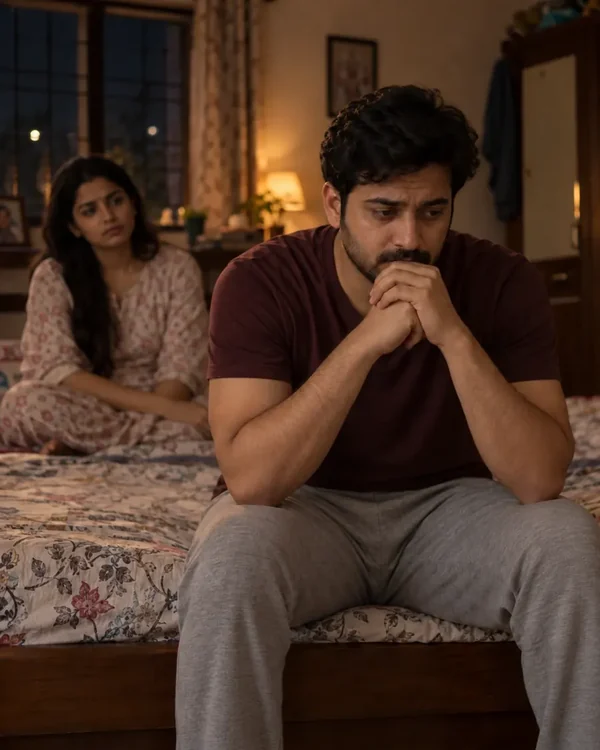
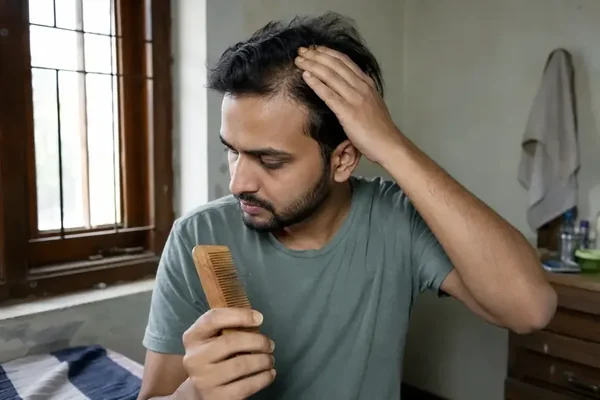
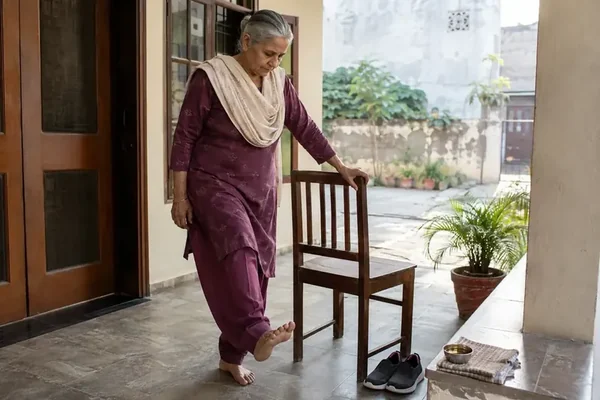
Does this sound like you?
Short answer: osteoporosis means the bones have become less dense and break more easily.1 It is found by a bone density (DEXA) scan read with your risk factors, or after a fracture from a small fall, not by a calcium blood test.2
Urgent signs: pain after a fall, especially in the hip, wrist or back, or sudden severe back pain needs care the same day if your bones may be weak.1 The full list is under “When it should not wait”.
Osteoporosis usually causes no signs or symptoms until a bone breaks, so the risk is worth checking before that happens.1 You may recognise some of these:
- You broke a wrist, hip or bone in the spine after a small fall, or from a bump that shouldn't have broken it.
- You have reached menopause, or you are over 50 and wondering about your bones.
- You have taken steroid tablets for months, or have rheumatoid arthritis, thyroid problems or low weight.
- A parent broke a hip, or you have noticed you have become shorter or more stooped.
- A bone density (DEXA) report that says "osteopenia" or "osteoporosis", or a vitamin D test, worries you.
Bone care for osteoporosis often involves other doctors too; where Dr. Sharma's role starts and ends is set out plainly below. For other bone and joint problems, see all bones and joints concerns.
Learn moreAsthi kṣaya: what Ayurveda means by it, and how it compares with osteoporosisAsthi kṣaya (अस्थिक्षय) is Ayurveda's name for depleted bone tissue.
What it is, and what it isn't
Osteoporosis means the bones have become less dense and more fragile, so they break more easily.1 People often say "calcium ki kami" or "haddiyan khokhli ho gayi". It is not the same as joint pain or arthritis, although the two can come together.
| It is | It isn't |
|---|---|
| Thinning bones, usually found by a scan or after a fracture | A cause of aching joints on its own |
| More likely after menopause, with age, steroids, low weight or smoking | Diagnosed from a calcium blood test; that is usually normal |
| Measured with a bone density (DEXA) scan, alongside your risk factors2 | Something only older women get; men have it too1 |
When it should not wait
Urgent signs
Get urgent care the same day if:
- you have pain after a fall, especially in the hip, wrist or back, and your bones may be weak;
- you can't put weight on a leg or move a limb;
- a limb looks out of shape;
- you have sudden severe back pain, which can be a fracture in the spine.1
Arrange a prompt review if:
- you have lost height or become more stooped;
- you have bone pain at night, or bone pain with unexplained weight loss or fever;
- you have had more than one fracture from a small fall.1
How Dr. Sharma assesses it
Most of it is a careful history of your risk, with an examination of your back, posture and balance in person.
- Fractures and falls. Any broken bone after the age of 50, how it happened, and whether you have fallen in the past year.
- Your risk factors. Age, menopause and its timing, family history of a hip fracture, weight, smoking and alcohol.2
- Health and medicines. Thyroid, rheumatoid arthritis, diabetes, digestion and kidney health; steroid tablets and other long-term medicines, and any calcium, vitamin D or other supplement you take, with the bottle.
- Activity and food. Walking, exercise, time outdoors, and the dairy and other foods in your day.
- Reports, and tests only when useful. Bring any DEXA scan, X-ray, vitamin D, calcium, thyroid or kidney report. A bone density scan is suggested when your risk calls for it, not for everyone.2
What treatment can and can't promise
What helps bones in general
- Risk first. Osteoporosis treatment aims to lower your chance of a fracture, not to chase a number: daily habits for everyone, and bone medicine from your doctor when the risk is high enough.
- Daily habits. Regular weight-bearing and muscle-strengthening exercise, not smoking, limiting alcohol and a diet with enough calcium and vitamin D are widely advised for bone health.1
- Falls matter. Balance, eyesight, footwear, lighting and loose rugs at home can matter as much as the bones.
- Prescribed bone medicine belongs with the prescriber. If a doctor has advised bone medicine, take it as prescribed and do not stop or change it on your own. An orthopaedic surgeon or an endocrinologist is suggested when your risk calls for it.
- Honest outcomes. Bone density changes slowly; the work is reducing the chance of a fracture over years.
What Dr. Sharma can do. He reviews your risk factors and reports and gives diet, activity and routine guidance. He discusses Ayurvedic care only after assessment, and only alongside the care of the doctor who manages your bones, never instead of it. Where your risk calls for a bone density scan, bone medicine or a specialist, you are told so plainly and referred. No product is named here.
Your doctor
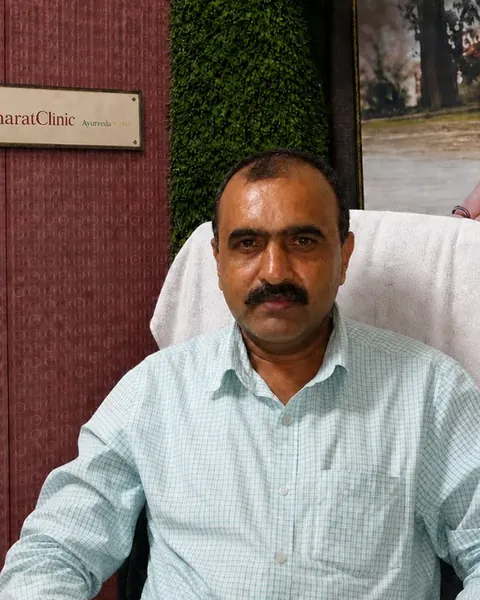
Your doctor
Dr. D.K. Sharma, the Ayurvedic doctor who sees you
Name, qualification and registration BAMS; practising since 1992 4067, Board of Ayurvedic and Unani Systems of Medicine, Punjab
Reviewed by Dr. D.K. Sharma. Approval recorded on 8 November 2026 for this exact text.
Medical content approved by Dr. D.K. Sharma.
A consultation, ₹500
Bring your DEXA report, vitamin D test and any recent X-ray, with the names of every long-term medicine and supplement. Dr. Sharma can discuss what they mean, the appropriate next step, and where lifestyle and Ayurvedic care might sit alongside a specialist's advice.
The consultation is in person at Samrala Chowk or Focal Point, Gobindgarh, in Ludhiana, or by video. A review of your risk and reports suits video, but pain after a fall needs urgent care in person first (see "When it should not wait"). The visit usually takes 30 to 60 minutes. Your personalised Dinacharya (daily-routine) guide follows the consultation. A family member can come along if falls are a worry. You can book a consultation or read how a video consultation works.
The consultation
₹500In person in Ludhiana, or by video
Includes your personalised Dinacharya (daily-routine) guide, prepared after the consultation.
How booking works · no payment until step 3
- You send a request
- Suitability and a time are confirmed
- You pay ₹500
- Your slot is confirmed
- The consultation
Other costs
- Medicine, if advised
- Discussed after your consultation
- Care courses
- Discussed after your consultation
Questions before you book
Should I take calcium and vitamin D?
It depends. Food can supply enough calcium for some people, and whether you need a supplement, and how much, depends on your diet, your risk and sometimes a blood test.
Full answer
Large doses taken for years without checking are not harmless.
My calcium blood test is normal. Are my bones fine?
Not necessarily. Blood calcium is usually normal in osteoporosis.
Full answer
Bone strength is judged from your risk factors and, where needed, a bone density (DEXA) scan.2
What are the symptoms of calcium deficiency?
Too little calcium in the diet usually causes no symptoms for years.
Full answer
Over time it can weaken bones, which may show only as a fracture.
A low level in the blood is different: it can cause tingling, muscle cramps or spasms, and needs a doctor.
What is the difference between osteoporosis and osteomalacia?
Osteomalacia is the adult form of rickets: the bones become weak and soft, usually because of low vitamin D and calcium.3
Can exercise help weak bones?
Regular weight-bearing and strengthening exercise is advised for bone health, and balance exercise lowers the chance of falls.1
Full answer
Which kind is safe for you depends on your bones and joints, so it is worked out in the consultation.
What is a bone density scan, and do I need one?
Osteoporosis diagnosis usually rests on a bone density (DEXA) scan, a quick, low-dose X-ray of the hip and spine, read together with your risk factors.
Full answer
It is usually suggested after menopause, after a fracture from a minor fall, or when other risks are present; the consultation tells you whether it would help.
My doctor has offered bone medicine. What should I ask?
Questions worth asking the prescriber:
Full answer
- What risk is it meant to lower?
- How long will I take it?
- Which side effects should I watch for?
- How will my response be checked?
- Do I need calcium or vitamin D with it?
Keep taking it as prescribed until the prescriber says otherwise.
I am in my 20s or 30s and my scan is low. Is that osteoporosis?
Not automatically. Low bone density in a younger person is read differently from the scores used after menopause.
Full answer
A specialist usually looks for a cause, such as a thyroid, hormone, digestive or medicine effect. Bring the report; this is a question for an endocrinologist as well as for this consultation.
Can I consult for my mother or father?
Yes, with their agreement. They can come with you, or join by video for a first conversation.
Full answer
Bring their reports and medicines.
Understand it better
What can contribute. Usually several things together12:
- Age and hormones: bone loss speeds up after menopause, and with age in men too.
- Medicines and conditions: long-term steroid tablets, rheumatoid arthritis, thyroid or digestive problems that affect absorption.
- Body and habits: low body weight, smoking, heavy drinking and little physical activity.
- Family: a parent who broke a hip.