
The names
Asthi kshaya meaning in Ayurveda. Asthi kṣaya means depletion of asthi, the bone tissue, which is one of the body's seven dhātus. It is often set beside osteoporosis, which only a bone density scan can confirm.3
Urgent signs: Pain after a fall, a leg you can't put weight on, or sudden severe back pain needs urgent care the same day.3 The full list is under "When it should not wait" on Osteoporosis and weak bones (calcium ki kami, bone density).
| Language | Name |
|---|---|
| Sanskrit | Asthi kṣaya (अस्थिक्षय): asthi, bone tissue, one of the body's seven dhātus, and kṣaya, depletion |
| Hindi | Calcium ki kami, haddiyan khokhli hona, haddiyon ka ghatna |
| Punjabi | Haddiyan da khokhla hona, calcium di ghaat (ਹੱਡੀਆਂ ਦਾ ਖੋਖਲਾ ਹੋਣਾ, ਕੈਲਸ਼ੀਅਮ ਦੀ ਘਾਟ) |
| English | Osteoporosis (thinning bones that break more easily); a milder loss of density is osteopenia |
How Ayurveda describes it
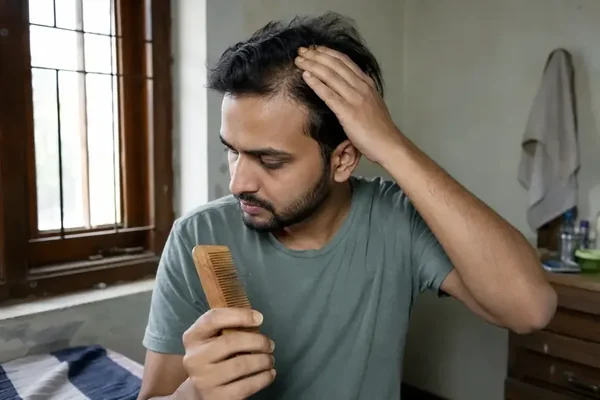
Unlike the entries about a joint or a limb, this one describes a body tissue. The texts count seven dhātus that build and support the body, and asthi kṣaya is the depletion of the bone one.1 They list signs such as pain in the bones and joints, falling hair, and brittle nails and teeth.1
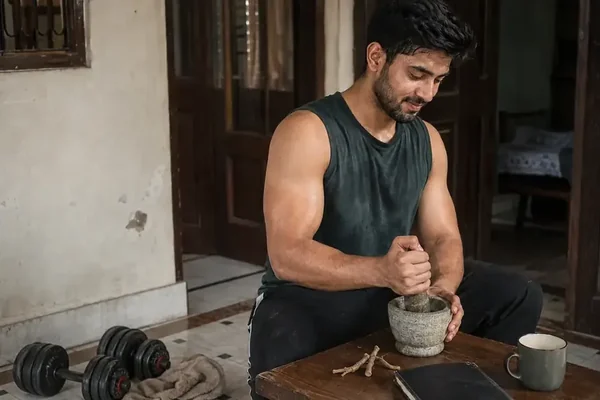
Bone and vāta are described as working in opposite directions. As bone tissue depletes, vāta rises, which is one reason the texts connect bone loss with age.2 Care in the Ayurvedic view aims to nourish the tissues with diet, routine and, where a doctor advises, medicines.
How modern medicine describes it
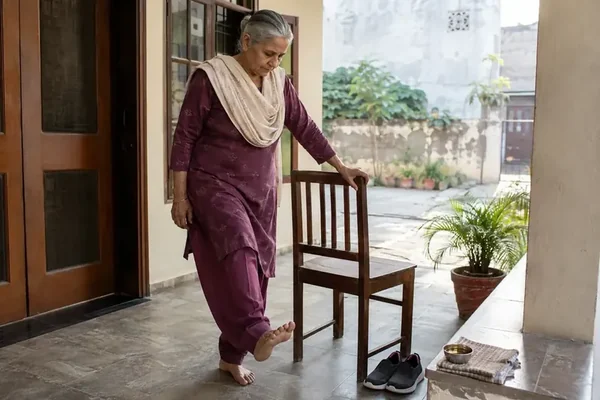
Osteoporosis is a condition in which bones lose strength and density and break more easily, most often at the hip, wrist and spine.3 It usually causes no symptoms until a bone breaks after a small fall or knock.3
Bone loss speeds up after menopause, and with age in men too. Long-term steroid tablets, low body weight, smoking, heavy drinking and a parent who broke a hip all raise the risk.34 It is diagnosed with a bone density (DEXA) scan alongside an assessment of fracture risk.34
Where they agree, and where they differ
| Ayurveda (asthi kṣaya) | Modern medicine (osteoporosis) | |
|---|---|---|
| The core idea | Depletion of the bone tissue | Loss of bone strength and density |
| Symptoms | Bone and joint pain, hair, nail and teeth changes | Usually none until a fracture3 |
| Age | Linked with rising vāta in later life | More common with age and after menopause3 |
| "Calcium ki kami" | Not a classical term | Calcium is one part; hormones, medicines, activity and family history also matter3 |
| Tests | Not part of the classical description | A DEXA scan and a fracture-risk assessment4 |
| Treatment | Nourish the tissues with diet and routine; medicines after assessment | Exercise, calcium and vitamin D where low, preventing falls, bone-strengthening medicines for some |
Both views link bone health with age, and both see bone as built over years through food and activity, not by a single nutrient.
What the evidence does and doesn't show
- Shown: regular weight-bearing exercise, enough calcium and vitamin D, not smoking and limiting alcohol support bone health. Medicines lower fracture risk in people at high risk.3
- Not shown: that bone pain alone means osteoporosis. The condition is usually silent, so risk is assessed, not felt.3
- Limited: the trials of Ayurvedic treatment that exist are few, small or poorly designed, and none cited here shows that it restores bone density. 5
- Not a substitute: looking for the classical signs does not replace a bone density scan and fracture-risk assessment when you are at risk.4
This is where the comparison is weakest. The signs the texts list, such as hair, nails and teeth, are not how osteoporosis is found.3
What this means for you
Bone risk is worked out from facts, not from how the bones feel: your age, menopause, long-term medicines, weight, smoking and drinking, and whether a parent broke a hip.34 Write those down, with any earlier scan report, and ask whether a scan is needed. Diet and routine in the Ayurvedic sense can be part of the plan once that is known.
Get urgent care the same day for pain after a fall, a leg you can't put weight on, or sudden severe back pain.3
Read next
- Osteoporosis and weak bones (calcium ki kami, bone density): risk, scans and what helps
- bones and joints
A consultation with Dr. D.K. Sharma (BAMS) is ₹500, in person in Ludhiana or by video. Most of it is a careful history of your risk, with your back, posture and balance examined in person. A personalised Dinacharya (daily-routine) guide follows.
Sources
- Caraka Saṃhitā, Sūtrasthāna, chapter on the depletion of the dhātus, and Suśruta Saṃhitā, Sūtrasthāna, chapter on the increase and depletion of doṣas, dhātus and malas (classical sources).
- Aṣṭāṅga Hṛdaya, Sūtrasthāna, chapter on the doṣas and dhātus (classical source).
- NHS. Osteoporosis. nhs.uk.
- NICE. Osteoporosis: assessing the risk of fragility fracture (CG146).
- NCCIH (US National Institutes of Health). Ayurvedic Medicine: In Depth. Last updated January 2019. nccih.nih.gov.
Medical content approved by Dr. D.K. Sharma.
Reviewed by Dr. D.K. Sharma. Approval recorded on 8 November 2026 for this exact text.