






Heel pain (edi ka dard) and plantar fasciitis: causes, treatment and when to be seen
Does this sound like you?
Short answer: heel pain that is worst with the first steps in the morning is most often plantar fasciitis, a painful band of tissue under the heel.2 It usually settles slowly with rest from what makes it worse, supportive footwear and calf and sole stretches.2
Urgent signs: severe heel pain after an injury, a snap or pop at the time, or a foot you can't put weight on needs care the same day.3 The full list is under “When it should not wait”.
You may recognise some of these:
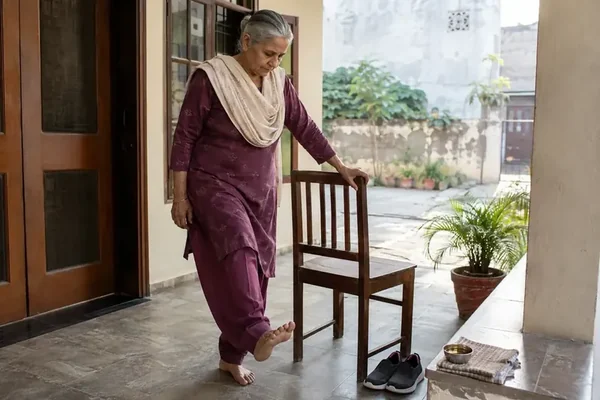
- The first steps out of bed are the worst; the heel eases as you walk, then aches again by evening.
- It hurts after sitting, then standing up.
- The pain is under the heel or along the arch, sometimes sharp, like stepping on a stone.
- Long hours standing at work, walking on hard floors or barefoot at home make it worse.
- An X-ray mentioned a heel spur, and you are not sure what that means.
Heel pain is common and usually not caused by anything serious.1 When it keeps you from walking comfortably, or comes with any sign in the next section, it is worth a proper look. For other bone and joint problems, see all bones and joints concerns.
What it is, and what it isn't
Plantar fasciitis is the most common cause of pain under the heel. The thick band of tissue that runs from the heel to the toes (the plantar fascia) becomes painful where it joins the heel bone.2 People also say "edi mein dard" or "edi mein kanta", and some call a heel spur "edi ki haddi badhna".
| It is | It isn't |
|---|---|
| Pain under the heel, worst with the first steps | Pain at the back of the heel, which is often the Achilles tendon |
| More likely with long standing, extra weight or unsupportive footwear | Explained by a heel spur on an X-ray; spurs are common without pain |
| Usually a slow pattern over weeks or months | A sign that you must stop walking altogether |
When it should not wait
Heel pain is usually not an emergency. These patterns are different.
Urgent signs
Get urgent care the same day if:
- heel pain is severe after an injury or a fall;
- you heard a snap, grinding or popping noise at the time of an injury;
- you can't walk or put weight on the foot;
- the heel is hot, red and swollen and you have a fever or feel unwell.3
Arrange a prompt review if:
- you have diabetes and any new foot pain, wound or colour change;
- there is tingling or numbness in the foot;
- the pain is getting worse rather than settling;
- the heel pain comes with long-lasting back pain and stiffness, or with pain and swelling in other joints, because inflammatory arthritis such as ankylosing spondylitis can inflame the tendon at the heel.4
How Dr. Sharma assesses it
Your feet are examined in person: where the heel is tender, how you stand and walk, your arches and your footwear.
- Where and since when. Under the heel, the back or the side; one foot or both; after a change in activity, an injury or gradually.
- The pattern. First steps in the morning, after sitting, after long standing; swelling, warmth or redness; night pain; what eases or worsens it.
- Your load. Work hours on your feet, floors, footwear, walking or running, and weight.
- Health and medicines. Diabetes, thyroid, back or other joint problems; every painkiller, injection, insole or oil you have used, and for how long. Bring the strips or bottle.
- Reports, and tests only when useful. Bring any X-ray. Plantar fasciitis is usually recognised without a scan; one is suggested when the pattern is unusual or a warning sign is present.2
What treatment can and can't promise
- No single oil or tablet. The plan follows the cause and your daily load.
- Simple steps first. Treatment for heel pain from plantar fasciitis commonly starts with rest from the activities that make it worse, supportive footwear, stretching the calf and the sole, and weight loss if you are overweight.2
- Within scope, or referred. After assessment, Dr. Sharma can give routine and footwear guidance and tell you whether Ayurvedic treatment suits you. A physiotherapist, a podiatrist or an orthopaedic surgeon is suggested when that is right.
- Honest outcomes. Plantar fasciitis often settles, but slowly, sometimes over months, and it can return with heavy standing. How long it takes for you is decided after assessment.
- Medicine for heel or foot pain (pair dard ki dawa). A painkiller can ease a bad week but doesn't change the strain on the heel. An Ayurvedic medicine is considered only after assessment, and no product is named here.
- Follow-up. A follow-up visit reviews the first-step pain, walking and work, and adjusts the plan. At a review he asks how the first steps feel now and checks the footwear you have been wearing.
Your doctor
Your doctor
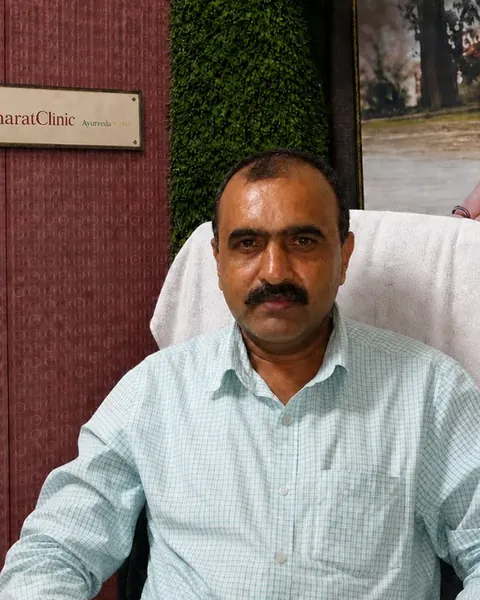
Dr. D.K. Sharma, the Ayurvedic doctor who sees you
Name, qualification and registration BAMS; practising since 1992 4067, Board of Ayurvedic and Unani Systems of Medicine, Punjab
Reviewed by Dr. D.K. Sharma. Approval recorded on 8 November 2026 for this exact text.
Medical content approved by Dr. D.K. Sharma.
A consultation, ₹500
Bring your X-ray, the footwear you use most and your medicines. You explain when it hurts, how long you stand each day and what you wear on your feet, and the foot is examined. Dr. Sharma can then tell you whether it looks like plantar fasciitis or needs a scan or a specialist, and whether treatment at Bharat Clinic suits you.
The consultation is in person at Samrala Chowk or Focal Point, Gobindgarh, in Ludhiana, or by video to begin. Heel pain needs the foot examined, so most first consultations are in person. The visit usually takes 30 to 60 minutes. Your personalised Dinacharya (daily-routine) guide follows the consultation. You can book a consultation or read how a video consultation works.
The consultation
₹500In person in Ludhiana, or by video
Includes your personalised Dinacharya (daily-routine) guide, prepared after the consultation.
How booking works · no payment until step 3
- You send a request
- Suitability and a time are confirmed
- You pay ₹500
- Your slot is confirmed
- The consultation
Other costs
- Medicine, if advised
- Discussed after your consultation
- Care courses
- Discussed after your consultation
Questions before you book
Is a heel spur causing my pain?
Not necessarily. Heel spurs are common on X-rays of people without heel pain, and the pain usually comes from the tissue under the heel rather than the spur.2
Full answer
The examination decides what is going on.
Edi mein dard kyu hota hai?
It is most often strain on the band of tissue under the heel, made worse by long standing, hard floors, unsupportive footwear or extra weight.
Full answer
Less often it is a tendon, a nerve, a stress fracture or arthritis, which is why it is examined.
Should I walk barefoot or wear soft slippers at home?
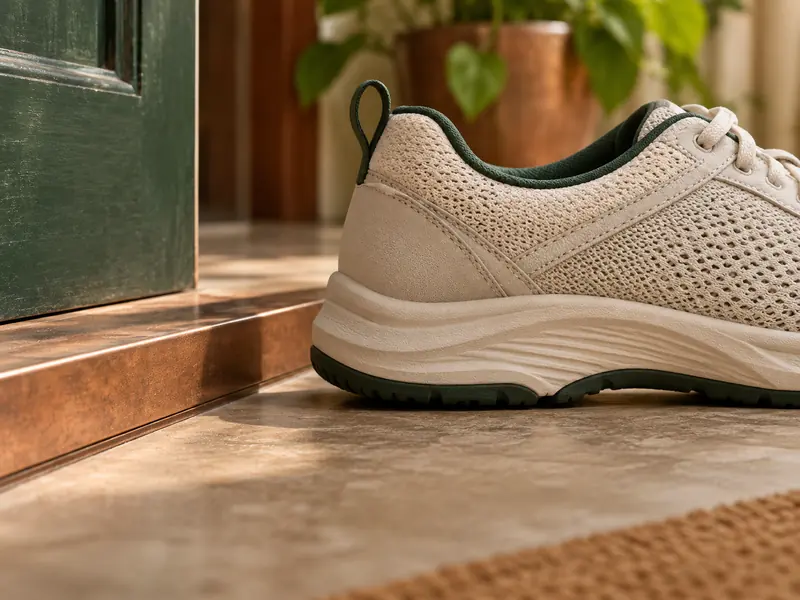
Cushioned, supportive footwear indoors is often more comfortable with heel pain than going barefoot on hard floors.2
Full answer
Flat, thin-soled or worn-out shoes and chappals add strain, so check what you wear most. What suits your feet is worked out in the consultation.
I changed my shoes and it still hurts. What next?
Plantar fasciitis settles slowly, so a few days is too soon to judge.
Full answer
If the pain has not improved after about two weeks of home care, or it is getting worse, have the foot examined.2 Other causes such as an Achilles tendon problem, a nerve or a stress fracture can look similar.
My uric acid is high and my heel hurts. Is it gout?
Gout usually starts in the big toe, but it can affect other joints, including the heel area.
Full answer
A high uric acid result on its own does not prove gout, and plantar fasciitis is far more common under the heel. Severe pain after an injury, or a heel that is hot, red and swollen with fever, needs urgent care (see the warning signs above). See gout and uric acid for how the two are told apart.
Understand it better
What can contribute. Usually more than one thing12:
- Load: long hours standing or walking on hard floors, a sudden increase in walking or running.
- Footwear: flat, thin-soled or worn-out shoes and chappals.
- Body: extra weight, tight calf muscles, and very flat or high arches.
- Other causes of heel pain: an Achilles tendon problem, a trapped nerve, a stress fracture or inflammatory arthritis.