
The names
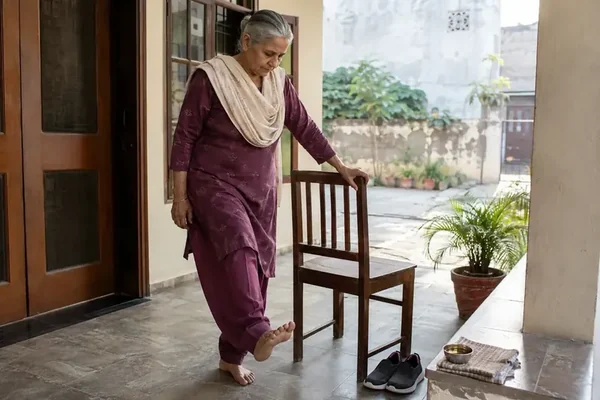
Vatakantaka meaning in Ayurveda. Vātakaṇṭaka means a thorn of vāta. It names the pricking heel pain that many people feel with the first steps out of bed, edi ka dard.
Urgent signs: A snap at the back of the ankle, a foot you can't put weight on, or a hot, red heel with fever needs urgent care the same day.3 The full list is under "When it should not wait" on Heel pain (edi ka dard) and plantar fasciitis.
| Language | Name |
|---|---|
| Sanskrit | Vātakaṇṭaka (वातकंटक): vāta, the dosha linked with movement, and kaṇṭaka, a thorn, for the pricking pain |
| Hindi | Edi ka dard, edi mein kaanta chubhne jaisa dard |
| Punjabi | Addi da dard, addi vich chubhan (ਅੱਡੀ ਦਾ ਦਰਦ, ਅੱਡੀ ਵਿੱਚ ਚੁਭਣ) |
| English | Heel pain; most often plantar fasciitis, sometimes called a heel spur |
How Ayurveda describes it
Here the image is a thorn. Vāta settles in the heel and ankle region and causes a pricking pain, as if from a thorn, when the foot is put down.1 The classical texts link it with placing the foot unevenly, walking on uneven ground and overexertion.1
Care starts by avoiding those causes. Vāta is then calmed with rest from strain, warmth, careful habits with footwear and, where a doctor advises, medicines and procedures.1
How modern medicine describes it
The most common cause of heel pain is plantar fasciitis: strain of the thick band of tissue under the foot that joins the heel to the toes.2 The pain is typically worst with the first steps in the morning or after rest.2
It is linked with long hours standing or walking, a sudden increase in activity, extra weight, tight calf muscles and unsupportive footwear.23 Doctors usually diagnose it from the symptoms and an examination. Other causes of heel pain include an Achilles tendon problem, a trapped nerve and a stress fracture.3
Where they agree, and where they differ
| Ayurveda (vātakaṇṭaka) | Modern medicine (plantar fasciitis) | |
|---|---|---|
| The core experience | A pricking, thorn-like pain on putting the foot down | Sharp heel pain, worst with the first steps |
| Load and ground | Central: uneven ground, uneven steps, overexertion | Important: standing, walking, sudden increase in activity2 |
| Rest | Rest from strain advised | Rest from strain, stretching and supportive shoes2 |
| The mechanism | Vāta lodged in the heel and ankle | Strain of the plantar fascia |
| Tests | Not part of the classical description | Usually none; tests when the picture is unclear |
| Treatment | Avoid causes, rest from strain, warmth; medicines after assessment | Rest, stretching, footwear, weight; specialist options if it persists |
The two views share a plain idea: pain follows the way the foot meets the ground, and it is worst when weight goes onto the heel.
What the evidence does and doesn't show
- Shown: rest from strain, regular calf and foot stretches, supportive shoes and losing extra weight help most people, though recovery can take months.2
- Not shown: that injections or surgery are needed for most people. Most improve with simple measures.2
- Limited: Ayurvedic trials are limited in number and quality, and none cited here shows that it eases vātakaṇṭaka. 4
- Not a substitute: the classical word does not replace a check of the feet when you have diabetes, or of tingling and numbness.3
"Thorn-like heel pain" in the texts is a description, not a finding. It cannot separate plantar fasciitis from the other causes of heel pain listed above.3
What this means for you
If your heel hurts most in the first steps of the day, three things help to sort out why. How long do you stand or walk? What shoes do you wear? Do your calves feel tight? Both views start with rest from strain and care with footwear, and the modern view adds stretching.2
Get urgent care the same day for a snap at the back of the ankle, a foot you can't put weight on, or a hot, red heel with fever.3
Read next
- Heel pain (edi ka dard) and plantar fasciitis: the condition, what helps and when to be seen
- bones and joints
A consultation with Dr. D.K. Sharma (BAMS) is ₹500, in person in Ludhiana or by video. The feet are examined in person: where the heel is tender, how you walk, and your footwear. A personalised Dinacharya (daily-routine) guide follows.
Sources
- Suśruta Saṃhitā, Nidānasthāna, chapter on vātavyādhi, and Mādhava Nidāna, chapter on vātavyādhi (classical sources).
- NHS. Plantar fasciitis. nhs.uk.
- NHS. Heel pain. nhs.uk.
- NCCIH (US National Institutes of Health). Ayurvedic Medicine: In Depth. Last updated January 2019. nccih.nih.gov.
Medical content approved by Dr. D.K. Sharma.
Reviewed by Dr. D.K. Sharma.