
The names
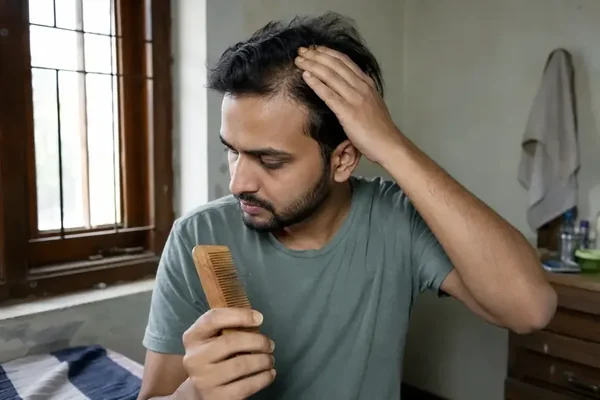
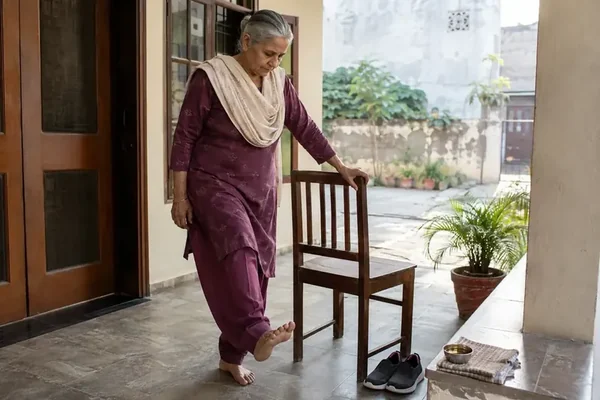
Manyastambha meaning in Ayurveda. The word is easy to take apart. Manyā is the sides and back of the neck, and stambha is stiffness, so manyāstambha is a stiff, painful neck: gardan akadna.
Urgent signs: Neck pain after a fall or a blow to the head, new weakness in an arm or leg, or a stiff neck with fever, a severe headache or a rash needs emergency care now.2 The full list is under "When it should not wait" on Neck pain (gardan dard) and cervical spondylosis.
| Language | Name |
|---|---|
| Sanskrit | Manyāstambha (मन्यास्तंभ): manyā, the sides and back of the neck, and stambha, stiffness; also grīvāgraha (ग्रीवाग्रह) |
| Hindi | Gardan dard, gardan akadna |
| Punjabi | Dhaun da dard, dhaun akadni (ਧੌਣ ਦਾ ਦਰਦ, ਧੌਣ ਆਕੜਨੀ) |
| English | Neck pain, a stiff neck; age-related wear of the neck's discs and joints is cervical spondylosis |
How Ayurveda describes it
In this picture, vāta, often with kapha, stiffens the neck, so that turning or bending the head is painful and restricted.1 The classical texts link it with sleeping in the day, sitting or lying in an awkward position, and looking upward or holding the head in one posture for long periods.1
Care starts by avoiding those habits. Then stiffness is eased with warmth, routine and suitable food and, where a doctor advises, medicines and procedures.1 The texts also describe related vāta disorders of the neck and arm, in which pain spreads into the shoulder.
How modern medicine describes it
Most neck pain comes from the muscles, ligaments and joints of the neck. It often follows poor posture, a sudden movement, sleeping awkwardly or stress, and it usually improves within a few weeks.2
Cervical spondylosis is a different kind of word. It names the age-related changes in the neck's discs and joints, which are common and often cause no symptoms.3 Sometimes they narrow the space for a nerve, with pain, tingling or weakness in an arm.3 Most people do not need a scan; it is kept for warning signs or nerve symptoms.23
Where they agree, and where they differ
| Ayurveda (manyāstambha) | Modern medicine (neck pain, cervical spondylosis) | |
|---|---|---|
| The core experience | A stiff, painful neck that is hard to turn | Pain and stiffness, sometimes into the shoulder or arm |
| Posture and habit | Central: awkward positions, looking up, day sleep | Important: screens, driving, pillow, stress2 |
| Pain into the arm | Described as related vāta disorders | A pressed nerve root in the neck3 |
| The mechanism | Vāta with kapha stiffening the neck | Strain in muscles and joints; sometimes a pressed nerve |
| Tests | Not part of the classical description | Usually none; a scan for warning or nerve signs |
| Treatment | Avoid causes, warmth, routine; medicines after assessment | Keeping moving, exercise, posture, pain relief; specialist care for nerve problems |
Both put the neck's daily position at the centre of the problem. A neck held in one posture for hours is named as a cause in the texts and in current NHS advice alike.2
What the evidence does and doesn't show
- Shown: keeping the neck moving, gentle exercise and attention to posture help most people with neck pain.2
- Not shown: that changes on an X-ray explain the pain. Many people with such changes have no pain.3
- Limited: Ayurvedic treatment has been tested in few and small studies, and none cited here shows that it eases manyāstambha. 4
- Not a substitute: the classical word does not replace a medical check for arm weakness, clumsy hands or the warning signs below.2
If you have been told "cervical spondylosis" after an X-ray, the classical word does not explain that report. It describes a stiff neck, not the findings of a scan.
What this means for you
A stiff neck is often a question of hours and habits. Note how long you sit at a screen or drive, how you sleep and which pillow you use, and whether pain, tingling or weakness reaches the shoulder or arm. Check yourself for the warning signs below before putting a stiff neck down to posture.
Get emergency care now for neck pain after a fall or a blow to the head, new weakness in an arm or leg, or a stiff neck with fever, a severe headache or a rash.2
Read next
- Neck pain (gardan dard) and cervical spondylosis: the condition, what helps and when to be seen
- avabāhuka: when the shoulder is the main problem
- bones and joints
A consultation with Dr. D.K. Sharma (BAMS) is ₹500, in person in Ludhiana or by video. The neck, shoulders and arms are examined in person. The visit helps tell a stiff neck from posture apart from pain or tingling that reaches the shoulder or arm. A personalised Dinacharya (daily-routine) guide follows.
Sources
- Suśruta Saṃhitā, Nidānasthāna, chapter on vātavyādhi, and Mādhava Nidāna, chapter on vātavyādhi (classical sources).
- NHS. Neck pain. nhs.uk.
- MedlinePlus. Cervical spondylosis. medlineplus.gov.
- NCCIH (US National Institutes of Health). Ayurvedic Medicine: In Depth. Last updated January 2019. nccih.nih.gov.
Medical content approved by Dr. D.K. Sharma.
Reviewed by Dr. D.K. Sharma. Approval recorded on 8 November 2026 for this exact text.