
The names
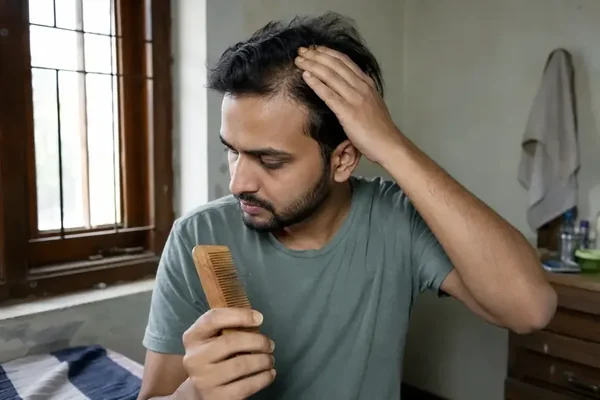
Vyanga meaning in Ayurveda. Vyaṅga means thin, painless, darker patches on the face. It is the classical word closest to melasma, or jhaiyan.
When to see a doctor: A new, changing, itchy or bleeding spot or mole needs a prompt check. So does dark, velvety skin that appears quickly in the neck or folds.34 The full list is under "When it should not wait" on Pigmentation and dark spots.
| Language | Name |
|---|---|
| Sanskrit | Vyaṅga (व्यंग): thin, painless, darker patches on the face |
| Hindi | Jhaiyan, chehre pe daag |
| Punjabi | Chhaiyan, chehre 'te daag (ਛਾਈਆਂ, ਚਿਹਰੇ 'ਤੇ ਦਾਗ਼) |
| English | Pigmentation, dark spots; melasma; marks left after pimples or inflammation |
How Ayurveda describes it
In Ayurveda, vyaṅga is one of the minor diseases (kṣudraroga): a thin, painless, brownish or darker patch that appears on the face.1 The classical texts link it with anger and over-exertion, which unsettle vāta together with pitta, and with heat reaching the skin.1
Contributors named include heat and sun, stress, late nights, poor digestion and an unsuitable diet. Treatment in the Ayurvedic view starts with avoiding the causes, then care of digestion, the skin and routine and, where a doctor advises, medicines. The aim described is healthy, even skin, not a change of natural skin colour.
How modern medicine describes it
Modern medicine separates several kinds of darker skin. Melasma gives brown or grey-brown patches on the cheeks, forehead, nose or upper lip; it is more common in women and in brown skin, and is linked with sunlight, heat, pregnancy and hormonal contraception.2
Dark marks after pimples, eczema, burns or harsh products are post-inflammatory pigmentation.2 Velvety darker skin in the neck and folds can be linked with insulin and weight.4
A new, changing, itchy or bleeding spot or mole is a separate matter and needs prompt checking.3
Where they agree, and where they differ
| Ayurveda (vyaṅga) | Modern medicine (melasma, pigmentation) | |
|---|---|---|
| The core experience | Thin, painless, darker patch on the face | Brown or grey-brown patches; dark marks after inflammation |
| Heat and sun | Heat named as a factor | Sunlight and heat darken patches2 |
| Stress and exertion | Anger and exertion named | Not a main recognised cause |
| Hormones | Not part of the classical description | Pregnancy and hormonal contraception linked with melasma2 |
| Tests | Not part of the classical description | Usually none; examination of any changing spot3 |
| Treatment | Avoid causes, whole-body and skin care; medicines after assessment | Daily sun protection, gentle care, prescribed treatment if needed |
Both views agree that heat and sun matter, that patches build up and fade slowly, and that harsh treatment of the skin does more harm than good.
What the evidence does and doesn't show
- Shown: daily sun protection is central; without it, patches tend to darken or come back.25
- Not shown: that harsh scrubs or strong products clear patches faster; irritation can leave darker marks, especially in brown skin.2
- Limited: clinical trials of Ayurvedic treatments have mostly been few, small or not well designed, so firm conclusions about vyaṅga cannot be drawn. 6
- Not a substitute: an Ayurvedic label doesn't replace a check of a new or changing spot, or of darker skin in the folds.34
What this means for you
If patches began in pregnancy or after starting hormonal contraception, mention that first. Then note the sun and heat you work in, products and medicines, any pimples or rashes before the marks, and your sleep and stress. Bring every cream you have used, especially any tube without a label.
Read next
- Pigmentation and dark spots: the kinds of dark skin, what helps and when to be seen
- mukhadushika: for the pimples that often come first
- skin and hair
A consultation with Dr. D.K. Sharma (BAMS) is ₹500, in person in Ludhiana or by video. Dr. Sharma asks when the patches began, what you have used on them and about your health, and, in person, looks at the skin. This helps tell melasma and marks left after pimples from a spot that needs a prompt check. A personalised Dinacharya (daily-routine) guide follows.
Sources
- Suśruta Saṃhitā, Nidānasthāna, chapter on kṣudraroga, and Mādhava Nidāna, chapter on kṣudraroga (classical sources).
- American Academy of Dermatology. Melasma: overview. aad.org.
- NHS. Moles; Melanoma skin cancer. nhs.uk.
- NHS. Acanthosis nigricans. nhs.uk.
- NHS. Sunscreen and sun safety. nhs.uk.
- NCCIH (US National Institutes of Health). Ayurvedic Medicine: In Depth. Last updated January 2019. nccih.nih.gov.
Medical content approved by Dr. D.K. Sharma.
Reviewed by Dr. D.K. Sharma. Approval recorded on 8 November 2026 for this exact text.